
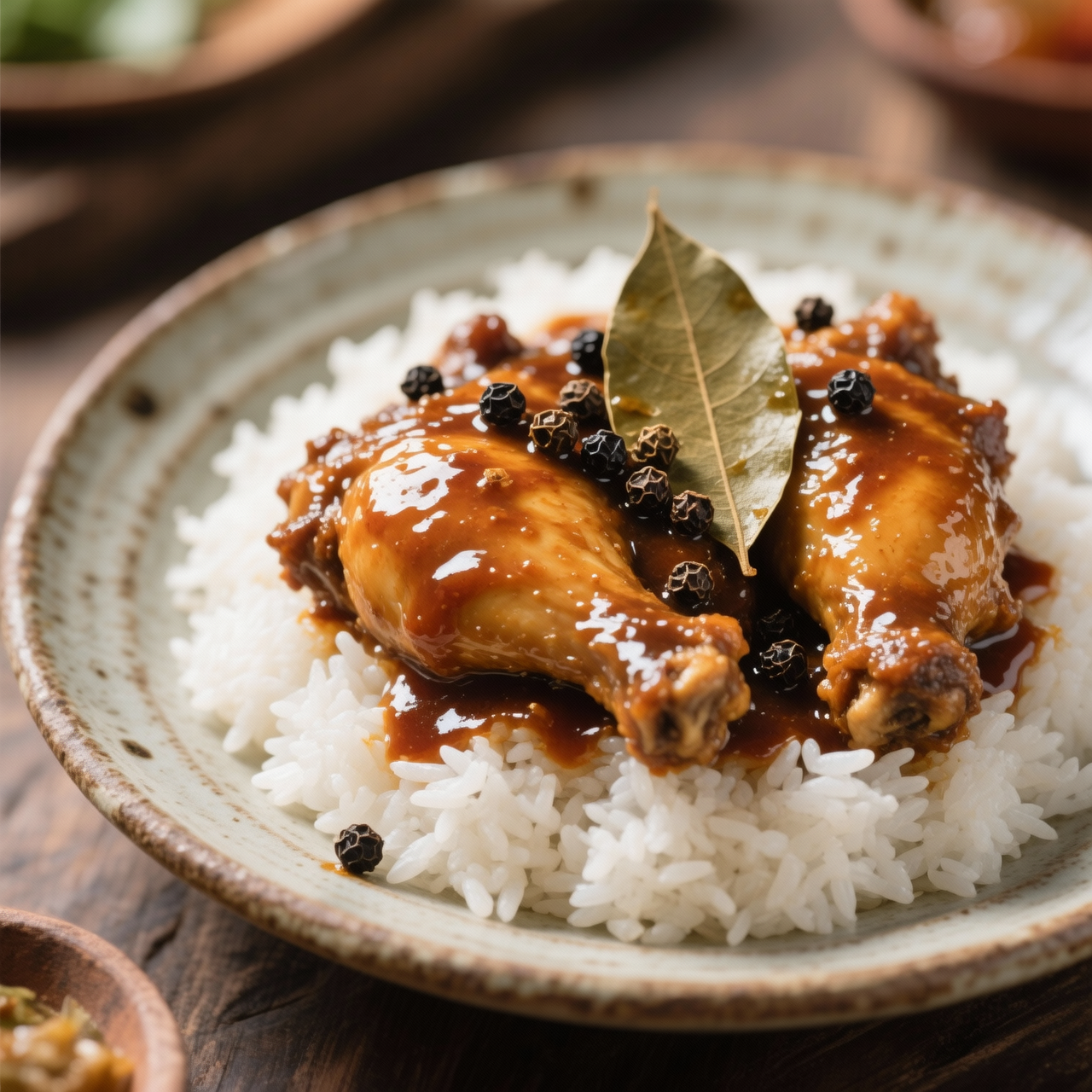
Adobo Marinade
When I first learned about Filipino adobo, I was struck by how a technique born from practicality became the soul of a nation’s table. Long before refrigeration reached the islands, early cooks discovered that simmering meats in vinegar and salt, then finishing them in soy sauce and garlic, naturally preserved food in the tropical heat. That clever marriage of acid, umami, and aromatics didn’t just survive—it thrived, evolving into what we now proudly call our unofficial national dish. For me, crafting a vegan adobo marinade isn’t about stripping away tradition; it’s about honoring its core chemistry while making it accessible to everyone. The magic lies in the balance: too much vinegar and the palate puckers, too much soy and it turns one-dimensional, and under-toasting the garlic leaves the whole profile flat. Many home cooks rush the process, boiling everything together instead of letting the marinade steep, which robs it of that slow, layered depth. I always remind myself to let the mixture rest, even if just for an hour, so the garlic mellows, the vinegar integrates, and the soy sauce finds its rhythm. Whether you’re coating jackfruit, tofu, or mushrooms, this base demands respect for its ratios and patience in its development. When done right, it doesn’t just season food; it transforms it, wrapping every bite in a bright, savory embrace that feels like a kitchen in Manila on a humid afternoon. That’s why I guard the proportions so carefully—because adobo isn’t just a recipe, it’s a conversation between land, sea, and the hands that stir it.
Nutrition
| Per serving | Calories | Protein | Carbs | Fat | Sat fat | Fibre | Sugar | Sodium |
|---|---|---|---|---|---|---|---|---|
| beginner | 42kcal | 3g | 5g | 1g | 0g | 0g | 3g | 1080mg |
| intermediate | 48kcal | 3g | 8g | 1g | 0g | 1g | 5g | 850mg |
| expert | 85kcal | 3g | 5g | 6g | 1g | 1g | 1g | 980mg |
Per serving · Ava-estimated — a guide, not a clinical figure.
- 240 mlSoy sauce— Use a Filipino-style soy sauce for authentic flavor
- 120 mlVinegar— Cane vinegar is traditional; white vinegar works as a substitute
- 30 gGarlic— Freshly peeled and smashed or minced
- 10 gBlack peppercorn— Whole peppercorns lightly cracked
- 3 pieceBay leaf— Dried whole leaves
This beginner-friendly Adobo marinade strips away the intimidation of balancing traditional Filipino pantry staples by relying on reliable, pre-mixed shortcuts. Instead of sourcing artisanal cane vinegars or mincing fresh garlic, you will use standard bottled soy sauce, distilled white vinegar, and convenient jarred minced garlic to achieve the classic savory-tangy profile. The key to success here is patience during the simmering phase. Beginners often rush this step and end up with a harsh, unblended flavor. By gently heating the mixture, you allow the sharp acidity to mellow and the aromatics to fully infuse into the liquid without boiling off essential notes. Always taste before using, adjusting with black pepper or a touch of sugar if your soy sauce runs particularly salty. Watch closely to prevent scorching at the bottom of the pan. This streamlined approach guarantees a foolproof, deeply flavorful sauce that builds your confidence for future cooking.
Equipment
- Small heavy-bottomed saucepan— prevents hot spots and scorching during gentle simmering
- Whisk or spoon— for steady stirring
Method
- 1
Combine the bottled soy sauce, distilled white vinegar, and jarred minced garlic in a small heavy-bottomed saucepan.
Measure accurately; soy sauce brands vary widely in salt content.
combining~ 1 min - 2
Place the pan over medium-low heat and stir constantly until the mixture steams and small bubbles appear at the edges.
Never let it reach a rolling boil or the vinegar will evaporate and leave a harsh taste.
scalding~ 5 minTricky bit - 3
Lower the heat to a gentle simmer and cook for ten minutes, stirring occasionally to prevent the garlic from burning.
The sharp acidity will soften and the flavors will marry into a cohesive sauce.
infusing~ 10 min - 4
Remove the pan from the heat and let the marinade cool completely to room temperature before transferring to a jar or using.
Cooling allows the flavors to stabilize and prevents premature cooking of raw ingredients.
resting~ 15 min
Cooking from frozen
Thaw overnight in the refrigerator and whisk vigorously to recombine separated liquids before use.
Storage times are a guide — always use your judgement and store food safely.