
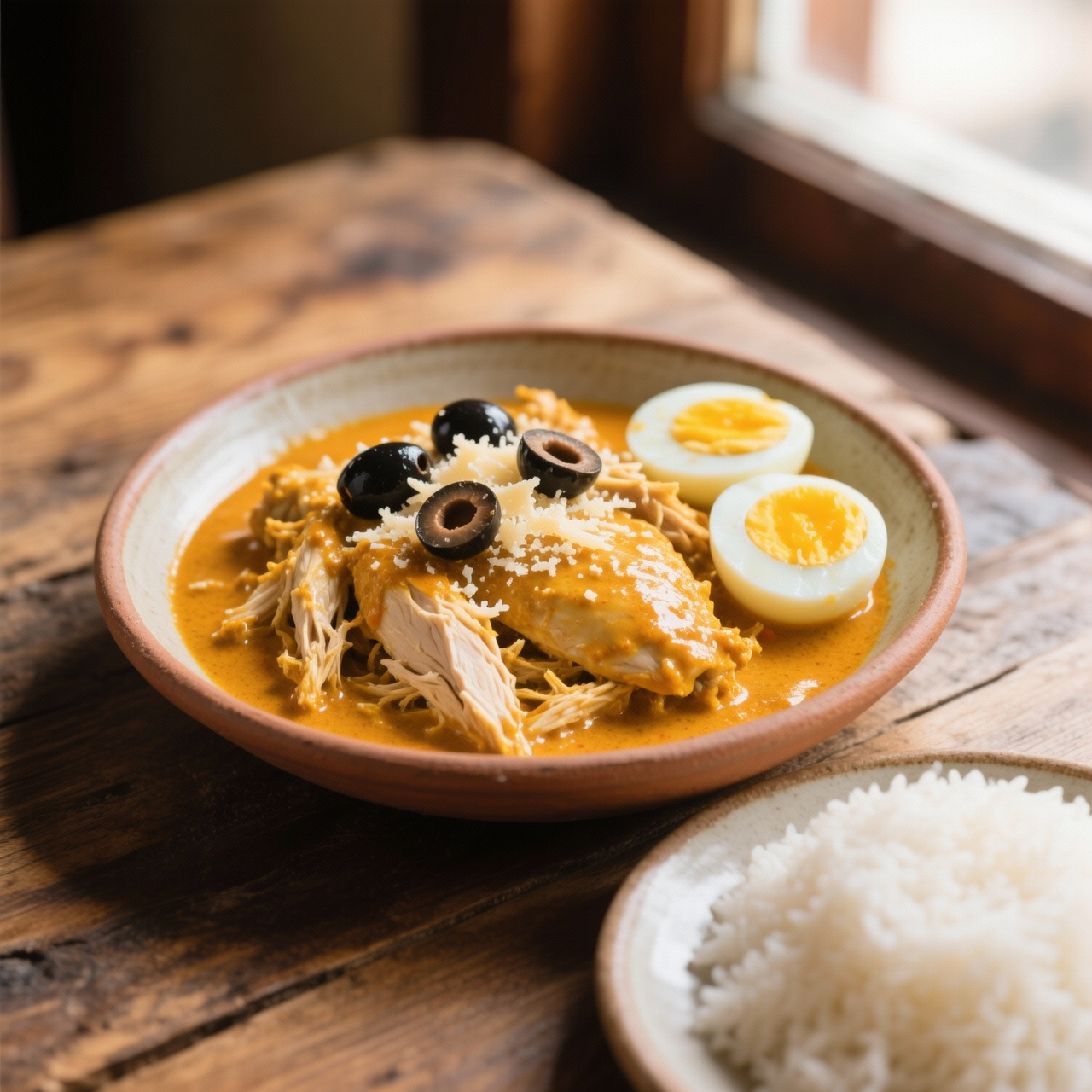
Aji de Gallina
I have always found that aji de gallina is less about the chicken itself and more about the alchemy of its sauce. Born in the colonial kitchens of Peru, where Spanish techniques met indigenous ingredients, this dish evolved from a practical way to stretch leftover poultry into something profoundly comforting. The name literally translates to yellow chili chicken, but it is the aji amarillo paste, soaked bread, walnuts, and evaporated milk that weave together to create a velvety, golden emulsion. What makes it matter to me is not just its history, but how it embodies Peruvian resilience and resourcefulness, transforming humble scraps into a dish that graces both family tables and high-end restaurants. Yet, so many attempts miss the mark. The most common pitfall is rushing the sofrito or undercooking the aji amarillo, which leaves a harsh, grassy bite instead of the deep, fruity warmth it should offer. Another mistake is neglecting to toast the nuts and bread properly. Without that step, the sauce lacks the necessary body and can split when the dairy hits the heat. People also forget to temper the evaporated milk, pouring it straight into a boiling pan and watching it curdle. The magic happens when you cook low, stir constantly, and let the flavors marry until the spoon leaves a thick trail. It is a dish that demands patience, but the reward is a rich, golden comfort that feels like a warm embrace.
Nutrition
| Per serving | Calories | Protein | Carbs | Fat | Sat fat | Fibre | Sugar | Sodium |
|---|---|---|---|---|---|---|---|---|
| beginner | 635kcal | 63g | 23g | 32g | 8g | 3g | 7g | 1440mg |
| intermediate | 635kcal | 63g | 23g | 32g | 8g | 3g | 7g | 1440mg |
| expert | 635kcal | 63g | 23g | 32g | 8g | 3g | 7g | 1440mg |
Per serving · Ava-estimated — a guide, not a clinical figure.
- 600 gBoneless skinless chicken breast— cut into uniform strips
- 80 gWhite sandwich bread— crusts removed, slightly stale
- 250 mlWhole milk— room temperature
- 60 gAji amarillo paste— freshly blended or jarred
- 50 gRaw walnuts— toasted before use
- 150 gYellow onion— finely diced
- 15 gGarlic cloves— minced
- 30 mlNeutral vegetable oil
- 200 mlChicken stock— warmed before adding
- 5 gGround cumin
- 8 gFine sea salt
- 2 gBlack pepper— freshly ground
- 30 gGrated Parmesan cheese
- 40 gPitted black olives(optional)— sliced for garnish
- 200 gHard-boiled eggs(optional)— quartered for garnish
This pathway prioritizes accessibility without sacrificing the dish’s signature comfort. You’ll rely on a reliable jarred aji amarillo paste and a quick food-processor blend to bypass the traditional grinding step. The chicken is gently poached and shredded with two forks, while the bread soaks in warm milk until it collapses into a soft mash. Your main objective here is achieving a cohesive sauce that doesn’t split or turn gluey. Watch the consistency closely as you combine the blended base with the warm stock; the sauce should flow slowly off a wooden spoon but still cling to the chicken. If it thickens too aggressively, thin it with a splash of extra milk rather than forcing it through a strainer. Keep your heat strictly at medium-low once the sauce hits the pan, stirring constantly to prevent the bottom from scorching. This version removes the intimidation factor, giving you a reliable framework to build confidence. By the time you plate it, you’ll have a deeply satisfying, restaurant-adjacent result that proves you don’t need specialized tools to master Peruvian comfort food.
Equipment
- Food processor— standard home model is sufficient
- Non-stick skillet— 10-inch diameter recommended
- Measuring cups— for precise liquid additions
Method
- 1
Bring a large pot of water to a gentle boil.
Add a pinch of salt to the water.
poaching~ 5 min - 2
Submerge the chicken and cook until opaque throughout, then transfer to a plate and shred with two forks.
Internal temperature should reach 74°C.
shredding~ 15 min - 3
Place the bread in a bowl and pour the milk over it until fully saturated.
Let it sit for ten minutes to soften completely.
soaking~ 10 min - 4
Heat the oil in a skillet over medium heat and sauté the onion and garlic until translucent.
Do not let the garlic brown, or it will turn bitter.
sweating~ 3 minTricky bit - 5
Transfer the soaked bread, walnuts, aji paste, cumin, salt, and pepper to a food processor and blend until completely smooth.
Scrape down the sides halfway through to ensure even consistency.
pureeing~ 2 min - 6
Return the skillet to low heat, pour in the blended mixture and stock, then fold in the shredded chicken and simmer until thickened.
Stir constantly to prevent scorching on the bottom.
simmering~ 10 minTricky bit