
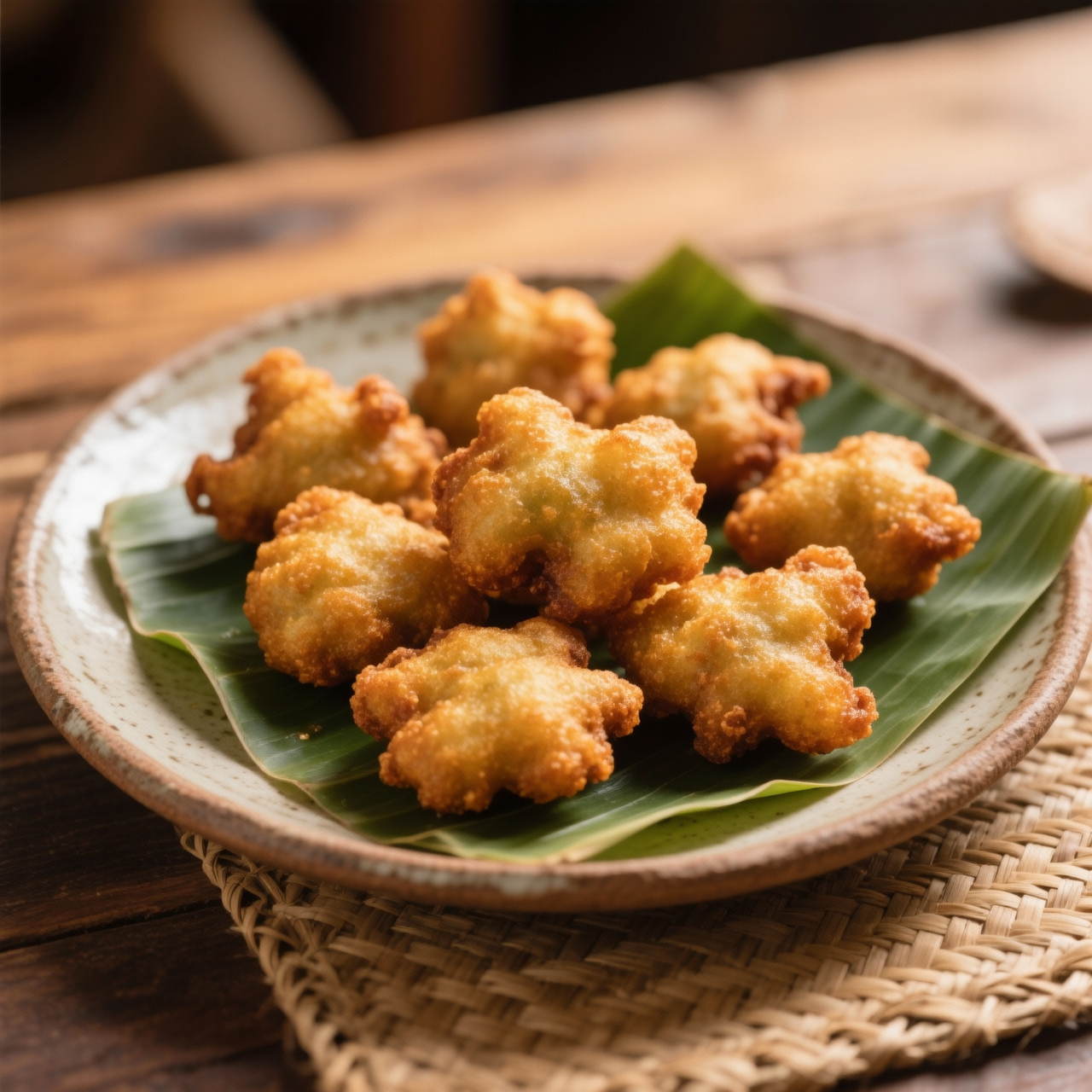
Akara (bean fritters)
When I first encountered akara on a bustling Lagos street, the contrast between its humble ingredients and its profound, nutty richness completely rewired how I think about breakfast. Born in Nigeria, these black-eyed pea fritters have long been a cornerstone of morning rituals across West Africa, traditionally served alongside pap or tucked into crusty bread. Yet, the modern supermarket version—those pale, air-fried nuggets masquerading as akara in the freezer aisle—often costs nearly twice as much as a bag of dried beans, delivering only a dense, overly salty paste that lacks the signature airy interior and crisp, golden shell. Making them from scratch is not just an act of culinary preservation; it’s a reclamation of texture and flavor that processed shortcuts simply cannot replicate. The magic lies in the friction of the blender and the patience of the soak. The most common pitfall is skipping the skin removal or rushing the aeration step. If the batter isn’t whipped until it floats on water, your fritters will emerge heavy and oil-logged rather than light and buoyant. I’ve learned that the real secret is a slow, deliberate blend with just enough ice water to emulsify, followed by a vigorous fold of air. Once you master the rhythm of dropping spoonfuls into gently simmering oil, you’re rewarded with a deeply satisfying, naturally vegan breakfast that freezes beautifully as both raw batter and cooked fritters. This isn’t just a recipe; it’s a small rebellion against the homogenized, packaged breakfast aisle, proving that true convenience doesn’t come from a plastic pouch but from understanding the quiet alchemy of beans, water, and heat.
Nutrition
| Per serving | Calories | Protein | Carbs | Fat | Sat fat | Fibre | Sugar | Sodium |
|---|---|---|---|---|---|---|---|---|
| beginner | 285kcal | 11g | 32g | 12g | 2g | 6g | 3g | 350mg |
| intermediate | 320kcal | 15g | 36g | 12g | 2g | 11g | 5g | 250mg |
| expert | 385kcal | 16g | 42g | 16g | 2g | 10g | 5g | 310mg |
Per serving · Ava-estimated — a guide, not a clinical figure.
- 300 gblack-eyed pea— soaked overnight, skins rubbed off, and rinsed thoroughly
- 150 gonion— peeled and roughly chopped
- 1 wholescotch bonnet pepper— stems removed, adjust quantity based on heat preference
- 5 gsalt— fine sea salt recommended
- 1000 mlvegetable oil— neutral oil with high smoke point for frying
This beginner approach strips away the traditional, labour-intensive peeling and hand-mashing steps while keeping the process entirely from scratch. Instead of spending hours rubbing skins off soaked beans, you’ll use split, pre-soaked black-eyed peas blended with a food processor until smooth. The key is maintaining a thick, airy batter that holds its shape when dropped into hot oil; if it spreads too thin, fold in a tablespoon of reserved bean water or blend a few extra peas to tighten it. Shop-bought akara or frozen bean fritter mixes typically run £4–6 per pack, yet they’re often loaded with stabilisers, excess sodium, and cheap refined oils that dull the natural earthy sweetness of the beans. Making it yourself costs a fraction of that, delivers a crisp exterior with a tender, steaming interior, and avoids artificial additives entirely. Watch your oil temperature closely—it should sit around 175°C (350°F)—and fry in small batches to prevent the pan from cooling. The batter freezes beautifully, so you can portion it into dollops on a tray, bag them once solid, and cook straight from frozen whenever a quick, protein-packed breakfast is needed.
Equipment
- Food processor or high-speed blender— pulse carefully to avoid over-processing into a dense paste
- Heavy-bottomed deep pan— holds at least five centimetres of oil for stable heat
- Digital cooking thermometer(optional)— ensures consistent 175°C frying temperature
- Slotted spoon— for safe turning and removal
Method
- 1
Drain soaked split black-eyed peas and transfer them to a food processor with chopped onion, scotch bonnet pepper, salt, and a tablespoon of water.
Keep the added liquid minimal so the batter stays thick.
blending~ 1 min - 2
Pulse and scrape the bowl sides until the mixture is completely smooth and paste-like.
Stop as soon as the texture is uniform to prevent a gummy result.
pureeing~ 2 min - 3
Whisk the batter vigorously by hand for two full minutes until it lightens in colour and visibly thickens.
This incorporates air and guarantees a fluffy interior.
aerating~ 2 minTricky bit - 4
Pour neutral oil into a heavy pan to a depth of five centimetres and heat until a thermometer reads 175°C.
If you lack a thermometer, steady bubbling around a wooden spoon handle means it is ready.
temperature control~ 5 minTricky bit - 5
Drop heaped tablespoon-sized scoops of batter into the hot oil, leaving space between each one.
Crowding the pan will cause the oil temperature to plummet and the fritters to absorb grease.
batch frying~ 1 min - 6
Turn the fritters gently every minute until they are evenly deep golden and crisp on all sides.
They should sound slightly hollow when tapped lightly with the spoon.
deep-frying~ 8 min - 7
Transfer the cooked akara to a wire rack set over a tray to drain excess oil.
Avoid paper towels to prevent the crust from steaming and softening.
resting~ 2 min - 8
Scoop any remaining raw batter onto a parchment-lined tray and freeze solid before bagging.
Cook directly from frozen by adding one extra minute to the frying time.
flash freezing~ 1 min
Cooking from frozen
Thaw raw batter overnight in the fridge, whip briefly to reincorporate air, then fry as usual.
Storage times are a guide — always use your judgement and store food safely.