
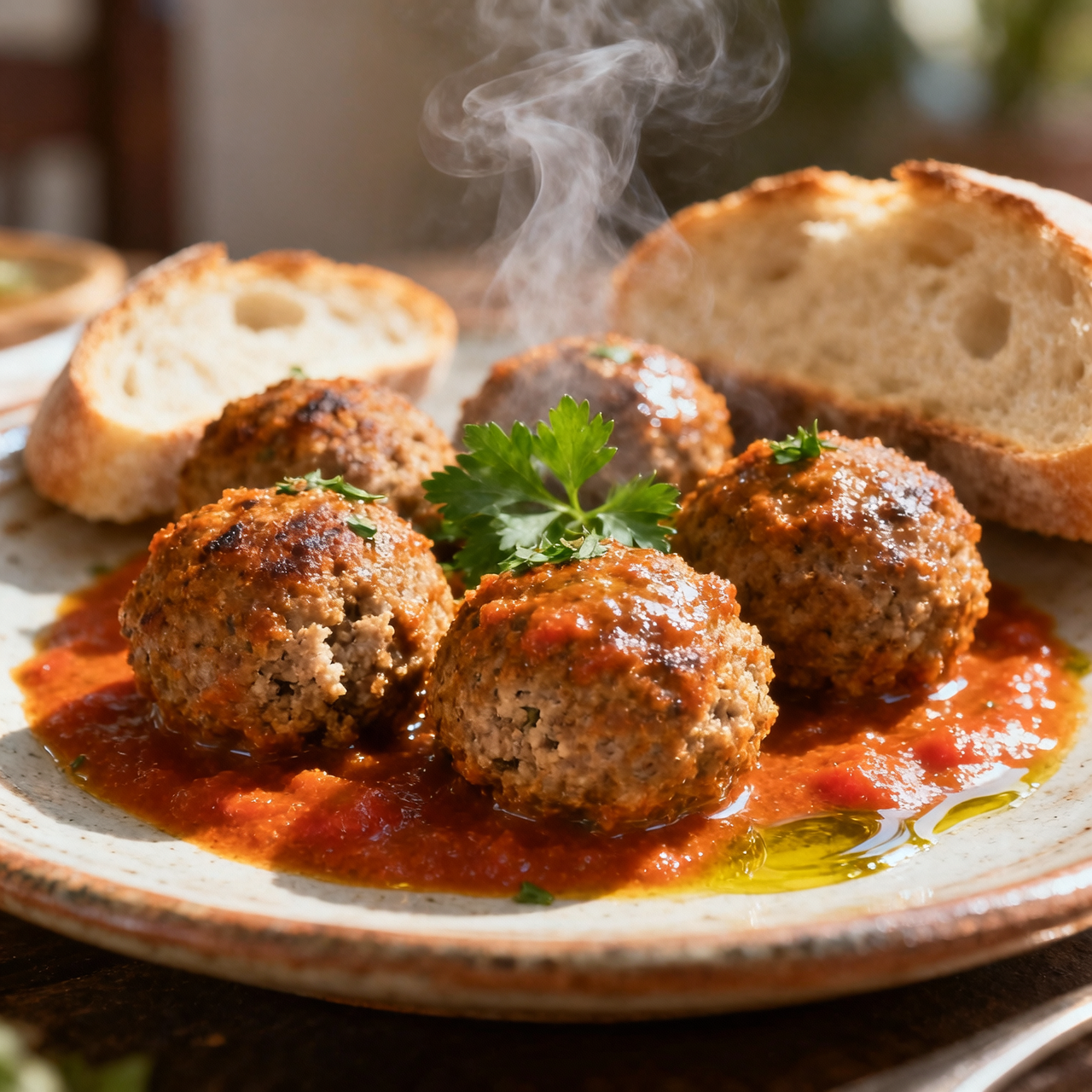
Albóndigas (Spanish meatballs)
I still remember the first time I tasted proper Spanish albóndigas in a tucked-away bodega in Madrid, and it completely dismantled my reliance on those frozen, plastic-wrapped meatball trays from the supermarket. Shop-bought versions run about four pounds a packet, but they are essentially salty, binder-heavy pucks swimming in a thin, tomato-sugar slurry that tastes of nothing but preservatives and haste. True albóndigas demand respect for their humble, rustic origins. Born from the Spanish countryside need to stretch precious meats and celebrate local harvests, they rely on a careful balance of minced pork and beef, bound not by industrial gums but by fresh eggs, day-old bread soaked in milk, and a generous hand of garlic and parsley. Why does this matter? Because when you build them from scratch, you are crafting a dish that breathes. The meat stays tender, the sauce deepens with slow-simmered onions, carrots, and a proper homemade sofrito, and the whole thing transforms into something deeply nourishing. The most common pitfall I see is overworking the meat mixture until it turns dense and rubbery, or skipping the initial sear that locks in those essential caramelised notes. Another trap is rushing the sauce, which leaves it tasting acidic and disjointed. Take your time. Mix gently, brown them in batches, and let everything marry in a low simmer. The result is a freezer-ready, batch-friendly masterpiece that costs less per portion than the supermarket equivalent while delivering a richness and authenticity no factory line could ever replicate.
Nutrition
| Per serving | Calories | Protein | Carbs | Fat | Sat fat | Fibre | Sugar | Sodium |
|---|---|---|---|---|---|---|---|---|
| beginner | 460kcal | 33g | 26g | 25g | 7g | 4g | 8g | 580mg |
| intermediate | 560kcal | 34g | 18g | 38g | 11g | 4g | 8g | 620mg |
| expert | 495kcal | 28g | 26g | 26g | 8g | 4g | 7g | 710mg |
Per serving · Ava-estimated — a guide, not a clinical figure.
- 250 gGround beef— Use standard fat content for moisture
- 250 gGround pork— Blended with beef for traditional flavor
- 1 mediumOnion— Finely diced, divided between meat and sauce
- 4 cloveGarlic— Minced, divided between meat and sauce
- 60 gBreadcrumbs— Dry, helps absorb juices and bind
- 1 largeEgg— Lightly beaten
- 15 gFresh parsley— Finely chopped
- 45 mlOlive oil— Extra virgin, for browning and sauce
- 30 gAll-purpose flour— For lightly dusting meatballs
- 400 gTomato passata— Smooth crushed tomatoes
- 100 mlDry white wine— For deglazing the pan
- 250 mlBeef broth— Low sodium preferred
- 1 pieceBay leaf— Remove before serving
- 8 gSalt— Fine sea salt
- 3 gBlack pepper— Freshly ground
This beginner-friendly version strips away intimidating techniques while keeping the dish entirely from scratch. Instead of relying on store-bought frozen packs loaded with fillers, preservatives, and hidden sugars that often cost over eight pounds for a mediocre tray, you will build authentic Spanish flavor using just pantry staples and fresh meat. Shop-bought versions are notoriously dry and rely on cheap extenders, whereas this method guarantees tender, juicy meatballs simmered in a bright, homemade tomato broth. The process focuses on gentle mixing to avoid toughening the meat, a quick sear to build a flavorful crust without crowding the pan, and a forgiving simmer that melds everything together without constant supervision. Watch for the meatball mixture to feel slightly sticky but not pasty; if it feels too wet, a quick five-minute chill will firm it up for easier shaping. Do not overwork the mixture or skip the resting step before shaping. This simplified approach delivers the comforting, rustic taste of a traditional Spanish kitchen in under an hour, proving that skipping the processed aisle actually saves you money and delivers vastly superior texture.
Equipment
- Large mixing bowl— wide enough to comfortably toss ingredients
- Heavy-bottomed skillet— cast iron or stainless steel retains heat well
- Baking sheet— lined with parchment for easy cleanup
- Measuring spoons(optional)— for precise seasoning balance
Method
- 1
Combine ground pork, ground beef, minced garlic, finely chopped parsley, and one beaten egg in a large bowl.
Keep ingredients cold to prevent fat from melting prematurely.
combining~ 2 min - 2
Sprinkle breadcrumbs and salt over the meat mixture and gently press them in until evenly distributed.
Stop mixing the moment the texture becomes uniform to avoid dense meatballs.
binding~ 2 minTricky bit - 3
Cover the bowl and refrigerate the mixture until the fat firms up.
Chilling makes rolling much cleaner and prevents breaking during cooking.
resting~ 10 min - 4
Roll the chilled mixture into uniform two-inch balls and place them on a prepared tray.
Wet your hands lightly to prevent sticking.
shaping~ 5 min - 5
Heat olive oil in a large skillet over medium-high heat and brown the meatballs in batches until deeply colored on all sides.
Do not crowd the pan or the meat will steam instead of sear.
searing~ 8 minTricky bit - 6
Transfer the browned meatballs to a plate, then pour crushed tomatoes and a splash of dry white wine into the hot pan.
Scrape the browned bits from the bottom to build sauce depth.
deglazing~ 2 min - 7
Return the meatballs to the pan, cover loosely, and simmer gently until cooked through and the sauce has thickened.
Maintain a low bubble; vigorous boiling will toughen the meat.
simmering~ 20 min
Cooking from frozen
Thaw overnight in the fridge, then warm gently on the stovetop with a splash of water to loosen the sauce.
Storage times are a guide — always use your judgement and store food safely.