
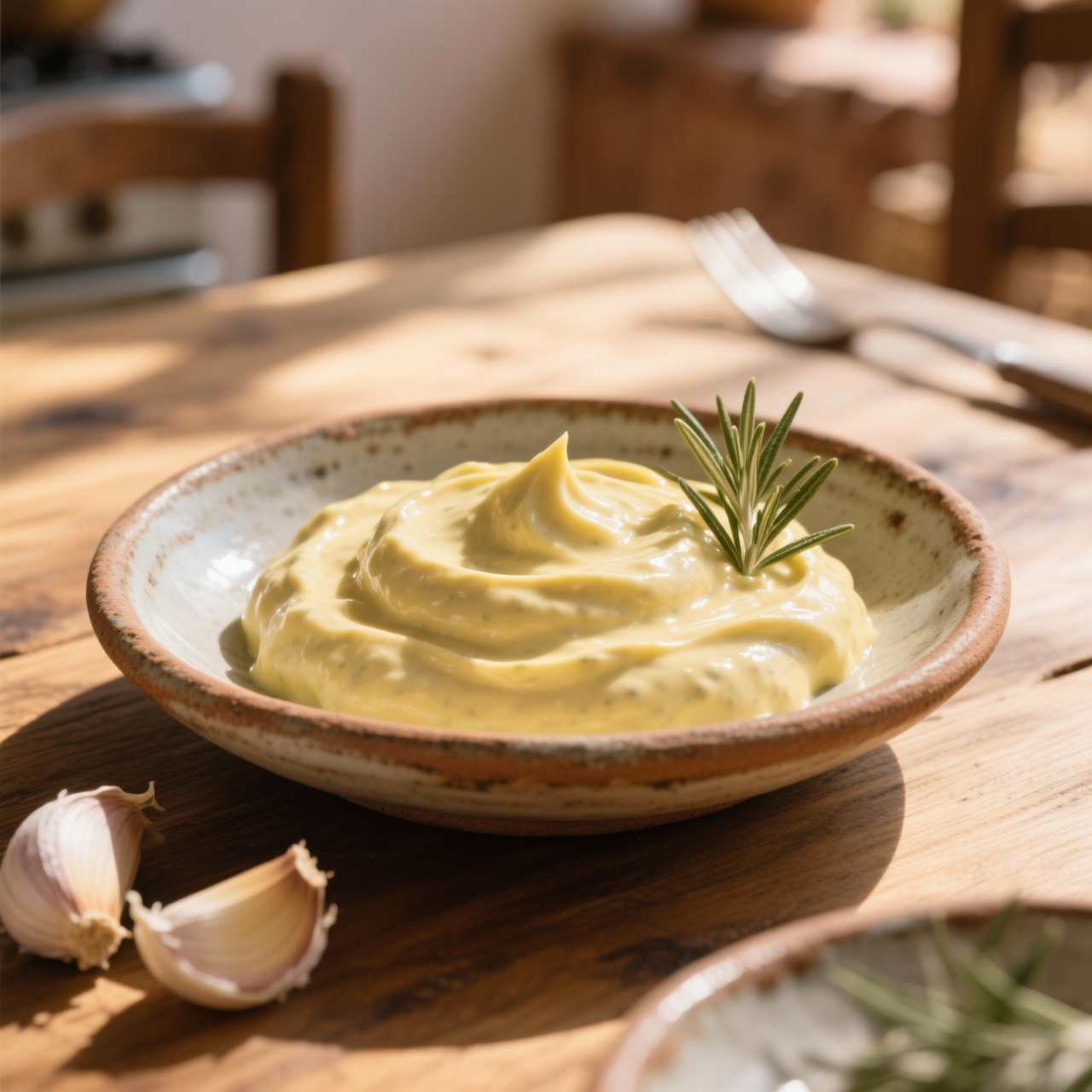
Alioli
I have always believed that the most profound culinary magic happens when patience meets simplicity, and nowhere is this truer than with alioli. Born along the sun-baked coasts of Catalonia, this emulsion is far more than a mere condiment; it is a testament to the Spanish philosophy of letting a few pristine ingredients speak for themselves. Historically, it was nothing more than crushed garlic and extra virgin olive oil, vigorously worked by mortar and pestle until the friction of the stone forced the two into a velvety union. That elemental origin matters deeply to me because it strips cooking back to its physical roots, demanding that we respect the ingredients rather than mask them. Yet, for all its apparent simplicity, alioli remains a notorious source of kitchen heartbreak. The most frequent pitfall is rushing the process. When the oil is poured too quickly or the garlic is not properly broken down into a smooth paste, the emulsion will simply fracture, leaving you with a slick, separated mess. Another common misstep is using a neutral oil instead of a robust, peppery olive oil, which not only compromises flavor but also destabilizes the delicate chemical balance needed to hold the droplets together. Temperature plays its quiet role too; ingredients that are too cold resist blending. When you finally coax it into that thick, glossy ribbon that coats a spoon, you are tasting centuries of Mediterranean craftsmanship. It reminds us that true richness does not require dairy or eggs, only a steady hand, sharp focus, and the courage to trust the slow, rhythmic grind.
Nutrition
| Per serving | Calories | Protein | Carbs | Fat | Sat fat | Fibre | Sugar | Sodium |
|---|---|---|---|---|---|---|---|---|
| beginner | 245kcal | 0g | 2g | 27g | 4g | 0g | 1g | 180mg |
| intermediate | 145kcal | 0g | 1g | 16g | 2g | 0g | 0g | 230mg |
| expert | 245kcal | 0g | 1g | 28g | 4g | 0g | 0g | 180mg |
Per serving · Ava-estimated — a guide, not a clinical figure.
- 30 ggarlic— peeled
- 250 mlextra virgin olive oil— room temperature for easier emulsification
- 3 gsea salt— fine grain
- 15 mllemon juice(optional)— freshly squeezed
This beginner-friendly approach skips the traditional mortar and pestle, relying instead on a reliable immersion blender or small food processor to guarantee a smooth, stable emulsion on your very first attempt. We will use a splash of aquafaba or a teaspoon of mild mustard as an emulsifier, which dramatically reduces the risk of your sauce splitting. The key is patience during the oil addition phase: start your blender before pouring, and introduce the neutral or mild olive oil in a barely-there stream while the blades are spinning. If the mixture looks too thin, pause, scrape down the sides, and continue slowly. Watch closely for the sudden thickening and pale color that signals success. Should your sauce accidentally break, simply start fresh with a single extra aquafaba in a clean bowl, then slowly whisk in the broken mixture until it comes together. Keep everything chilled before beginning, as cooler temperatures help the fats bind. Taste and adjust the lemon juice and salt at the end, then transfer to an airtight jar. You will have a bright, creamy condiment that tastes restaurant-quality without the stress.
Equipment
- Immersion blender or mini food processor— A tall, narrow cup works best for trapping oil and preventing splatter
- Measuring spoons— For precise emulsifier ratios
- Silicone spatula— For scraping down sides
Method
- 1
Mince the garlic cloves and place them in the base of your immersion blender cup or food processor bowl.
Using a microplane or garlic press yields a smoother texture with no sharp bits.
macerating~ 2 min - 2
Add the lemon juice, salt, and aquafaba or mustard to the garlic, then pulse briefly to combine.
Room temperature ingredients blend faster than cold ones.
combining~ 1 min - 3
Turn on the blender and slowly drizzle in the oil in a thin, steady stream until fully incorporated.
Do not rush this step, as pouring too quickly will break the emulsion.
emulsifying~ 5 minTricky bit - 4
Taste the sauce and adjust with extra salt or lemon juice, then transfer to a sealed container for serving.
Let it rest for ten minutes to allow the garlic flavor to fully bloom.
seasoning~ 2 min
Storage times are a guide — always use your judgement and store food safely.