
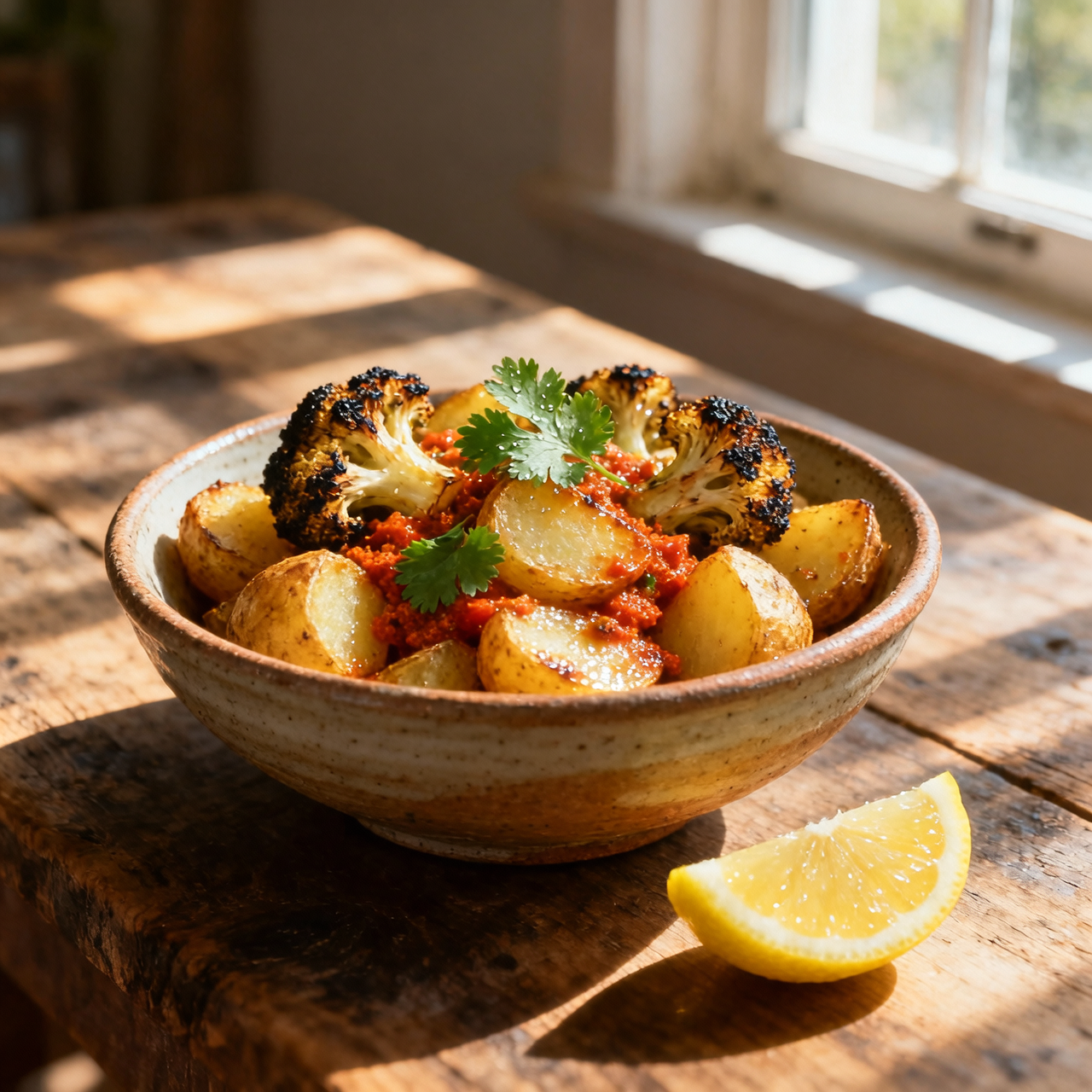
Aloo Gobi
I first learned to make aloo gobi in a cramped Delhi kitchen, watching my grandmother coax cauliflower and potatoes into something that tasted like monsoon comfort. This dish is not just a staple of North Indian home cooking; it is a quiet testament to how resourcefulness shapes flavor. Born from the need to stretch humble, seasonal vegetables into a satisfying meal, it carries the warmth of everyday resilience. What makes it matter to me is its deceptive simplicity. There is no heavy cream, no exotic spices, just the honest alchemy of cumin, turmeric, and slow-cooked earthiness that respects the vegetables rather than overpowering them. Yet, that simplicity is exactly where most cooks stumble. I have seen too many versions turn into a soggy, bitter mash because the cauliflower is overcooked before the spices bloom, or because the potatoes are cubed too large to soften evenly. The real secret lies in patience and moisture control. I always dry the florets thoroughly, toast the ground spices until they release their aroma without burning, and let the vegetables steam gently under a heavy lid before finishing uncovered to crisp the edges. I know that rushing the process steals the dish’s soul. When done right, aloo gobi is a celebration of restraint, where each bite balances earthy sweetness with a whisper of heat, reminding me that the most profound meals often begin with the most ordinary ingredients.
Nutrition
| Per serving | Calories | Protein | Carbs | Fat | Sat fat | Fibre | Sugar | Sodium |
|---|---|---|---|---|---|---|---|---|
| beginner | 270kcal | 6g | 31g | 15g | 2g | 7g | 5g | 835mg |
| intermediate | 270kcal | 6g | 31g | 15g | 2g | 7g | 5g | 835mg |
| expert | 270kcal | 6g | 31g | 15g | 2g | 7g | 5g | 835mg |
Per serving · Ava-estimated — a guide, not a clinical figure.
- 400 gpotato— peeled and cut into uniform 1-inch cubes
- 500 gcauliflower— trimmed and separated into bite-sized florets
- 60 mlvegetable oil— neutral high-heat oil like sunflower or grapeseed
- 150 gtomato— finely chopped, seeds removed
- 25 gginger root— peeled and finely grated
- 15 ggarlic clove— minced to a smooth paste
- 8 gcumin seed— whole, for dry roasting
- 8 gcoriander seed— whole, for dry roasting
- 3 gturmeric powder— freshly milled preferred
- 5 gkashmiri red chili powder— mild heat, vibrant color
- 1 gasafoetida resin— powdered form acceptable
- 8 gsalt— adjust to taste and humidity
- 15 gfresh cilantro— stems removed, leaves chopped
- 15 glemon— freshly squeezed juice only
This version removes the intimidation factor by leaning on reliable commercial shortcuts. Instead of dry-roasting and grinding a dozen whole spices, you will use a high-quality jarred curry or aloo gobi paste to build the flavor foundation instantly. The goal here is absolute confidence: you will learn to manage heat distribution in a single pan, recognize when the tomato base has properly cooked down, and master the crucial steam-and-cook phase that ensures tender vegetables without turning them to mush. Watch your heat closely during the initial sauté; too high and the commercial paste will scorch, too low and it will retain a raw, metallic edge. I have designed the steps to walk you through each transition, giving you clear visual and aromatic cues at every turn. Do not rush the covered cooking stage, as this is precisely where the cauliflower softens and the potatoes absorb the rich masala. You will end with a cohesive, deeply flavorful dish that proves intentional shortcuts can still deliver profound comfort.
Equipment
- large non-stick skillet— 12-inch diameter recommended
- spatula— silicone or wooden to prevent scratching
- tight-fitting lid— essential for the steaming phase
Method
- 1
Heat the vegetable oil in a large skillet over medium heat until it shimmers.
Oil should ripple but not smoke.
heating~ 1 min - 2
Add the cumin seeds to the hot oil and cook until they begin to sizzle.
Listen for a steady, gentle popping sound.
blooming~ 1 min - 3
Stir in the jarred aloo gobi paste and scrape the bottom of the pan continuously.
Keep heat at medium to prevent scorching.
sautéing~ 2 minTricky bit - 4
Add the chopped tomato and cook until it breaks down into a thick, uniform sauce.
Stir occasionally to prevent sticking.
reducing~ 5 min - 5
Fold in the cubed potato and cauliflower florets until every piece is evenly coated.
Do not overcrowd the pan.
folding~ 2 min - 6
Cover the skillet tightly and let the vegetables steam over medium-low heat until fork-tender.
Check halfway and give a gentle stir.
steaming~ 10 minTricky bit - 7
Remove the lid, stir in the fresh cilantro and lemon juice, and serve immediately.
Taste and adjust salt before plating.
finishing~ 1 min