
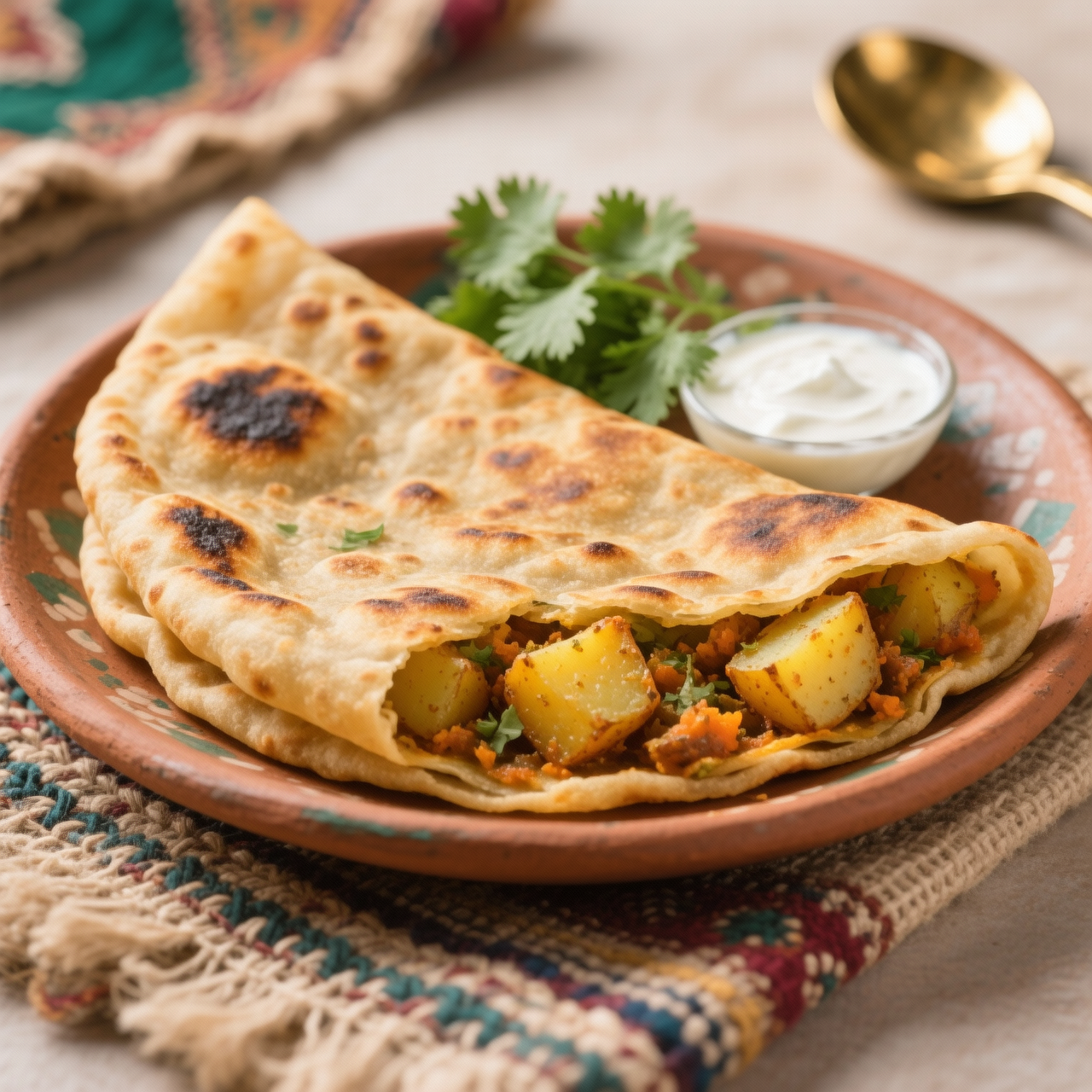
Aloo Paratha
I still remember the first time I watched my grandmother coax aloo paratha to life on a well-seasoned tawa, her hands moving with a rhythm that felt more like breathing than cooking. Born across the Punjab plains of Pakistan, this stuffed flatbread has always been the quiet anchor of a proper morning meal, transforming humble potatoes, toasted cumin, and fresh coriander into something deeply sustaining. Yet so many modern kitchens reach for the frozen aisle instead, grabbing those glossy plastic-wrapped discs that cost nearly eight dollars for six pieces. They taste like stale cardboard and cheap palm oil, their fillings chemically stabilized and their dough prone to cracking under a dry skillet. Making them from scratch matters precisely because it reclaims that lost texture and honest warmth. The most common pitfall I see is treating the dough like sandwich bread; it needs gentle resting, not aggressive kneading into toughness, or it will shrink and tear. Another frequent mistake is packing the spiced potatoes too tightly or skipping the initial dry sauté to evaporate their moisture, which inevitably leads to tragic leaks and steam burns. When you respect the hydration, seal the seams with a careful pleat, and roll with a light flour dusting, the flatbread puffs into a beautifully layered, golden pocket. This is not just breakfast; it is an exercise in patience, a direct line to a culinary tradition that refuses to be rushed or replaced by factory shortcuts, proving that the simplest ingredients will always outshine the processed alternative.
Nutrition
| Per serving | Calories | Protein | Carbs | Fat | Sat fat | Fibre | Sugar | Sodium |
|---|---|---|---|---|---|---|---|---|
| beginner | 380kcal | 10g | 52g | 14g | 3g | 5g | 2g | 420mg |
| intermediate | 410kcal | 11g | 58g | 15g | 4g | 7g | 5g | 420mg |
| expert | 460kcal | 9g | 68g | 15g | 5g | 6g | 2g | 490mg |
Per serving · Ava-estimated — a guide, not a clinical figure.
- 400 gwhole wheat flour— Preferably finely milled atta for a pliable dough
- 500 gpotato— Boiled, peeled and thoroughly mashed while warm
- 2 piecegreen chili— Finely chopped to distribute heat evenly
- 20 gfresh coriander— Leaves only, washed and finely chopped
- 5 gcumin seed— Dry roasted and coarsely crushed
- 3 gred chili powder— Adjust according to preferred spice level
- 3 gdry mango powder— Adds tanginess to balance the earthy potato filling
- 10 gsalt— Divide evenly between dough and filling
- 220 mlwater— Room temperature, added gradually during kneading
- 45 mlghee— Divided for pan frying and final brushing
This beginner version strips away the intimidation of traditional Aloo Paratha while keeping the process entirely from scratch. Instead of relying on expensive, preservative-laden frozen flatbreads from the supermarket—which often cost three times as much per box and feature soggy, under-seasoned fillings trapped in dough that cracks when reheated—we build everything fresh with pantry staples. The dough is mixed by hand and rested briefly for maximum pliability, while the spiced potato filling is boiled and mashed while the dough rests to streamline the timeline. You will learn a simplified gathering method that eliminates tricky pleating: simply place the filling on a rolled disc, pull the edges upward, pinch tightly, and gently press flat again. Watch for dough that feels too sticky; a light dusting of flour during rolling prevents tearing without toughening the crumb. Keep your pan at a steady medium heat to avoid burning the exterior before the potato warms through. The result is a soft, deeply spiced breakfast flatbread that freezes beautifully. Once cooked and cooled, stack them with parchment for quick weekday toasting, proving that homemade comfort easily beats any packaged shortcut.
Equipment
- Heavy-bottomed skillet or tawa— non-stick is forgiving for beginners
- Rolling pin— any sturdy cylindrical pin works
- Large mixing bowl— for dough and filling prep
- Pastry brush(optional)— optional for light oiling
Method
- 1
Combine whole wheat flour, a pinch of salt, a tablespoon of oil, and warm water in a bowl until a shaggy dough forms.
Add water gradually; dough should be soft but not sticky.
kneading~ 5 min - 2
Cover the dough and let it rest at room temperature while you prepare the filling.
Resting relaxes gluten and prevents shrinking during rolling.
resting~ 15 min - 3
Boil peeled potatoes until tender, then drain thoroughly and mash while still warm.
Excess moisture will tear the dough, so drain completely.
mashing~ 10 min - 4
Fold grated fresh ginger, minced garlic, toasted cumin seeds, ground coriander, red chili powder, chopped cilantro, and salt into the mashed potatoes.
Mix until uniform; taste for seasoning before stuffing.
seasoning~ 3 min - 5
Divide the dough and filling into four equal portions, then roll each dough portion into a small circle.
Keep edges slightly thinner than the center.
rolling~ 5 minTricky bit - 6
Place a filling portion in the center of each dough circle, pull the edges upward to meet at the top, and pinch tightly to seal.
Ensure no filling is exposed to prevent leaks during cooking.
stuffing~ 4 minTricky bit - 7
Dust the sealed ball with dry flour and gently roll it into a six-inch flatbread.
Use light, outward strokes; stop if you feel resistance to avoid tearing.
flattening~ 3 min - 8
Heat a dry skillet over medium heat and cook each paratha until brown spots form, then flip and press gently with a spatula.
Cook until the filling is heated through and the bread is crisp.
pan-toasting~ 6 min - 9
Transfer cooked parathas to a wire rack to cool completely before stacking with parchment for freezer storage.
Cooling prevents condensation that causes freezer burn.
cooling~ 10 min
Cooking from frozen
Thaw at room temperature for fifteen minutes, then reheat directly on a dry skillet until the exterior crisps and the center is piping hot.
Storage times are a guide — always use your judgement and store food safely.