
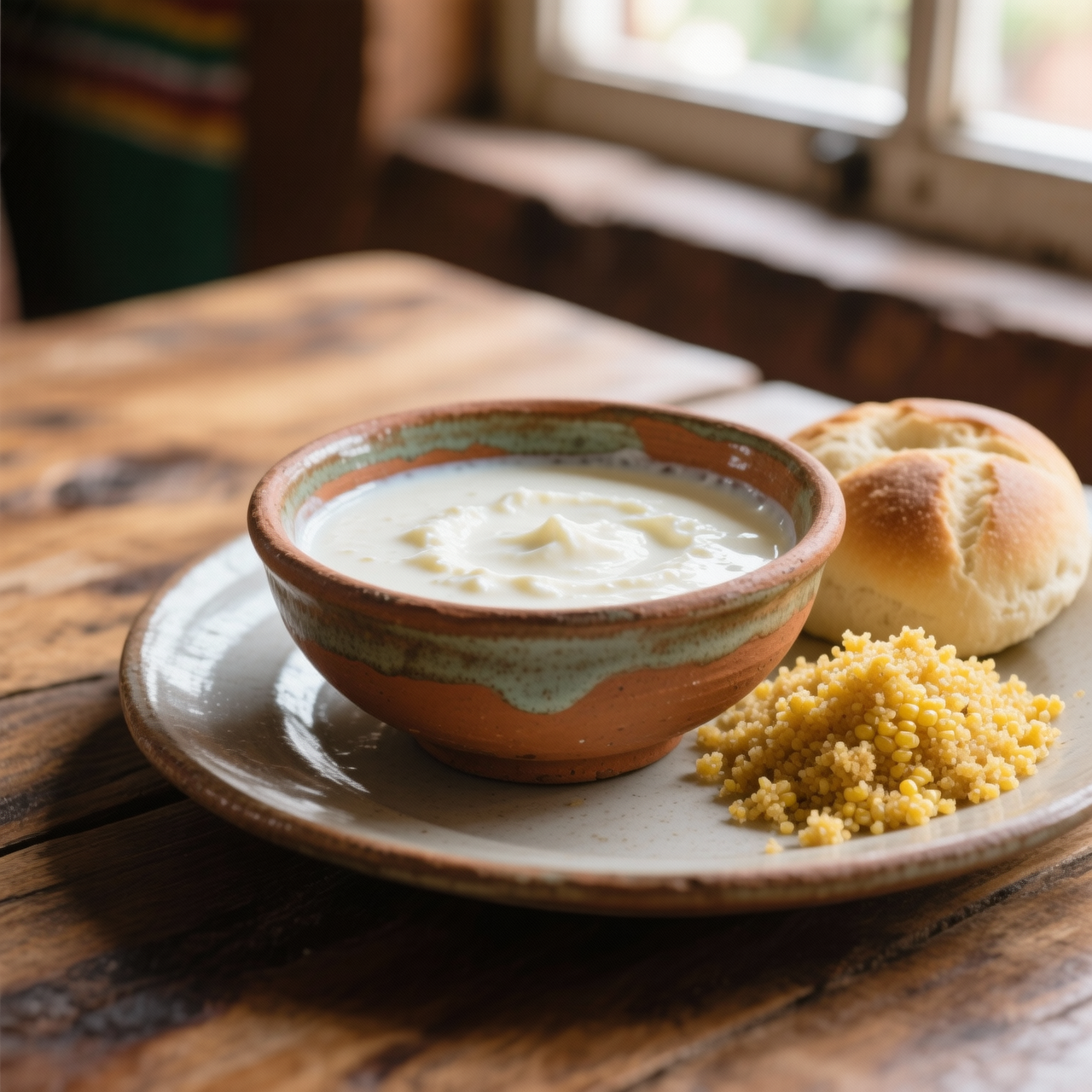
Amasi (cultured milk)
I grew up watching my grandmother leave fresh milk in a ceramic pot on the windowsill, trusting time and warmth to coax it into amasi. This isn’t just breakfast; it’s a quiet act of South African preservation that transforms ordinary dairy into something alive, probiotic, and deeply nourishing. Before I started making it myself, I’d buy those glossy, shelf-stable cartons from the supermarket, paying nearly five dollars for a fraction of the volume. The trouble with those commercial versions is that they’re often heavily pasteurized, loaded with thickeners like pectin and gelatin, and stripped of the wild, complex tang that makes true cultured milk sing. Making amasi from scratch strips away all that industrial padding. You only need fresh milk and a reliable starter culture, then patience. The pitfalls are surprisingly simple: rushing the fermentation with excessive heat kills the delicate bacteria, while using ultra-pasteurized milk leaves you with a stubbornly sweet liquid that refuses to separate properly. You also must sterilize your jar, because one rogue contaminant will sour the batch in the wrong direction. When done right, the milk naturally thickens, developing a clean, lemony acidity that coats your throat and wakes up your digestive tract. It’s a batch hero that replaces every overpriced, over-engineered dairy tub on your shelf, costing pennies per cup and delivering a living food that actually does what it promises. Once you taste the honest difference, there’s simply no going back to the supermarket aisle.
Nutrition
| Per serving | Calories | Protein | Carbs | Fat | Sat fat | Fibre | Sugar | Sodium |
|---|---|---|---|---|---|---|---|---|
| beginner | 155kcal | 8g | 12g | 8g | 5g | 0g | 11g | 95mg |
| intermediate | 150kcal | 8g | 11g | 8g | 6g | 0g | 9g | 100mg |
| expert | 155kcal | 8g | 11g | 8g | 5g | 0g | 10g | 100mg |
Per serving · Ava-estimated — a guide, not a clinical figure.
- 1000 mlwhole milk— Full-cream or pasteurized milk works best; avoid ultra-high temperature (UHT) milk as it may hinder natural fermentation.
Store-bought amasi often carries a premium price and hides behind a wall of thickeners, stabilizers, and hidden sugars that dull the natural lactic tang and strip away live probiotics. This beginner-friendly method strips the process down to two pure ingredients: fresh whole milk and a spoonful of plain, live-culture yogurt. Instead of relying on traditional gourds or temperature-controlled chambers, you will use a simple glass jar and the gentle warmth of your kitchen to achieve a reliable ferment. Watch the milk temperature closely; too hot and you will kill the active cultures, too cold and the bacteria will stay dormant. Lukewarm is the sweet spot—think comfortably warm to the touch, like a baby’s bath. The active work takes barely fifteen minutes, but patience does the heavy lifting over the next twelve to twenty-four hours. Keep the jar undisturbed in a draft-free cupboard or an oven with the light left on. You will know it is ready when it sets into a soft, spoonable curd with a bright, clean acidity. Once thickened, a quick whisk restores a smooth, pourable consistency perfect for pouring over granola, blending into smoothies, or simply drinking straight from the glass.
Equipment
- Clean 1-litre glass jar— sterilise with boiling water before use
- Kitchen thermometer(optional)— helps verify the safe lukewarm zone
- Whisk— wooden spoon works fine
Method
- 1
Pour fresh whole milk into a saucepan and gently heat until small bubbles form around the edges.
Do not let it boil vigorously or it will scald.
scalding~ 5 minTricky bit - 2
Remove the pan from the heat and let the milk cool until it reaches a lukewarm temperature.
Aim for 40°C or comfortably warm to the touch.
tempering~ 10 minTricky bit - 3
Transfer the milk to the sterilised glass jar and whisk in the live-culture plain yogurt.
Stir thoroughly to distribute the starter evenly.
inoculating~ 2 min - 4
Cover the jar loosely with a breathable cloth and place it in a warm, draft-free spot.
An oven with only the pilot light or bulb turned on works perfectly.
fermenting~ 720 min - 5
Check the jar after twelve hours and whisk gently until the texture is smooth and pourable.
It should taste bright and tangy with a soft, custard-like body.
agitating~ 1 min
Cooking from frozen
Thaw slowly in the refrigerator overnight and whisk vigorously to re-emulsify any natural separation before serving.
Storage times are a guide — always use your judgement and store food safely.