
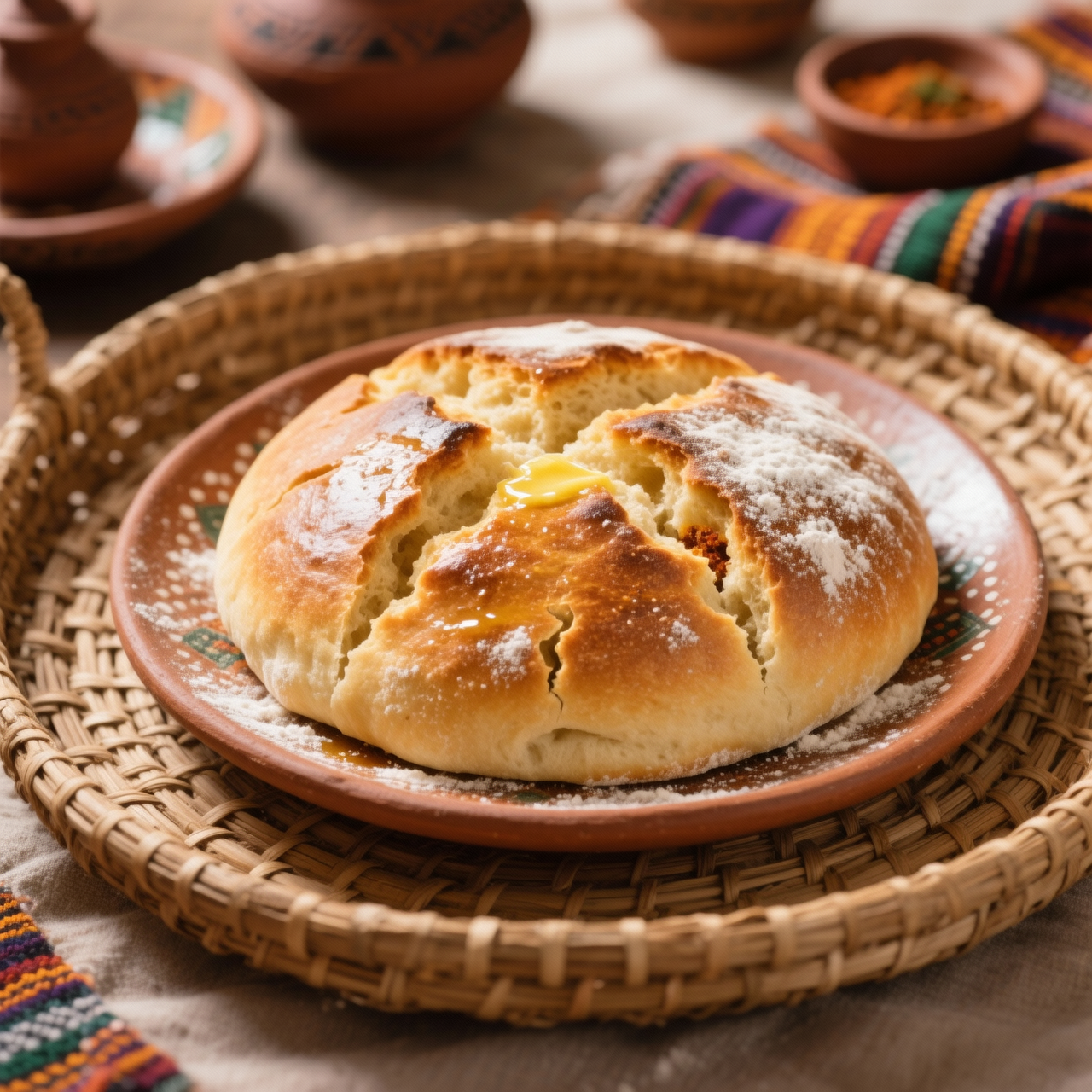
Ambasha (spiced festival bread)
Ambasha is a traditional Ethiopian spiced bread, often baked for holidays like Easter or weddings. It is richly decorated with intricate patterns. I love making it because it replaces the bland, plastic-wrapped supermarket loaves that cost around four dollars and are packed with preservatives and dough conditioners that kill any real flavor or texture. When you tear into a fresh ambasha, the crumb should be tender, slightly dense, and fragrant with toasted nigella seeds, cardamom, and sometimes a whisper of ginger. The dough’s beauty lies in its patience. A common pitfall is rushing the fermentation or overworking the dough, which turns it tough rather than giving it that signature pillowy chew. Another mistake is using too much flour during shaping, which dries out the crust and ruins the delicate surface scoring. You have to let the dough rest properly in a warm spot, trusting that slow rise. The decorative patterns aren’t just for show; they’re a cultural signature, traditionally made with a sharp knife or skewer to mark the loaf for sharing. I’ve learned to handle the dough gently, keeping my hands lightly oiled rather than dusted with extra flour, so the crust stays soft. Baking it at a moderate heat with a tray of water underneath mimics the steam of a traditional clay oven, giving you that glossy, deeply golden finish. It’s a bread that demands respect for time and tradition, but the payoff is a centerpiece that makes any supermarket alternative look and taste like cardboard. You’ll never want to go back to factory-sliced once you’ve pulled your own from the oven.
Nutrition
| Per serving | Calories | Protein | Carbs | Fat | Sat fat | Fibre | Sugar | Sodium |
|---|---|---|---|---|---|---|---|---|
| beginner | 225kcal | 7g | 38g | 4g | 1g | 2g | 1g | 290mg |
| intermediate | 215kcal | 6g | 38g | 4g | 1g | 2g | 2g | 165mg |
| expert | 350kcal | 9g | 60g | 10g | 2g | 3g | 4g | 480mg |
Per serving · Ava-estimated — a guide, not a clinical figure.
- 500 gall-purpose flour— Sifted before measuring
- 300 mlwarm water— Approximately 38°C or 100°F
- 7 gactive dry yeast— Check expiration date for reliable rising
- 30 ggranulated sugar— Helps activate yeast and balances spices
- 8 gfine sea salt
- 45 mlvegetable oil— Neutral-flavored variety works best
- 3 gground cardamom— Freshly ground preferred
- 2 gground cinnamon
- 1 gground turmeric— Provides traditional golden hue
- 15 gnigella seed— Reserved for decorative topping and scoring
This beginner-friendly Ambasha strips away the intimidating braiding and long ferments of traditional recipes, delivering the same festive, spiced loaf with a straightforward, single-rise method. Instead of relying on expensive supermarket flatbreads or pre-made dough—which cost four to six dollars, contain dough conditioners, and lack authentic depth—this version builds real flavor from scratch using pantry staples and whole spices. The dough is forgiving: a quick hand-knead develops just enough gluten for a tender crumb without demanding a windowpane test. Watch your water temperature carefully; it should feel like a warm bath to keep the yeast active without killing it. The signature decorative scoring is simplified to a shallow cross and edge slashes, which bloom beautifully in the oven. Brushing the top with a light oil glaze before baking ensures a soft, golden crust rather than a hard shell. Let the loaf cool completely before slicing to prevent gummy interiors. This approach guarantees a reliable, celebration-ready centerpiece with zero shortcuts, proving that authentic festival bread can be approachable, economical, and deeply satisfying on your very first try.
Equipment
- Large mixing bowl— holds at least 3 quarts for comfortable rising
- Rimmed baking sheet— line with parchment for easy release
- Pastry brush(optional)— silicone or natural bristle
Method
- 1
Dissolve instant yeast and a pinch of sugar in one cup of warm water (105°F/40°C) and let sit until frothy.
Water should feel like a warm bath to protect the yeast.
proofing~ 5 min - 2
Whisk all-purpose flour, ground fenugreek, turmeric, nigella seeds, salt, and vegetable oil in a large bowl.
Sifting the spices prevents bitter clumps.
dry mixing~ 1 min - 3
Pour the yeast liquid into the flour and stir until combined, then knead on a lightly floured surface for five minutes.
A slightly tacky dough is normal; add only a dusting of flour to prevent sticking.
kneading~ 5 minTricky bit - 4
Transfer the dough to an oiled bowl, cover tightly with a damp cloth, and let rise in a warm spot until doubled.
Check by pressing a knuckle into the dough; if it holds an indent, it is ready.
bulk fermentation~ 60 min - 5
Place dough on a parchment-lined baking sheet, shape into a nine-inch round, and score a cross with parallel slashes.
Cut only halfway through the dough to allow proper oven spring.
scoring~ 2 min - 6
Rest uncovered for twenty minutes, then bake at 375°F (190°C) until deeply golden and hollow-sounding when tapped.
Rotate the pan halfway through for even browning.
baking~ 35 min
Cooking from frozen
Thaw at room temperature for two hours, then refresh in a 180°C oven for five minutes.
Storage times are a guide — always use your judgement and store food safely.