
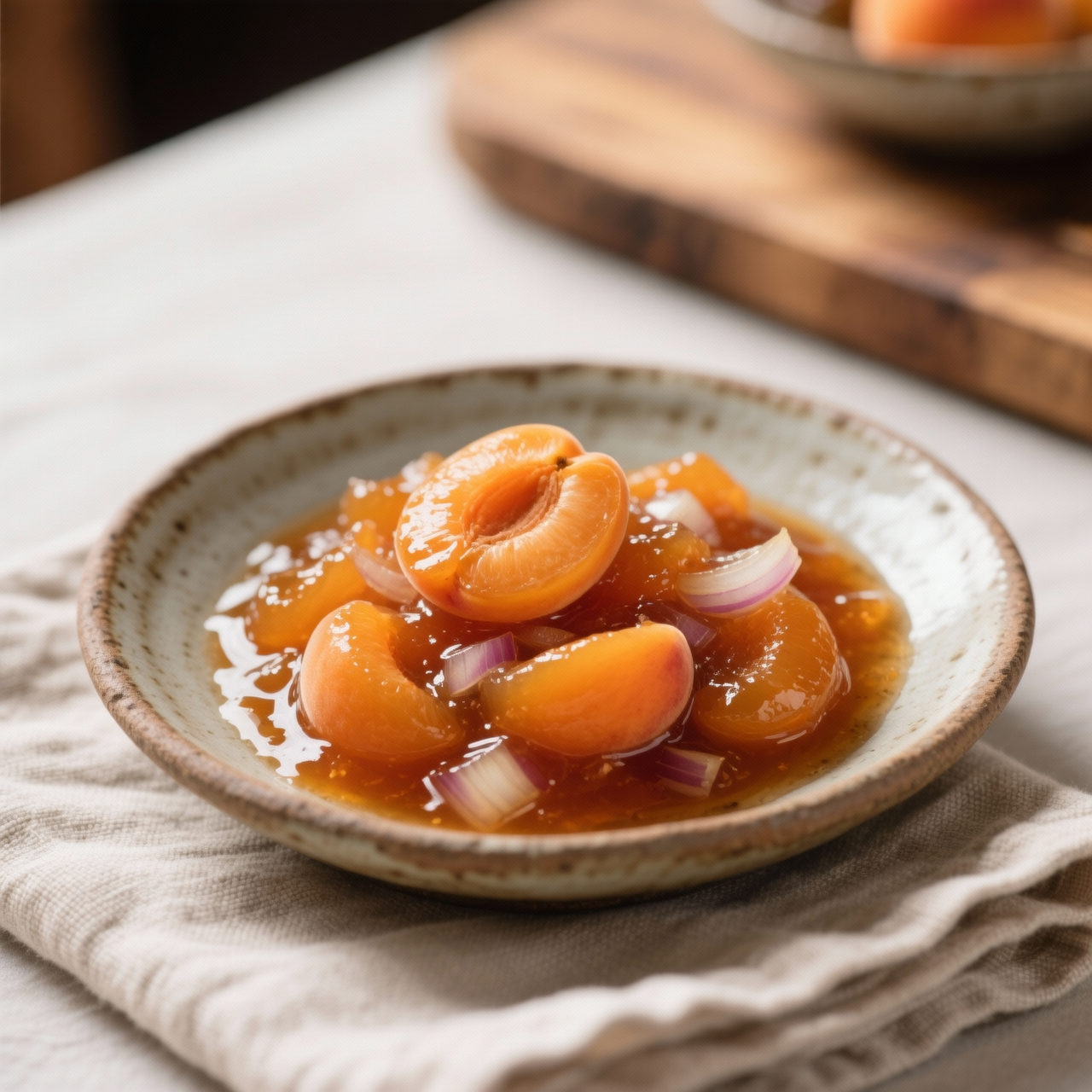
Apricot blatjang
Apricot blatjang is one of those quiet triumphs of the South African pantry, born from the Cape Malay kitchens where sweet, sour, and spice have always danced in perfect tension. I have always loved how it bridges the gap between preserve and relish, carrying the sun-drenched sweetness of dried apricots into a slow-cooked reduction that deepens with every simmer. Traditionally, it is a celebration of preservation, a way to capture seasonal bounty in vinegar and brown sugar so it can enliven winter braais or sit alongside rich, spiced meats. What makes it matter to me is not just its heritage, but its everyday versatility. A spoonful can lift a simple lentil stew, cut through sharp cheeses, or transform a plain roast into something deeply comforting. Yet, it is surprisingly easy to misstep. The most common pitfall is rushing the simmer, which leaves the apricots tough and the flavors disjointed rather than melded into a glossy, cohesive whole. Another trap is the vinegar balance. Too much and it becomes a sharp pickling brine, too little and it lacks the necessary backbone to preserve and brighten. I always toast the spices lightly before adding them, and I never skip the resting period. Blatjang asks for patience. It needs at least a day in the jar for the acidity to soften and the dried fruit to fully surrender its sugars to the syrup. When you give it that time, the result is a deeply aromatic, jewel-toned condiment that feels both ancient and utterly essential.
Nutrition
| Per serving | Calories | Protein | Carbs | Fat | Sat fat | Fibre | Sugar | Sodium |
|---|---|---|---|---|---|---|---|---|
| beginner | 68kcal | 1g | 16g | 0g | 0g | 2g | 14g | 115mg |
| intermediate | 210kcal | 2g | 45g | 4g | 1g | 3g | 38g | 140mg |
| expert | 115kcal | 1g | 29g | 1g | 0g | 3g | 26g | 120mg |
Per serving · Ava-estimated — a guide, not a clinical figure.
- 500 gdried apricot— halved and pitted
- 2 mediumbrown onion— finely diced
- 200 gbrown sugar— ensure vegan-certified
- 250 mlapple cider vinegar
- 20 gfresh ginger— peeled and grated
- 5 gmustard seed
- 1 piececinnamon stick
- 4 piecewhole clove
- 8 gsea salt
- 150 mlwater— for initial simmer
This beginner-friendly approach strips away the traditional spice-toasting and soaking steps, relying instead on high-quality jarred apricot preserves and a ready-made spice blend to deliver authentic Cape Malay flavor without the fuss. Because dried fruit can easily scorch or stick when sugar and vinegar are involved, the focus here is entirely on gentle, controlled heat and consistent stirring. You will learn to recognize the exact moment the chutney reaches a jam-like consistency by checking how it coats the back of a wooden spoon. The recipe is intentionally forgiving, allowing you to adjust sweetness or acidity to your personal preference during the final ten minutes of simmering. Pay close attention to the pot’s edges, as bubbling sugar tends to caramelize quickly; a quick wipe-down with a damp paper towel prevents unwanted bitterness. Once the mixture thickens and turns glossy, remove it from the heat and let it rest undisturbed. This cooling phase is crucial, as it allows the fruit fibers to fully hydrate and the flavors to meld. The result is a reliable, pantry-ready condiment that pairs beautifully with cold cuts, cheeses, or roasted vegetables, giving you the confidence to tackle more complex preserves later.
Equipment
- Heavy-bottomed saucepan— Essential for even heat distribution to prevent sugar scorching
- Wooden spoon— For gentle, non-scratching stirring
- Clean glass jars— Dry and ready for immediate storage
Method
- 1
Combine the jarred apricot preserves, finely diced onion, brown sugar, and apple cider vinegar in your heavy-bottomed saucepan over medium heat.
Use a wide pan so steam escapes efficiently.
combining~ 2 min - 2
Stir continuously until the sugar completely dissolves and the mixture begins to bubble gently around the edges.
Lower heat immediately if bubbles become aggressive.
dissolving~ 3 minTricky bit - 3
Fold in the pre-measured spice blend, whole mustard seeds, and grated ginger until evenly distributed throughout the syrup.
The heat will instantly release the aromatics.
blooming~ 2 min - 4
Reduce the heat to low and simmer uncovered, scraping the bottom every five minutes, until the mixture thickens enough to coat the back of a spoon.
Draw a line with your spoon; if it holds, it is ready.
reducing~ 20 minTricky bit - 5
Remove the pan from the heat and let the chutney cool completely in the pot before transferring it to clean jars for storage.
Cooling prevents condensation and extends shelf life.
resting~ 30 min
Cooking from frozen
Thaw overnight in the refrigerator, stir thoroughly to restore texture, and serve cold or warm gently.
Storage times are a guide — always use your judgement and store food safely.