
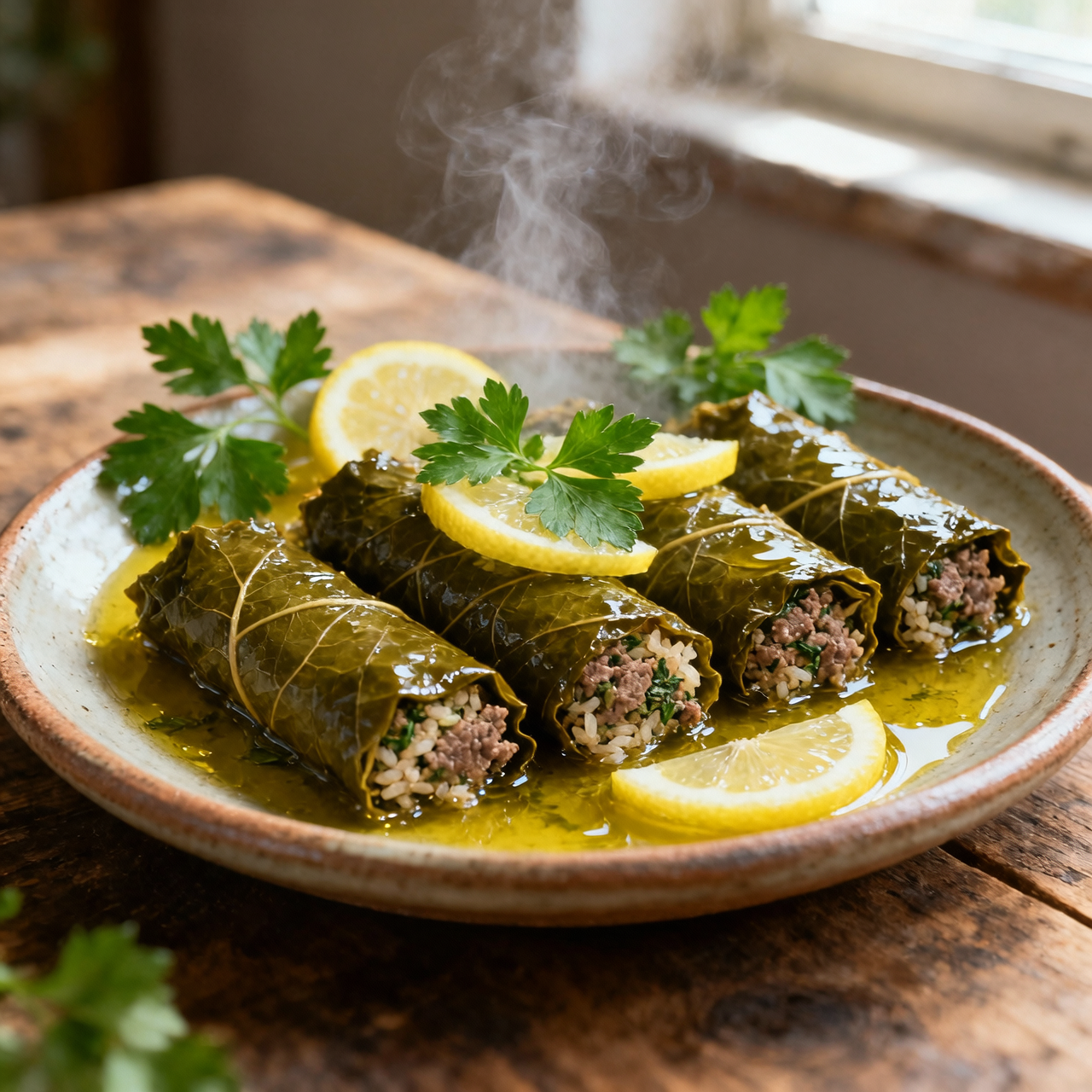
Armenian Dolma
When I first learned to make Armenian dolma, I quickly realized it is less about following a strict formula and more about honoring a quiet, centuries-old rhythm. The dish traces its roots to the fertile valleys of the Armenian highlands, where families preserved summer harvests by stuffing tender grape leaves and hollowed vegetables with spiced rice and meat. To me, dolma is an edible archive of resilience, carrying the warmth of communal kitchens where generations of cooks gathered, their hands moving in practiced unison to fold, roll, and arrange. It matters deeply because it represents more than sustenance; it embodies hospitality, patience, and the unspoken language of care passed down through tactile memory. Yet, so many home cooks stumble on the same pitfalls. I have seen rushed hands pack the filling too tightly, causing the leaves to split or the rice to burst. Others skip the essential resting period after cooking, missing how the flavors deepen only when the pot is left undisturbed. And there is the frequent mistake of boiling instead of gently simmering, which turns delicate leaves into rubbery shreds. True dolma demands a slow, deliberate pace. You must taste the filling for balance before wrapping, layer the leaves with intention, and let time do its quiet work. When done right, each bite unfolds with the earthy tang of preserved leaves, the savory richness of seasoned grain, and the subtle sweetness that only patience can coax out. That is the heart of it.
Nutrition
| Per serving | Calories | Protein | Carbs | Fat | Sat fat | Fibre | Sugar | Sodium |
|---|---|---|---|---|---|---|---|---|
| beginner | 680kcal | 27g | 49g | 42g | 13g | 3g | 3g | 1650mg |
| intermediate | 680kcal | 27g | 49g | 42g | 13g | 3g | 3g | 1650mg |
| expert | 680kcal | 27g | 49g | 42g | 13g | 3g | 3g | 1650mg |
Per serving · Ava-estimated — a guide, not a clinical figure.
- 200 gGrape leaf— brined, rinsed and patted dry
- 250 gGround lamb— freshly ground, 80/20 fat ratio
- 250 gGround beef— lean cut
- 200 gMedium-grain rice— uncooked, rinsed until water runs clear
- 150 gYellow onion— finely minced
- 30 gTomato paste— concentrated, double-strength
- 30 gFlat-leaf parsley— leaves and tender stems, finely chopped
- 10 gSpearmint— finely chopped
- 10 gGarlic clove— microplaned
- 60 mlExtra virgin olive oil— for mixing and drizzling
- 45 mlFresh lemon juice— strained
- 10 gFine sea salt— divided use
- 3 gBlack pepper— coarsely cracked
- 2 gCinnamon— Ceylon preferred
- 1 gAllspice— freshly toasted
This version is engineered for your first confident attempt, prioritizing clarity and reliability over tradition. We rely on jarred tomato paste and pre-rinsed brine leaves to eliminate prep friction, letting you focus entirely on the rolling mechanics. The key here is maintaining consistent tension without tearing the delicate veins; a gentle, snug roll is all you need. I have structured the steps to walk you through portioning, sealing, and arranging the dolma in a single pot, so they cook evenly without shifting. Watch for a steady, quiet simmer rather than a rolling boil, which can rupture the leaves and scatter rice into the broth. The resting phase is non-negotiable here, as it allows the shortcut ingredients to fully integrate and the rice to finish absorbing liquid without turning gummy. If your rolls feel tight but yield slightly to pressure, you are on track. Trust the low heat, resist the urge to lift the lid, and you will achieve a cohesive, restaurant-style result on your very first try.
Equipment
- Large mixing bowl— wide rim for easy hand mixing
- Heavy-bottomed pot— non-stick or stainless steel works
- Ceramic plate— slightly smaller than pot diameter
Method
- 1
Combine the ground lamb, ground beef, rinsed rice, minced onion, tomato paste, chopped parsley, mint, microplaned garlic, olive oil, half the salt, black pepper, cinnamon, and allspice in a large mixing bowl.
Use your hands to ensure even distribution without overworking the meat.
kneading~ 2 min - 2
Lay a single grape leaf vein-side up on a clean cutting board and place a heaping tablespoon of filling near the stem end.
Trim any tough stems from the leaves before starting.
portioning~ 0 min - 3
Fold the bottom of the leaf over the filling, tuck the sides inward, and roll upward into a tight cylinder.
Snug but not constricting; the rice needs room to expand.
folding~ 3 minTricky bit - 4
Arrange the rolled dolma seam-side down in a single layer inside the heavy-bottomed pot.
Pack them closely to prevent shifting during the simmer.
nesting~ 2 min - 5
Pour the lemon juice and enough warm water to reach halfway up the sides of the rolls, then cover and bring to a gentle simmer over medium-low heat.
Do not let the liquid boil vigorously.
simmering~ 5 minTricky bit - 6
Reduce the heat to low, cover tightly, and cook until the rice is tender and the leaves are silky.
Check at forty minutes for doneness and liquid level.
braising~ 40 min