
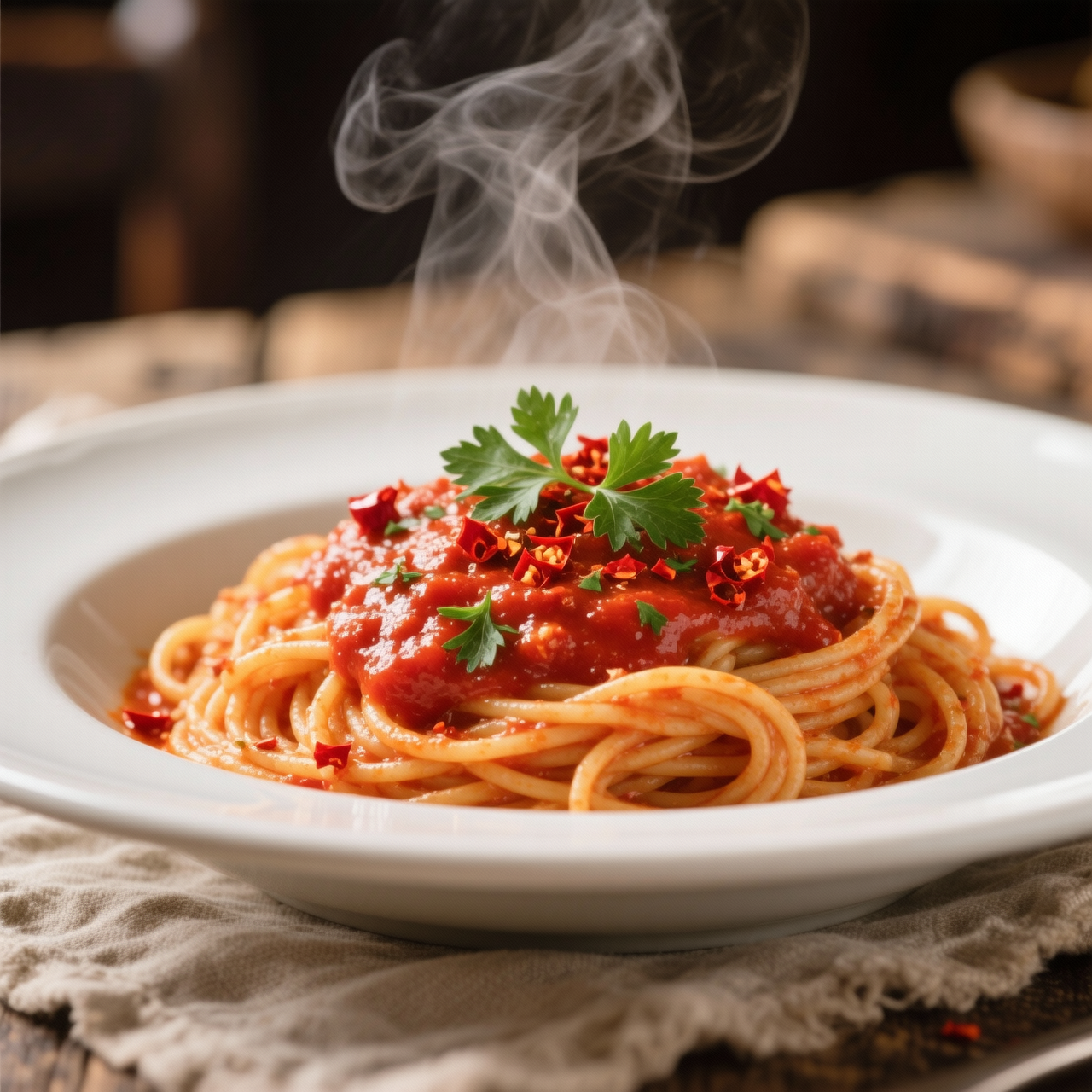
Arrabbiata
I’ve always believed that the soul of Roman cooking lives in its simplicity, and arrabbiata is a perfect testament to that philosophy. Born in the bustling trattorias of Rome’s Trastevere district, the name literally means “angry,” a playful nod to the fiery kick of dried red chilies that sets this sauce apart from its sweeter tomato counterparts. What makes it matter isn’t just its bold heat, but how it teaches patience. You start with good-quality canned tomatoes, letting them break down slowly while garlic and chili flakes bloom in olive oil. The real magic happens when you resist the urge to rush the simmer; that slow reduction concentrates the acidity and deepens the chili’s warmth without burning it. Too often, I see home cooks drown the pan with water, toss in fresh herbs too early, or crank the heat to speed things up, only to end up with a flat, scorched, or overly sharp sauce that lacks balance. Arrabbiata isn’t meant to be complicated. It’s a study in restraint. You let the tomatoes speak, the oil carry the heat, and the salt tie it all together. Because it’s entirely plant-based by default, it bridges generations of dietary habits while staying fiercely traditional. When you get it right, you don’t just taste the ingredients—you taste the rhythm of the kitchen. That’s why I always double the batch. It’s a freezer staple that waits patiently for a weeknight, thawing quickly and reheating with the same vibrant intensity it had on day one. Master the simmer, respect the heat, and you’ll never look at a jar of tomatoes the same way again.
Nutrition
| Per serving | Calories | Protein | Carbs | Fat | Sat fat | Fibre | Sugar | Sodium |
|---|---|---|---|---|---|---|---|---|
| beginner | 158kcal | 2g | 13g | 11g | 2g | 3g | 7g | 460mg |
| intermediate | 135kcal | 2g | 11g | 10g | 2g | 3g | 7g | 290mg |
| expert | 185kcal | 2g | 9g | 15g | 3g | 3g | 6g | 380mg |
Per serving · Ava-estimated — a guide, not a clinical figure.
- 60 mlextra virgin olive oil— Use a good quality oil for base flavor
- 4 clovegarlic clove— Thinly sliced
- 5 gdried red chili flake— Adjust amount based on desired heat level
- 800 gcanned crushed tomato— San Marzano variety recommended for authentic flavor
- 10 gfresh basil leaf— Roughly torn and stirred in at the end
- 8 gfine sea salt— Adjust to taste during cooking
- 3 ggranulated sugar(optional)— Optional to balance tomato acidity
This beginner-friendly approach strips away the intimidation of traditional Italian cooking while keeping the bold, spicy soul of arrabbiata intact. Instead of building a base from scratch, we lean on reliable shortcuts like high-quality jarred crushed tomatoes and pre-minced garlic, which dramatically cut down on prep time and eliminate knife anxiety. The real focus here is managing heat and building confidence. You will learn how to properly bloom dried chili flakes in oil without burning them, a simple trick that unlocks their smoky depth before the tomatoes go in. We also simmer gently rather than aggressively boil, preventing splatters and giving you time to adjust salt and acidity at the end. Watch for the moment the oil starts to separate slightly around the edges; that is your visual cue that the sauce has reduced enough and the raw tomato flavor has mellowed. Keep a wooden spoon handy for gentle stirring, and remember that low, steady heat is your best friend. By the time you finish this version, you will understand exactly how to balance heat, salt, and sweetness, giving you a reliable foundation to experiment with fresher ingredients later.
Equipment
- Heavy-bottomed pan— non-stick or stainless steel works well
- Wooden spoon— ideal for scraping corners and gentle stirring
- Measuring cups and spoons(optional)— keeps ratios consistent for first attempts
Method
- 1
Heat the olive oil in a heavy-bottomed pan over medium-low heat.
The oil should shimmer but never smoke.
warming~ 1 min - 2
Add the dried chili flakes and pre-minced garlic to the warm oil.
Stir constantly for thirty seconds to release aromatics without burning.
blooming~ 1 minTricky bit - 3
Pour in the jarred crushed tomatoes and stir to combine everything evenly.
The pan will hiss loudly as the liquid hits the hot oil.
combining~ 1 min - 4
Reduce the heat to low and let the sauce simmer uncovered.
Stir every few minutes until small oil beads appear at the edges.
simmering~ 20 min - 5
Taste the finished sauce and adjust with salt or a pinch of sugar as needed.
Sugar cuts sharp acidity; add it gradually in quarter-teaspoon increments.
seasoning~ 1 min
Cooking from frozen
Thaw overnight in the fridge or gently warm in a saucepan over low heat, adding a splash of water if it thickens too much.
Storage times are a guide — always use your judgement and store food safely.