
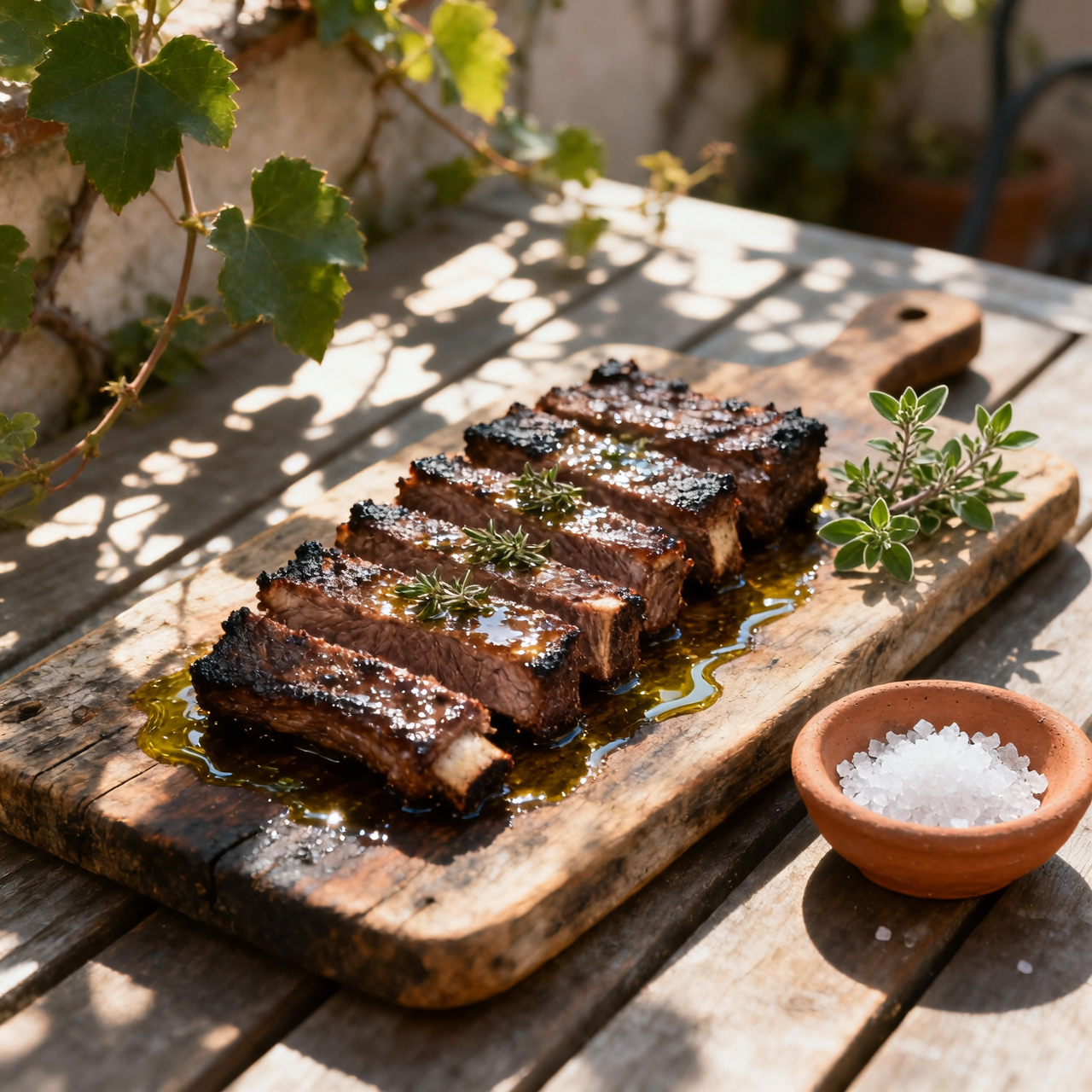
Asado de Tira
I first fell in love with asado de tira not in a polished restaurant, but around a crackling fire on the outskirts of Buenos Aires, where the scent of rendering fat and slow-burning quebracho wood told a story older than any cookbook. This cut, known in English as short ribs but revered here by its bone-in cross-section, is the quiet backbone of the Argentine parrilla. It matters because it refuses to be rushed. Unlike the flash-seared steaks that dominate modern grilling, asado de tira demands patience, respect for the flame, and an understanding that meat is not just cooked but coaxed. The origins stretch back to the colonial gauchos, who mastered the art of open-fire roasting with whatever tools they had, turning tough, economical cuts into tender, deeply flavorful feasts that still anchor family Sundays and national celebrations. Yet, for all its simplicity, it’s terribly easy to ruin. The most common mistake I see is treating it like a quick grill: cranking the heat too high, flipping it constantly, or marinating it with acidic sauces that mask the beef’s natural sweetness. True asado de tira needs only coarse salt, a low and steady fire built to glowing embers, and the discipline to let it rest. When you get it right, the collagen melts into silk, the bone loosens with a gentle pull, and the crust cracks just enough to reveal a rosy, fragrant interior. It’s not just a meal; it’s a lesson in listening to the fire and trusting time.
Nutrition
| Per serving | Calories | Protein | Carbs | Fat | Sat fat | Fibre | Sugar | Sodium |
|---|---|---|---|---|---|---|---|---|
| beginner | 690kcal | 36g | 2g | 59g | 21g | 1g | 0g | 1350mg |
| intermediate | 690kcal | 36g | 2g | 59g | 21g | 1g | 0g | 1350mg |
| expert | 690kcal | 36g | 2g | 59g | 21g | 1g | 0g | 1350mg |
Per serving · Ava-estimated — a guide, not a clinical figure.
- 1500 gbeef short rib— cross-cut asado de tira style, 2 to 3 cm thick
- 15 gcoarse sea salt— flaky or kosher style for even crust formation
- 4 clovesgarlic clove— fresh and firm
- 10 gfresh oregano— leaves only, stems discarded
- 10 gsmoked paprika— Spanish pimentón dulce preferred
- 5 gblack peppercorn— whole, freshly cracked
- 60 mlextra virgin olive oil— robust, cold-pressed
- 30 mlred wine vinegar— aged, with balanced acidity
This version strips away the intimidation factor while honoring the core flavors of a classic Argentine grill. Instead of grinding whole spices or managing a live wood fire, you will rely on a reliable gas or charcoal setup with straightforward temperature control. The herb and spice components are combined quickly using a mortar and pestle or even a sturdy fork to create a rough paste that coats the meat evenly. I recommend using a high-quality jarred chimichurri base if you are short on time, though the listed fresh oregano and garlic will still deliver a bright, aromatic profile when simply mashed. The key to success at this level is patience during the resting phase and avoiding the temptation to move the meat constantly. Watch for sudden flare-ups caused by dripping fat, and keep a spray bottle of water nearby to tame them without extinguishing your heat source. Do not rush the initial sear; let the salt draw out moisture naturally so a proper crust forms. By following these guarded steps, you will achieve a tender, deeply savory result on your very first attempt, proving that authentic flavor does not require a professional kitchen.
Equipment
- Gas or charcoal grill— two-zone setup required
- Instant-read thermometer— digital probe preferred
Method
- 1
Preheat your grill or heavy skillet to medium-high heat.
Aim for a steady 200°C zone.
preheating~ 10 min - 2
Combine the salt, garlic, oregano, paprika, and pepper into a rough paste using a sturdy fork.
Jarred paste is an acceptable substitute here.
mashing~ 3 min - 3
Pat the beef short ribs completely dry and press the herb mixture firmly onto every surface.
Moisture prevents proper crust formation.
patting~ 2 minTricky bit - 4
Place the meat over indirect heat and cook until the internal temperature reaches fifty-five degrees Celsius.
Rotate only once halfway through.
indirect_grilling~ 30 minTricky bit - 5
Remove the ribs from the heat, brush lightly with olive oil and vinegar, and rest for fifteen minutes before slicing.
Slice against the grain for maximum tenderness.
resting~ 15 min