
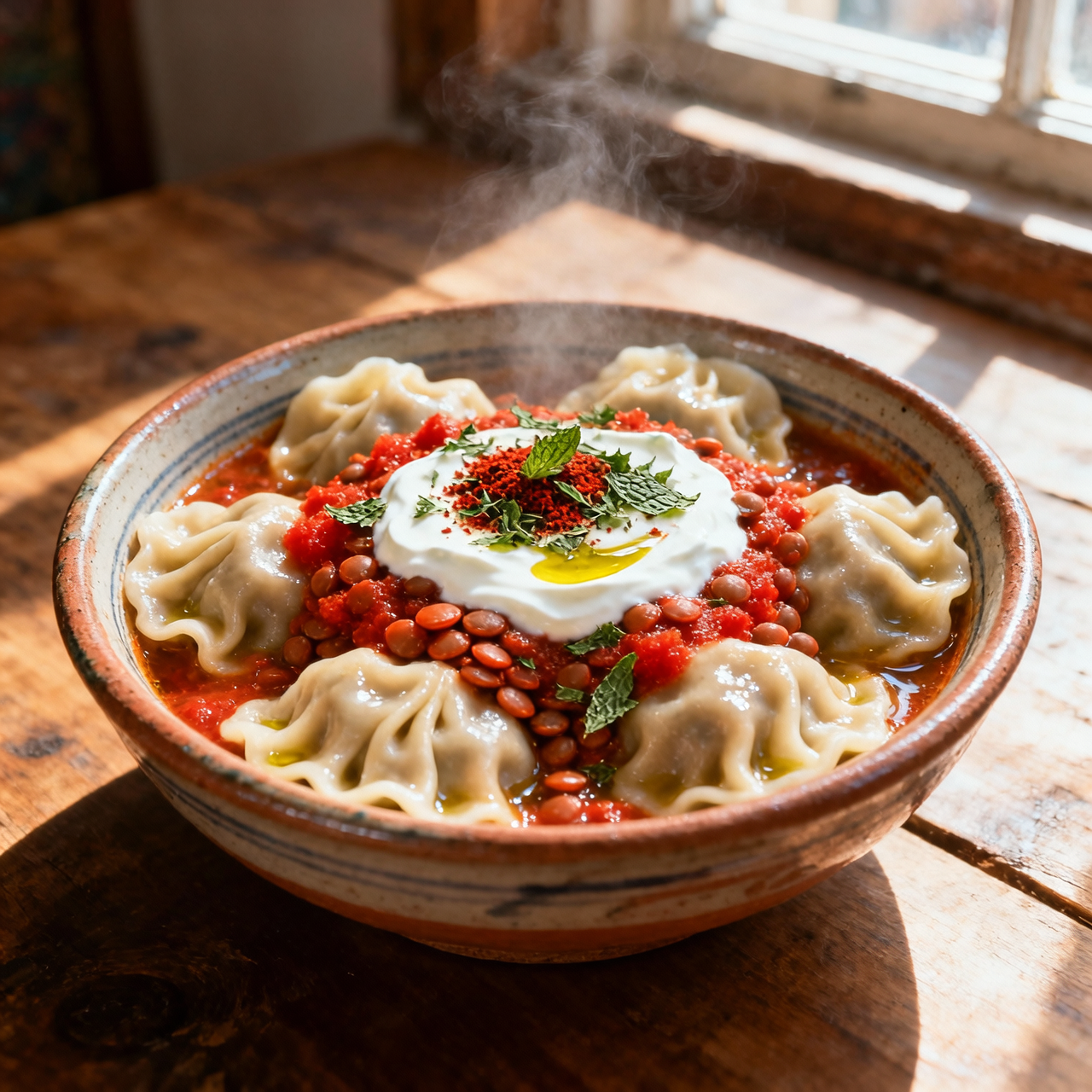
Aushak
I first learned to make aushak in a cramped Kabul kitchen where the air was thick with scallion steam and quiet laughter. To outsiders, it might simply look like dumplings, but in my family, it is a quiet declaration of resilience and hospitality. Originating in the bustling streets of Kabul, aushak has always been a vegetarian cornerstone, born from times when meat was a luxury but flavor was non-negotiable. The dish matters because it captures the Afghan spirit of gathering; it is slow, deliberate, and deeply communal. Every folded pocket of dough carries the memory of generations who understood that patience yields the most profound comfort. Yet, so many stumble at the very beginning. The most common pitfall is rushing the dough, which leads to tough, impenetrable wrappers that refuse to hold the delicate leek and herb filling. Others drown the dumplings in violently boiling water, causing them to split and bleed their precious contents into the broth. And then there is the sauce, a careful balance of tangy yogurt, earthy split peas, and bright dried mint that must never be boiled, lest it curdle and lose its cooling silkiness. When I make it now, I treat the process like a meditation, rolling each wrapper thin as parchment, sealing the edges with a practiced pinch, and warming the sauce low and slow. It is not merely a meal to me; it is a bridge to the past, a reminder that some of the most beautiful things in life require time, care, and a steady hand.
Ingredients
- 400 gAll-purpose flour— high-protein preferred
- 500 gLeek— white and pale green parts only
- 300 gPlain yogurt— full-fat, strained
- 15 gGarlic— fresh cloves
- 10 gDried mint— crushed, not powdered
- 60 gTomato paste— concentrated
- 150 gYellow split pea— rinsed and soaked
- 120 mlNeutral cooking oil— vegetable or sunflower
- 5 gGround turmeric— whole berries ground fresh or pre-milled
- 10 gSalt— fine sea salt
- 200 mlWater— room temperature
Method
Pick a skill levelThis version prioritizes accessibility without sacrificing the soul of the dish. We lean on trusted jarred tomato paste and a straightforward dough method to remove the intimidation factor. The key is managing moisture: leeks release a lot of water, so give them ample time in the pan until they collapse and sweeten. Do not rush the boiling stage; a rolling boil will tear your dumplings apart. Keep the water at a gentle simmer and only drop them in once it’s calm. Seal your dumplings firmly, but avoid overstuffing—less is more for a first attempt. The jarred paste already contains balanced acidity and salt, so taste the topping before adding extra seasoning. Rest the dough fully; skipping this step makes it snap back and tear during rolling. Watch the dumplings closely once they hit the water. When they rise to the surface, they are nearly done. This path gives you the confidence to understand the rhythm of Aushak, building a foundation you can refine later.
Method
- 1
Combine flour and salt in a large bowl.
Add water one tablespoon at a time.
kneading~ 5 minTricky bit - 2
Cover the dough with a damp cloth and let it rest on the counter.
Do not skip this step.
resting~ 20 min - 3
Heat half the oil in a large skillet over medium heat.
Pan should be hot before adding vegetables.
heating~ 1 min - 4
Sauté the chopped leeks until soft and translucent.
Stir frequently to prevent browning.
sweating~ 8 min - 5
Stir in the jarred tomato paste, turmeric, and split peas.
Taste before adding extra salt.
simmering~ 10 minTricky bit - 6
Divide the dough into four equal pieces and roll each into a thin circle.
Keep unused dough covered.
rolling~ 4 min - 7
Place a spoonful of the leek filling in the center of each circle and pinch the edges tightly to seal.
Moisten edges slightly with water.
pleating~ 10 minTricky bit - 8
Bring a large pot of water to a gentle boil and cook the dumplings until they float.
Maintain a steady, low simmer.
poaching~ 5 min - 9
Whisk together the yogurt, minced garlic, and a pinch of salt in a small bowl.
Let the mixture sit for five minutes.
emulsifying~ 2 min - 10
Arrange the cooked dumplings on plates, top with the sauce, drizzle with yogurt, and garnish with dried mint.
Serve immediately while hot.
plating~ 3 min
This iteration strips away the shortcuts and asks for mindful technique. You will handle the dough from scratch, learning to read its texture rather than relying on measurements. The leeks are blanched first to remove their sharp, sulfurous edge, then slowly sweated until they melt into a sweet foundation. Pay close attention to blooming the tomato paste and turmeric in the hot oil; this step unlocks their full aromatic potential and deepens the sauce’s color. Dough hydration is critical here—add water slowly until the mixture feels soft but not sticky, then knead until it springs back when pressed. Rolling requires patience; aim for uniform thinness so the wrapper cooks evenly without gummy centers. When sealing, ensure no air pockets remain, as trapped steam will rupture the dumpling in the pot. Maintain a steady, gentle simmer for poaching. The yogurt sauce is tempered by mashing the garlic with salt first, which breaks down its pungency and allows it to blend seamlessly. This version yields a balanced, restaurant-style texture and flavor.
Method
- 1
Whisk flour and salt in a bowl, then slowly incorporate room temperature water while stirring to form a cohesive mass.
Use a scale for precision.
kneading~ 7 minTricky bit - 2
Transfer the dough to a lightly floured surface and work it until smooth and elastic.
The dough should pass the windowpane test.
developing gluten~ 10 min - 3
Wrap the dough tightly and let it rest at room temperature to relax the gluten network.
Resting prevents shrinkage during rolling.
resting~ 30 min - 4
Blanch the chopped leeks in boiling water for two minutes, then drain thoroughly to remove excess moisture.
Press gently with paper towels.
blanching~ 4 minTricky bit - 5
Heat oil in a heavy skillet over medium-low heat and sauté the drained leeks until deeply caramelized.
Low and slow builds sweetness.
sweating~ 9 min - 6
Add tomato paste and turmeric to the pan, stirring constantly to bloom the spices in the fat.
Fry until the raw smell disappears.
blooming~ 3 minTricky bit - 7
Fold in the pre-soaked split peas and simmer until tender and the sauce coats the back of a spoon.
Adjust liquid as needed.
reducing~ 15 min - 8
Roll the rested dough into thin sheets and cut uniform rounds using a bowl as a guide.
Aim for two-millimeter thickness.
cutting~ 5 min - 9
Fill each round with leeks, fold, and press the edges firmly to create a tight, crimped seal.
Eliminate all air pockets.
crimping~ 8 minTricky bit - 10
Drop the dumplings into simmering salted water and cook until tender, then drain and toss lightly with oil.
Water should be barely bubbling.
poaching~ 5 min - 11
Mash the garlic with a pinch of salt, fold it into the yogurt, and whisk until completely smooth.
A microplane yields the best texture.
tempering~ 3 min - 12
Plate the dumplings, spoon the split pea mixture over them, and finish with a generous drizzle of garlic yogurt and a sprinkle of crushed dried mint.
Balance acidity and richness.
finishing~ 3 min
This is Aushak as it is crafted in heritage kitchens and refined Afghan restaurants, where time and technique replace convenience. The dough undergoes a long cold fermentation, which breaks down starches, strengthens the gluten network naturally, and yields a wrapper that is impossibly tender yet structurally sound. You will feel the difference immediately when rolling; cold-rested dough stretches without snapping back. The leek filling requires precise moisture management. We sweat them slowly to concentrate their natural sugars, then fold them into a deeply reduced tomato and split pea base. The critical moment comes when blooming the paste: you must fry it until the oil visibly separates, a sign that the raw acidity has cooked out and the umami has fully developed. Sealing is an exercise in muscle memory. Each pleat must be uniform and tightly compressed to withstand the gentle poach. The final flourish—the mint oil—is not merely garnish. It is infused at low heat until the leaves crackle, then strained to leave behind a vibrant, non-bitter essence. Trust your hands. Read the dough, watch the oil, and respect the simmer. The result is a dish of profound balance.
Method
- 1
Combine flour, salt, and water, mixing until hydrated, then knead vigorously until a tight, glossy dough forms.
Hydration level determines final texture.
kneading~ 15 min - 2
Place the dough in an oiled bowl, cover tightly, and refrigerate overnight to develop complex flavor and extensibility.
Cold rest is non-negotiable for this method.
cold fermentation~ 60 minTricky bit - 3
Remove the dough and allow it to come to room temperature before dividing into precise, equal portions.
Cold dough will tear when rolled.
tempering~ 30 min - 4
Sweat finely minced leeks in a heavy-bottomed pan with a pinch of salt, stirring until they collapse completely.
Draw out moisture slowly.
sweating~ 12 min - 5
Grind whole turmeric, then heat oil until shimmering, add tomato paste and the freshly ground spice, and fry until the oil separates.
Listen for the sizzle to change pitch.
frying~ 4 minTricky bit - 6
Incorporate the split peas, add a measured amount of water, and simmer gently until the sauce achieves a velvety, cohesive texture.
Skim impurities for clarity.
simmering~ 20 min - 7
Roll each dough portion paper-thin using a tapered rolling pin, aiming for near-translucency at the edges.
Rotate constantly to maintain symmetry.
rolling~ 10 minTricky bit - 8
Fill, fold, and seal with precise, overlapping pleats, ensuring a watertight closure.
Uniform pleats cook evenly.
pleating~ 7 minTricky bit - 9
Poach the dumplings in barely simmering, heavily salted water, gently agitating to prevent sticking until they float.
Salt concentration should be two percent.
poaching~ 6 min - 10
Infuse the remaining oil with dried mint over low heat until fragrant, then immediately strain to prevent bitterness.
Do not let the mint smoke.
infusing~ 3 minTricky bit - 11
Whip the yogurt with grated garlic until aerated and silky, seasoning to exact taste.
Temperature matters; keep it cool.
whipping~ 4 min - 12
Assemble the dish with deliberate placement: dumplings first, sauce pooled strategically, yogurt swirled, and mint oil drizzled at the peak.
Visual contrast is part of the experience.
plating~ 4 min