
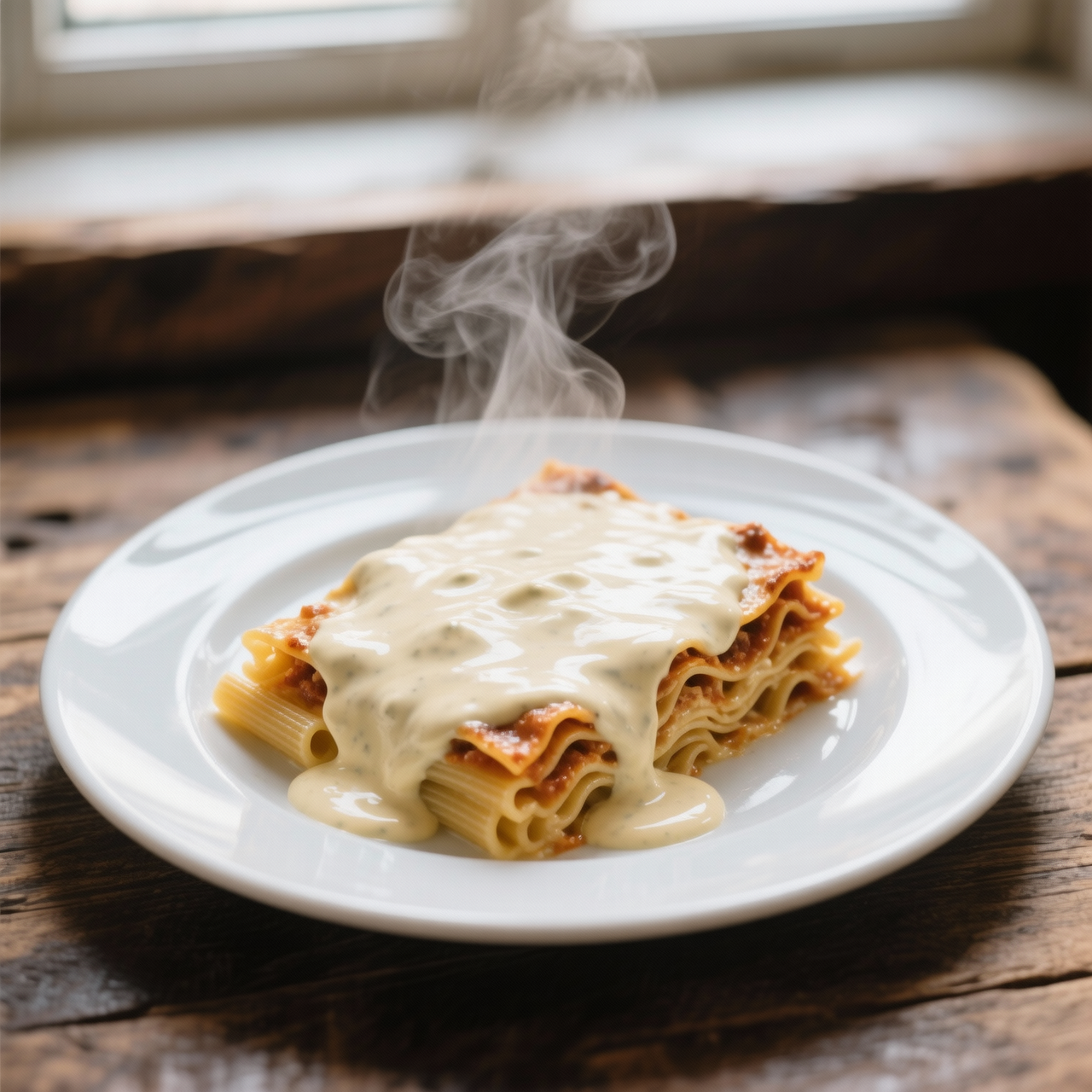
Béchamel
When I first learned to coax milk, butter, and flour into a velvety harmony, I realized that béchamel is less a mere sauce and more a quiet architect of comfort food. Though its name is firmly French, born in the royal kitchens of the seventeenth century, it found its truest calling across the Alps in Italy, where it became the indispensable binder for baked pastas like lasagna alla bolognese. I treat it as a foundational language in my kitchen, one that teaches patience and precise heat management. The magic lies in the roux; you must whisk fat and flour until they lose their raw edge, then slowly introduce warm milk, allowing the starches to swell without seizing. I have ruined more pans than I care to admit by rushing this step, only to end up with a gritty, separated mess that refuses to coat a wooden spoon. The most common pitfall, beyond inadequate whisking, is applying heat that is too aggressive, which scorches the bottom and leaves a bitter aftertaste. You must coax it, not force it. A gentle simmer and constant attention transform those humble ingredients into something profoundly luxurious. When done right, it carries a subtle nuttiness and a silken mouthfeel that elevates every dish it touches, proving that simplicity, when respected, yields extraordinary results. I keep a mental note of the exact consistency I aim for, knowing this sauce will either elevate or undermine the layers built upon it.
Nutrition
| Per serving | Calories | Protein | Carbs | Fat | Sat fat | Fibre | Sugar | Sodium |
|---|---|---|---|---|---|---|---|---|
| beginner | 200kcal | 5g | 14g | 12g | 7g | 0g | 6g | 65mg |
| intermediate | 195kcal | 6g | 12g | 14g | 8g | 0g | 6g | 110mg |
| expert | 310kcal | 8g | 24g | 20g | 12g | 0g | 11g | 120mg |
Per serving · Ava-estimated — a guide, not a clinical figure.
- 50 gunsalted butter— cut into uniform pieces for consistent melting
- 50 gall-purpose flour— sifted to prevent clumping in the roux
- 500 mlwhole milk— gently warmed before adding to avoid temperature shock
- 3 gfine sea salt— added once the sauce begins to thicken
- 0.5 gnutmeg(optional)— freshly grated for the most aromatic result
This beginner-friendly approach strips away the intimidation of classic French technique and focuses entirely on reliable temperature control and steady motion. Instead of stressing over a perfect roux from the start, you will gently melt the butter and whisk in the flour until it just turns pale and bubbly, removing the pan from the heat before adding cold milk in slow, measured stages. This cold-milk trick is your safety net, guaranteeing a silky texture without stubborn lumps. Keep your whisk moving in a continuous figure-eight pattern, scraping the bottom and corners where the sauce likes to hide and thicken unevenly. Watch closely as the liquid warms; once tiny bubbles break the surface and the sauce coats the back of a spoon, it is ready. Do not rush the simmer or crank the heat, as high temperatures will cause the dairy to scorch and separate. If a few minor clumps appear despite your best efforts, simply pull the pan off the stove and give it a quick thirty-second blitz with an immersion blender or a vigorous shake in a mason jar. This forgiving method guarantees a smooth, creamy base for your lasagne or macaroni every single time.
Equipment
- Heavy-bottomed saucepan— essential for even heat distribution and preventing scorching
- Silicone whisk— flexible edges reach pan corners better
- Measuring cups— accuracy matters for the flour-to-butter ratio
Method
- 1
Melt the butter in a heavy-bottomed pan over medium-low heat, then whisk in the flour until a pale, bubbly paste forms.
Keep heat gentle to avoid browning the flour.
roux~ 2 min - 2
Remove the pan from the heat and slowly pour in half of the cold milk while whisking constantly.
Adding cold liquid to hot roux prevents instant clumping.
tempering~ 2 minTricky bit - 3
Return the pan to medium heat and steadily whisk in the remaining milk until fully combined.
Scrape the corners frequently to catch hiding pockets of dry flour.
emulsifying~ 2 min - 4
Bring the mixture to a bare simmer and cook until it thickens enough to coat the back of a wooden spoon.
Look for the nappe stage; it should leave a clear trail when you swipe a finger.
reducing~ 5 minTricky bit - 5
Remove from heat and stir in the salt, pepper, and nutmeg until fully dissolved.
Taste and adjust seasoning before using as a base.
finishing~ 1 min
Cooking from frozen
Thaw overnight in the refrigerator, then reheat gently over low heat while whisking vigorously and adding a splash of milk to restore emulsion.
Storage times are a guide — always use your judgement and store food safely.