
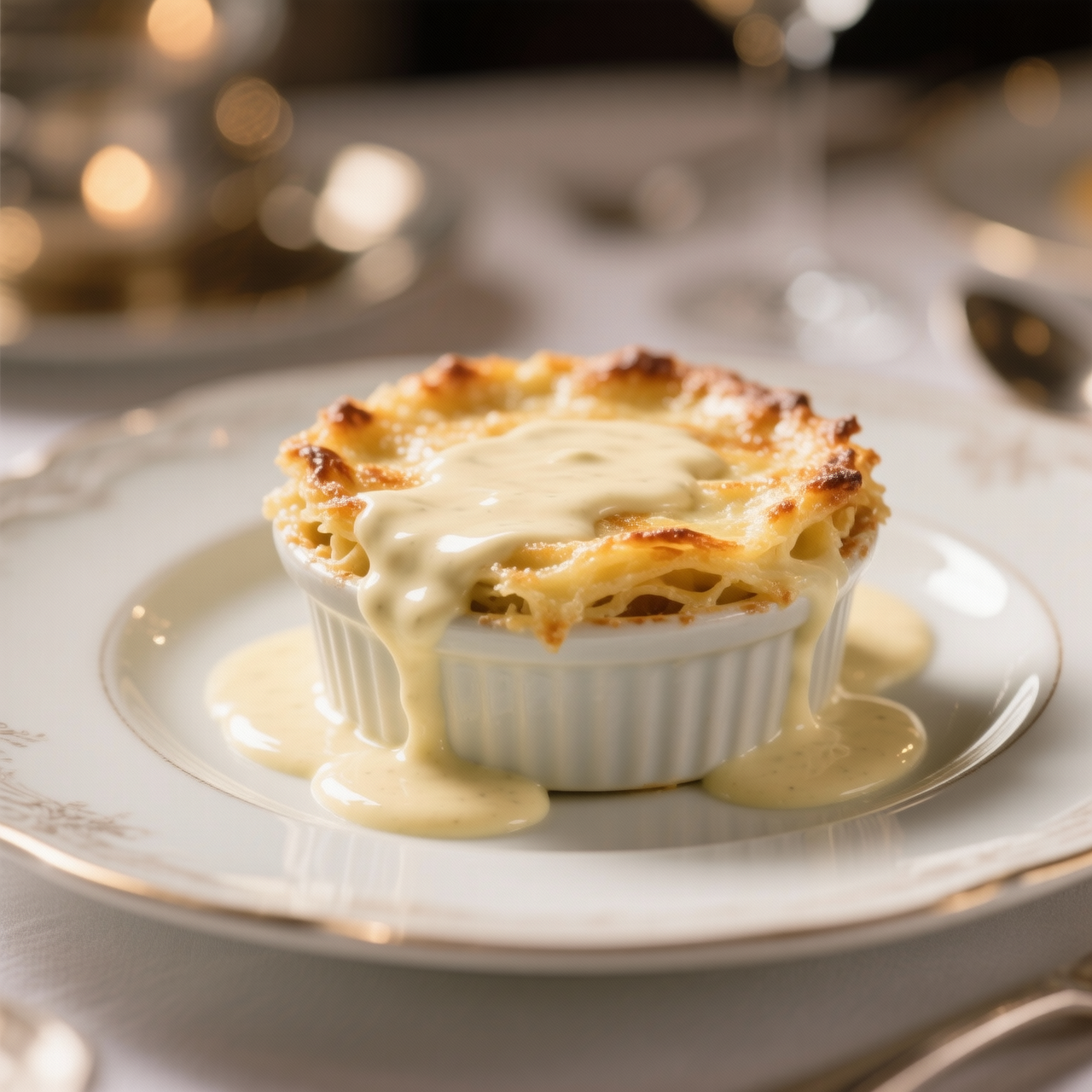
Béchamel sauce
I have always believed that true culinary mastery begins with restraint, and no preparation proves that quite like the humble béchamel. Born in the seventeenth-century kitchens of the French court, likely under the stewardship of François Pierre de La Varenne and later codified by Marie-Antoine Carême and Auguste Escoffier, this velvety emulsion stands as the quiet architect of countless classic dishes. It is not merely a sauce; it is the foundational mother of French cuisine, the creamy backbone that elevates a simple cauliflower gratin into something transcendent and binds lasagna sheets into cohesive comfort. Its importance lies in its profound simplicity: just butter, flour, and warm milk, transformed through patience. Yet, this simplicity is precisely what makes it so unforgiving. The most common pitfall I see in home kitchens is impatience. Adding cold milk to a hot roux invites lumps that feel nearly impossible to rescue, while rushing the cooking stage leaves behind the raw, starchy taste of uncooked flour. Another frequent misstep is over-whisking once the sauce has thickened, which breaks the delicate starch network and yields a gluey, heavy texture. When I prepare it, I treat it as a meditation. I melt the butter gently, toast the flour just until it smells faintly nutty, and stream in the warmed milk in slow, deliberate ribbons. I stir constantly, not frantically, allowing the starches to swell and release their silkiness naturally. Once it coats the back of a wooden spoon and shimmers softly, it is ready. Respect the process, and it will reward you with a versatile, elegant canvas that honors its centuries-old lineage.
Nutrition
| Per serving | Calories | Protein | Carbs | Fat | Sat fat | Fibre | Sugar | Sodium |
|---|---|---|---|---|---|---|---|---|
| beginner | 190kcal | 4g | 8g | 14g | 8g | 0g | 6g | 150mg |
| intermediate | 195kcal | 4g | 12g | 15g | 9g | 0g | 9g | 280mg |
| expert | 210kcal | 5g | 14g | 15g | 9g | 0g | 6g | 180mg |
Per serving · Ava-estimated — a guide, not a clinical figure.
- 50 gUnsalted butter— Room temperature for easier roux formation
- 50 gAll-purpose flour— Sifted to prevent clumping
- 500 mlWhole milk— Gently warmed to prevent temperature shock
- 2 gFine sea salt— Adjust to taste after reduction
- 1 gGround white pepper— Provides heat without dark specks
- 0.5 gGround nutmeg(optional)— Freshly grated preferred
This beginner-friendly approach demystifies the classic French mother sauce by focusing on low-stress, foolproof techniques. Instead of stressing over exact temperatures, you will cook over gentle heat and use a steady whisk to prevent lumps from forming. The key is patience: melt the butter slowly, cook the flour just until it smells lightly nutty, and add your milk in small, steady pours while whisking continuously. If the sauce thickens too fast, simply remove the pan from the heat for a moment; the residual warmth will keep it moving without scorching. Watch closely for the first signs of simmering bubbles along the edges, which means your starch has fully activated. Season at the very end so the salt does not draw moisture prematurely. This version is intentionally forgiving, making it an ideal starting point for lasagnas, macaroni, or vegetable gratins. You will learn to trust the visual cues—smooth, glossy, and coating the back of a spoon—rather than relying on strict timers. By the end, you will have a velvety, reliable base that proves restaurant-quality technique is just about controlled heat and consistent motion.
Equipment
- Heavy-bottomed saucepan— distributes heat evenly to prevent hot spots
- Silicone whisk— flexible tines scrape corners effectively
Method
- 1
Melt the butter in the saucepan over medium-low heat.
Keep heat gentle to avoid browning the milk solids.
melting~ 1 min - 2
Whisk the flour into the melted butter until a smooth paste forms.
Cook for exactly one minute to remove raw flour taste.
roux~ 1 minTricky bit - 3
Pour the milk in a slow, steady stream while whisking constantly.
Adding it gradually is the only way to guarantee a lump-free sauce.
emulsifying~ 2 minTricky bit - 4
Bring the mixture to a gentle simmer and cook until thickened.
Stir frequently; the sauce should coat the back of a spoon.
thickening~ 5 min - 5
Remove from heat and stir in salt, pepper, and a pinch of nutmeg.
Seasoning off-heat prevents over-reduction and graininess.
finishing~ 1 min
Cooking from frozen
Thaw overnight in the refrigerator and reheat gently over low heat, whisking constantly with a splash of fresh milk to restore a smooth emulsion.
Storage times are a guide — always use your judgement and store food safely.