
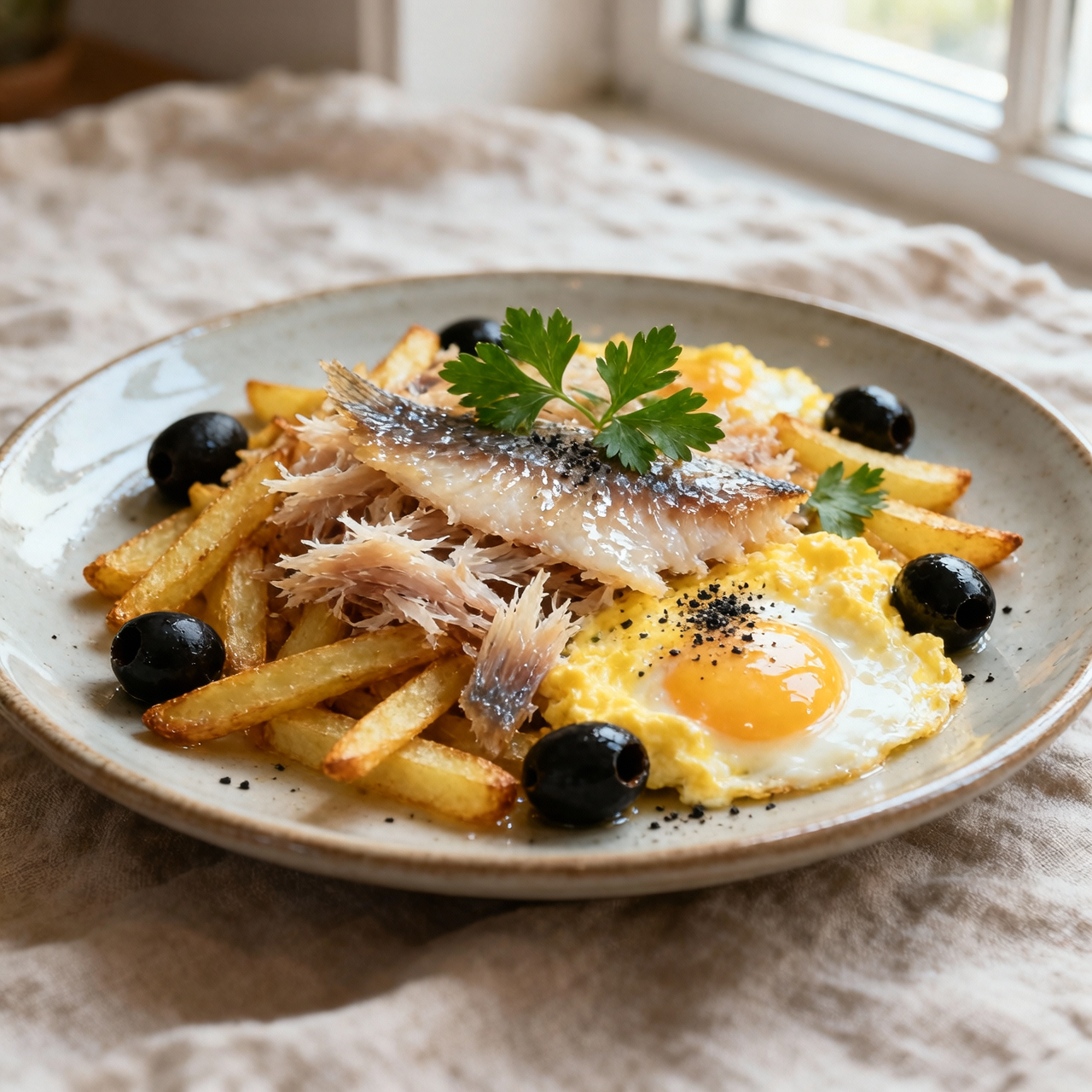
Bacalhau a Bras
When I first encountered Bacalhau à Brás in a tucked-away Lisbon tasca, I realized it was less a recipe and more a masterclass in humble transformation. Born in the late nineteenth century, likely from the hands of a cook named Brás who worked in the Bairro Alto neighborhood, this dish was conceived to stretch precious salted cod with whatever pantry staples remained: shredded potatoes, onions, and eggs. Its enduring appeal lies in that exact alchemy, turning preserved fish and simple ingredients into something that tastes like comfort and history intertwined. What makes it matter today is how it refuses to be rushed; it demands patience and respect for the salt cod’s journey from ocean to table, reminding us that great cooking often begins long before the stove is lit. The most common pitfalls I have seen, both in professional kitchens and home cooks, stem from misunderstanding the fish texture and the egg role. Many fail to properly desalinate the bacalhau, leaving it harshly salty, while others overcook the eggs, turning a delicate, creamy scramble into dry, rubbery curds. Another frequent error is skipping the proper shredding technique, which should yield thin, uniform strands that marry seamlessly with the potatoes. The magic happens in the final moments, when the whisked eggs are folded off the heat, creating a glossy, cohesive emulsion rather than a stiff omelet. If you treat each component with quiet attention, the dish reveals its true character: rustic, deeply savory, and profoundly Portuguese, a quiet testament to how necessity breeds brilliance on the plate.
Nutrition
| Per serving | Calories | Protein | Carbs | Fat | Sat fat | Fibre | Sugar | Sodium |
|---|---|---|---|---|---|---|---|---|
| beginner | 400kcal | 30g | 19g | 23g | 4g | 3g | 3g | 900mg |
| intermediate | 400kcal | 30g | 19g | 23g | 4g | 3g | 3g | 900mg |
| expert | 400kcal | 30g | 19g | 23g | 4g | 3g | 3g | 900mg |
Per serving · Ava-estimated — a guide, not a clinical figure.
- 400 gsalt cod— boneless, skinless
- 200 gyellow onion— thinly sliced
- 300 grusset potato— firm and unblemished
- 6 countlarge egg— room temperature
- 50 gblack olive— pitted and halved
- 60 mlextra-virgin olive oil— cold-pressed
- 15 gflat-leaf parsley— freshly chopped
- 2 gblack pepper— freshly cracked
This version embraces thoughtful shortcuts to guarantee success on your very first attempt. Instead of managing lengthy desalination, we use pre-shredded cod that requires only a quick rinse. A reliable jarred seasoning paste replaces the slow-sautéed onion base, delivering consistent flavor without the guesswork of balancing aromatics. The matchstick potatoes come pre-cut, saving tedious knife work. Your primary focus shifts entirely to the egg integration, which is the true heart of the dish. You will learn to monitor heat carefully, using low temperatures to coax a creamy texture rather than scrambling the eggs into rubbery curds. Watch the pan closely during the final minute, as residual heat does the heavy lifting. If the mixture appears dry, a splash of warm water restores moisture instantly. Do not rush the resting phase. Let the dish sit off the burner for two full minutes before plating, allowing the flavors to meld and the eggs to finish setting gently. This approach removes intimidation, giving you a reliable template to build confidence. Once you master the timing here, you will naturally feel ready to explore traditional methods.
Equipment
- Heavy-bottomed pan— non-stick is fine here
- Whisk— silicone or metal
- Large mixing bowl— for egg preparation
Method
- 1
Rinse the pre-shredded cod under cold water and pat thoroughly dry.
Do not soak longer than five minutes.
rinsing~ 1 min - 2
Warm olive oil in a heavy-bottomed pan over medium heat.
Oil should shimmer but not smoke.
heating~ 2 min - 3
Add the jarred seasoning paste and sauté until fragrant.
Stir constantly to prevent scorching.
blooming~ 2 minTricky bit - 4
Fold in the pre-cut potatoes and cod, cooking until warmed through.
Keep the flame at medium-low.
sautéing~ 5 min - 5
Whisk eggs in a separate bowl and pour evenly over the mixture.
Ensure eggs are fully beaten.
incorporating~ 1 min - 6
Gently stir off the heat until eggs are softly set and creamy.
Residual heat will finish the cooking.
finishing~ 2 minTricky bit