
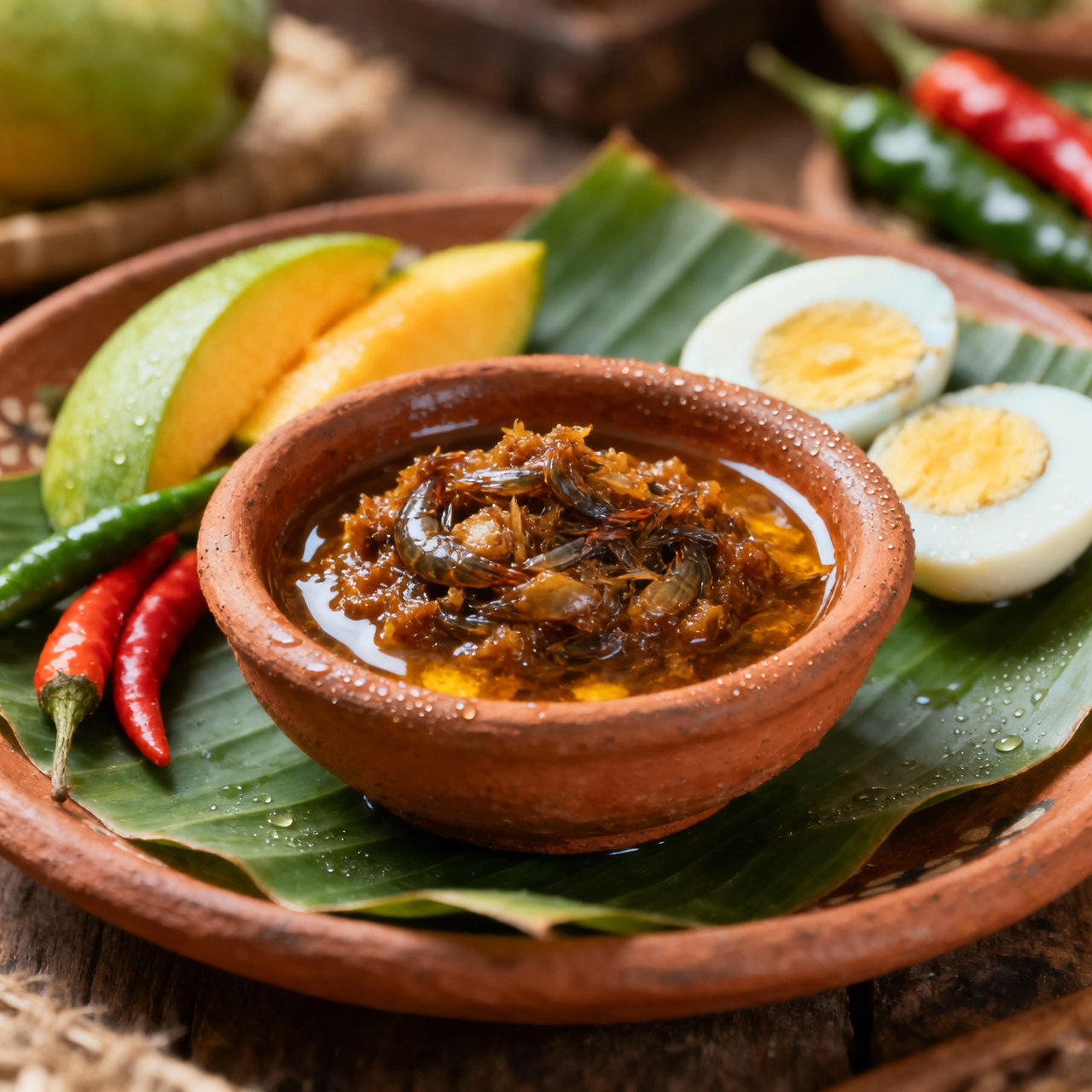
Bagoong (Shrimp Paste)
I’ve always believed that the soul of Filipino cooking lives in the quiet patience of fermentation. Bagoong isn’t just a salty condiment you spoon over steamed rice or use to build the base of a vegetable stew; it’s a centuries-old preservation method born from necessity along our archipelago’s bustling coastlines. Long before refrigeration, coastal communities learned that layering fresh krill or small shrimp with coarse sea salt in earthen jars could transform a highly perishable catch into a deeply savory, shelf-stable treasure. I return to this practice because it teaches me how time and salt work together to coax out profound umami that no quick seasoning can replicate. It’s the backbone of countless home-cooked meals, yet it’s surprisingly unforgiving if approached carelessly. The most common pitfall I see is rushing the process or skimping on the salt-to-shrimp ratio. If you don’t use enough salt, unwanted bacteria will outcompete the beneficial fermenters, leading to spoilage or a dangerously sour off-note. Another frequent mistake is exposing the jar to direct sunlight or inconsistent temperatures, which can halt the enzymatic breakdown or invite mold. I always stress using airtight, sterilized glass, pressing the mixture down firmly to eliminate air pockets, and trusting the timeline rather than forcing it. True bagoong requires at least two to three weeks of undisturbed fermentation, during which the shrimp slowly break down into a rich, pungent paste. When you get it right, you’re rewarded with a complex, oceanic depth that elevates everything it touches, proving that some of the best flavors in the world simply cannot be hurried.
Nutrition
| Per serving | Calories | Protein | Carbs | Fat | Sat fat | Fibre | Sugar | Sodium |
|---|---|---|---|---|---|---|---|---|
| beginner | 45kcal | 2g | 5g | 2g | 0g | 0g | 3g | 980mg |
| intermediate | 65kcal | 5g | 3g | 4g | 1g | 1g | 1g | 950mg |
| expert | 35kcal | 4g | 2g | 1g | 0g | 0g | 1g | 1150mg |
Per serving · Ava-estimated — a guide, not a clinical figure.
- 1000 gshrimp— Fresh tiny shrimp or alamang, rinsed and thoroughly drained
- 250 gsea salt— Coarse, non-iodized salt to draw out moisture and initiate fermentation
This beginner-friendly approach skips the traditional multi-week fermentation by starting with a high-quality, pre-fermented jarred shrimp paste. Instead of managing brine ratios and temperature-controlled curing, you will gently cook the paste with aromatics to unlock its full umami depth while balancing the intense salinity. The goal is a confident, shelf-stable condiment ready in under thirty minutes. Pay close attention to heat control; shrimp paste burns easily and turns bitter when scorched. Cook over medium-low, stirring constantly until the raw seafood aroma mellows into a rich, savory fragrance. Adding a touch of sugar or vinegar is essential to round out the sharp saltiness, so taste frequently and adjust gradually. Because this method relies on a store-bought base, consistency is guaranteed on your first try. Watch for oil separation and a deepened color as signs that the paste is fully cooked and ready for storage. Once cooled, transfer to sterilized glass jars and refrigerate. This shortcut delivers authentic Filipino flavor without the guesswork, making it perfect for beginners who want to master the foundational balance of salty, sweet, and savory before attempting long-term fermentation projects.
Equipment
- Small heavy-bottomed skillet— non-stick is highly recommended to prevent scorching
- Wooden or silicone spatula— for constant stirring and scraping the pan bottom
- Sterilized glass jars with tight lids— ensure completely dry before filling
Method
- 1
Heat a tablespoon of neutral oil in a skillet over medium-low heat.
Avoid high heat to prevent burning the paste later.
heating~ 1 min - 2
Add minced garlic, diced onion, and chopped tomato, cooking until softened and fragrant.
Do not let the aromatics brown.
sweating~ 3 min - 3
Stir in the jarred shrimp paste, breaking up clumps, and cook gently while stirring constantly.
The paste will sputter; keep the lid slightly ajar if needed.
blooming~ 4 minTricky bit - 4
Mix in a teaspoon of sugar and a splash of white vinegar, simmering until the mixture thickens and oil separates.
Taste before adding more sugar to balance the saltiness.
reducing~ 3 min - 5
Remove the pan from heat and let the condiment cool completely before transferring it to sterilized jars.
Seal tightly and refrigerate immediately.
cooling~ 10 min
Cooking from frozen
Thaw overnight in the refrigerator and stir thoroughly to restore consistency before use.
Storage times are a guide — always use your judgement and store food safely.