
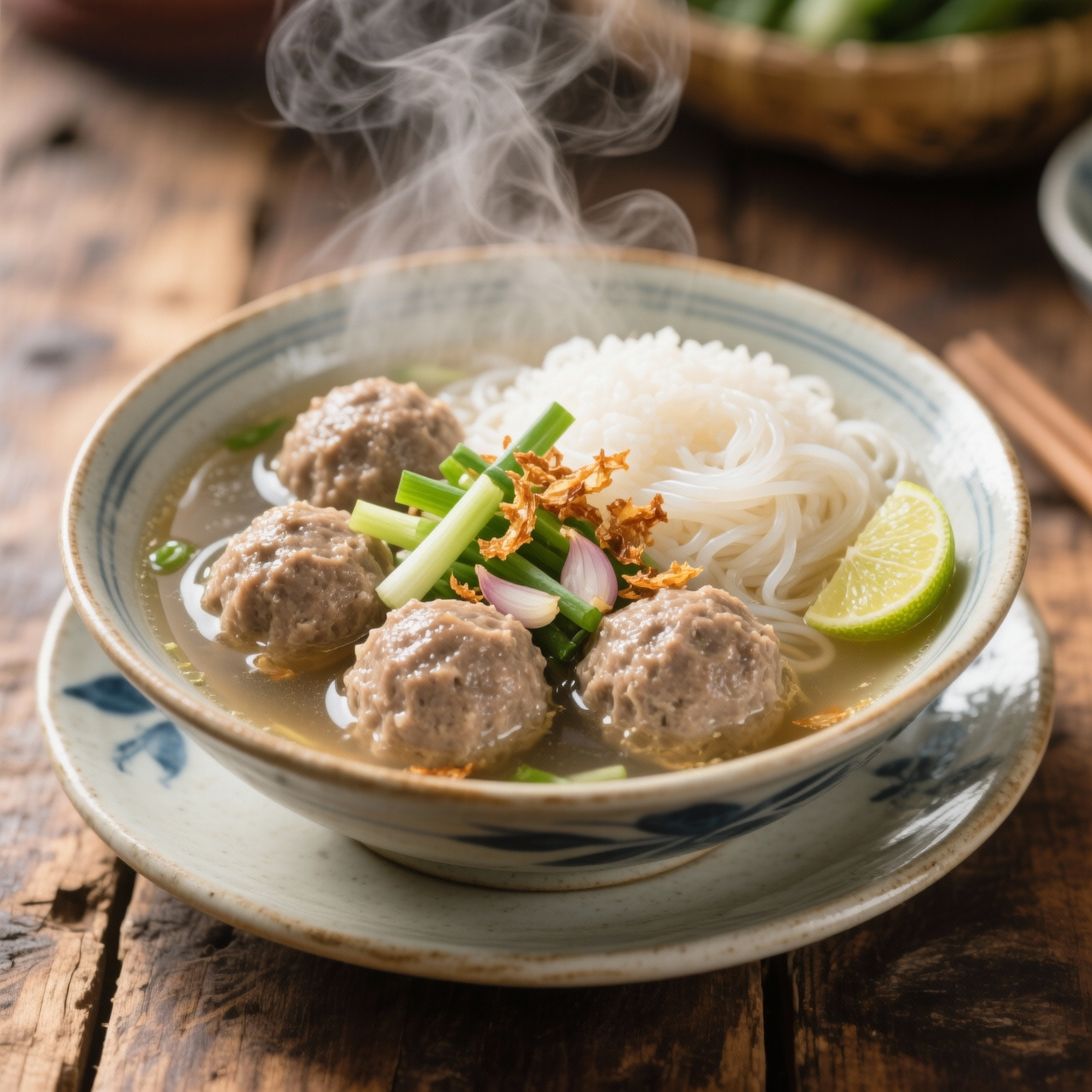
Bakso (Meatballs)
I first learned to make bakso in Jakarta’s bustling night markets, where Hokkien Chinese immigrants originally introduced their meatball craft, eventually weaving it into the very fabric of Indonesian street culture. That heritage matters deeply today, especially when supermarket aisles are flooded with cheap, plastic-wrapped alternatives. You can buy a bag of frozen commercial bakso for roughly three dollars, but the trade-off is steep: they rely heavily on modified starches, artificial meat flavorings, and phosphates to force a synthetic bounce. The result is a rubbery, one-note sphere that completely lacks the delicate, savory depth of a proper homemade batch. The real magic lies in respecting the physics of the paste. Common pitfalls include using meat that’s too lean, letting your hands warm the mixture, or skipping the ice-cold broth during blending, all of which guarantee a dense, crumbly texture instead of that signature springy snap. By keeping everything brutally cold and working the beef with tapioca flour until it becomes glossy and almost translucent, you unlock a naturally bouncy, deeply satisfying bite. I always keep a batch ready because they freeze beautifully, turning a simple pot of simmering broth into a deeply comforting, restaurant-quality snack that honors its roots without a single chemical shortcut.
Nutrition
| Per serving | Calories | Protein | Carbs | Fat | Sat fat | Fibre | Sugar | Sodium |
|---|---|---|---|---|---|---|---|---|
| beginner | 340kcal | 23g | 21g | 20g | 7g | 1g | 2g | 480mg |
| intermediate | 320kcal | 28g | 19g | 13g | 4g | 1g | 2g | 540mg |
| expert | 240kcal | 22g | 16g | 9g | 3g | 1g | 2g | 750mg |
Per serving · Ava-estimated — a guide, not a clinical figure.
- 300 gbeef— Use lean cuts like sirloin, kept very cold for optimal bounce
- 100 gtapioca starch— Provides the signature chewy texture
- 20 ggarlic— Peeled and finely minced
- 30 gshallot— Peeled and finely minced
- 30 gegg white— From approximately one large egg
- 120 mlice water— Essential for maintaining low temperature during mixing
- 8 gsalt— Fine sea salt
- 2 gwhite pepper powder— Freshly ground preferred
- 10 gcelery leaf(optional)— Finely chopped for garnish
- 1000 mlbeef broth— Used for serving soup base
This beginner-friendly approach strips away the intimidating restaurant techniques while keeping the authentic, from-scratch integrity of traditional Indonesian bakso. Instead of relying on a commercial meat grinder or ice-cold industrial blenders, we use a simple food processor and a forgiving hand-mixing method to develop that signature springy bounce. The key to success here is temperature control and gentle mixing; keeping your meat and water ice-cold prevents the fat from melting, which is what gives bakso its distinctively firm texture. Watch closely for the dough to become smooth and slightly sticky before shaping—if it feels too wet, a brief 10-minute chill in the fridge will make rolling effortless. While store-bought frozen meatballs cost around $4–$6 per pack, they are typically packed with fillers, hidden preservatives, and excessive sodium that mask the clean beef and aromatic garlic flavor. By making them yourself, you control the quality, skip the unnecessary additives, and create a cleaner, more satisfying bite. Shape a generous batch, freeze them on a tray, then transfer to bags for quick, wholesome weeknight snacking or broth additions.
Equipment
- Food processor— keep bowl chilled for best texture
- Large stockpot— for simmering and poaching
- Rimmed baking sheet— lined with parchment for freezing shaped balls
Method
- 1
Pulse shallots, garlic, salt, and white pepper into a fine, fragrant paste.
Scrape down the bowl halfway through.
pulsing~ 1 min - 2
Add cubed beef and ice-cold water to the processor, then run until a smooth, glossy meat paste forms.
Stop and scrape if chunks remain near the edges.
emulsifying~ 2 minTricky bit - 3
Transfer the paste to a mixing bowl, then fold in tapioca flour until the dough is uniform and slightly tacky.
Avoid overworking once flour is added.
folding~ 2 min - 4
Scoop portions and roll into tight, golf-ball-sized spheres using lightly wetted hands.
Dip fingers in cold water between rolls to prevent sticking.
shaping~ 5 min - 5
Gently slide the balls into a pot of barely simmering water and cook until they float to the surface.
Keep heat at a gentle bubble to prevent splitting.
poaching~ 10 minTricky bit - 6
Remove with a slotted spoon and drain on paper towels before serving or freezing.
Pat dry thoroughly if freezing to prevent ice crystals.
draining~ 1 min
Cooking from frozen
Drop frozen directly into simmering broth; cook for 8–10 minutes until they float.
Storage times are a guide — always use your judgement and store food safely.