
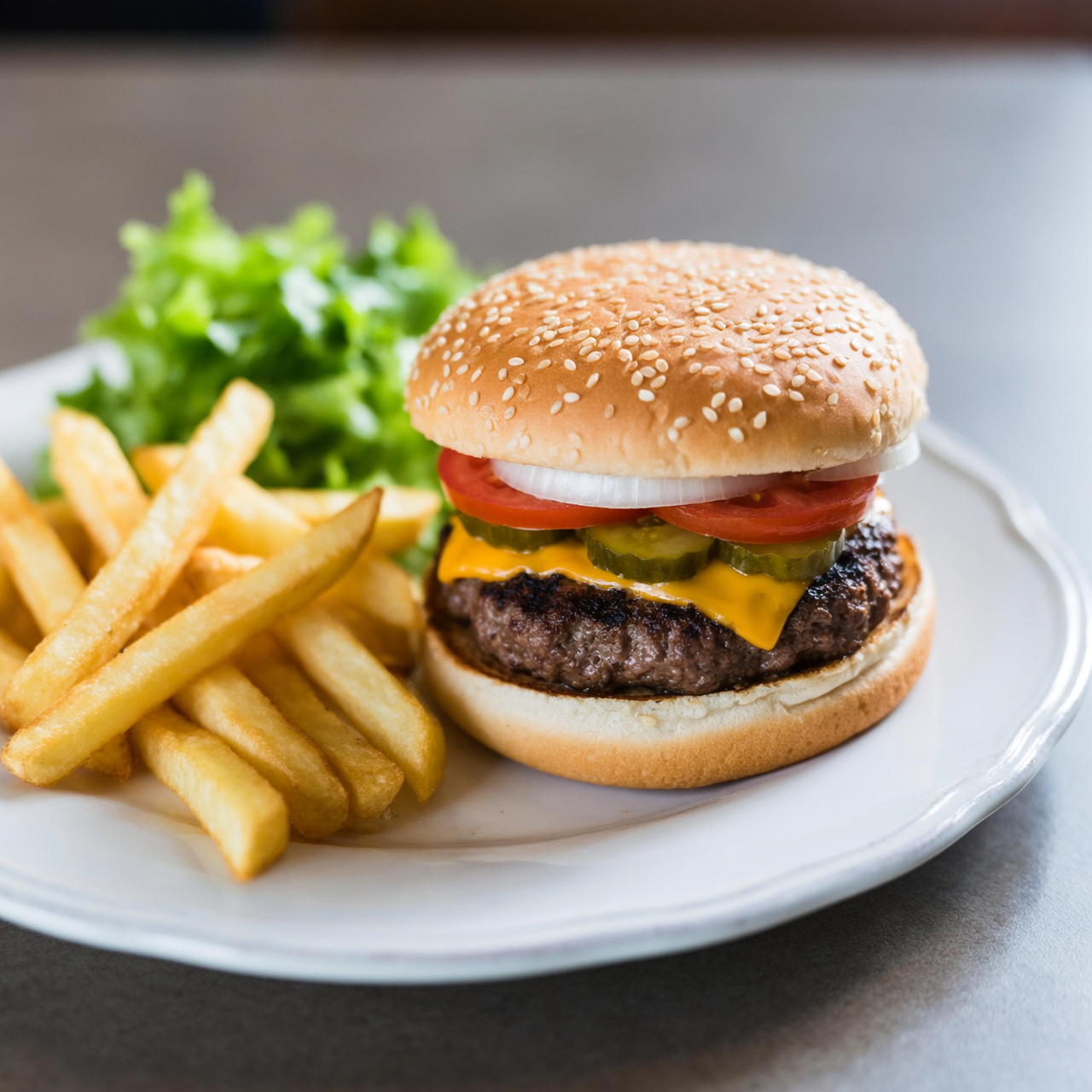
Beef burgers
I’ve always believed that the humble beef burger deserves far more respect than the freezer aisle gives it. When you look at those multipacks of shop-bought frozen burgers, usually costing around three or four quid for a pack of eight, you’re paying for a sad, ultra-processed disc of meat trimmings, rusk, and preservatives that tastes more like seasoned cardboard than beef. They shrink into rubbery pucks and lack any real depth of flavour. Making them from scratch is a revelation. The concept traces back to the Hamburg steak brought to Britain by German immigrants, eventually evolving into the pub staple we know today. But the secret to a truly great homemade burger isn't a complex recipe; it’s restraint. The most common pitfall I see is overworking the meat or adding too many fillers, which turns a juicy patty into a dense, tough meatball. You just need good quality, relatively fatty minced beef—around fifteen to twenty percent fat is the sweet spot for a succulent result. A simple seasoning of salt and pepper is all you need to let the beef shine. By forming your own patties and freezing them flat, you create the ultimate batch-cooked hero. You get the convenience of the frozen burger aisle, but with a crust that actually sears beautifully and a centre that remains gloriously, unapologetically beefy. It’s a small shift in effort that completely transforms your midweek dinners, proving that the best convenience food is the kind you make yourself.
Nutrition
| Per serving | Calories | Protein | Carbs | Fat | Sat fat | Fibre | Sugar | Sodium |
|---|---|---|---|---|---|---|---|---|
| beginner | 380kcal | 28g | 1g | 28g | 11g | 0g | 1g | 350mg |
| intermediate | 410kcal | 25g | 1g | 33g | 13g | 0g | 0g | 380mg |
| expert | 450kcal | 32g | 1g | 36g | 15g | 0g | 0g | 420mg |
Per serving · Ava-estimated — a guide, not a clinical figure.
- 800 gbeef mince— 15-20% fat content is ideal for juicy burgers
- 1 tspsea salt— fine or flaky
- 1 tspblack pepper— freshly ground
Shop-bought burgers cost around £6 for a pack of four and are often pumped full of water, soy fillers, and preservatives to bulk them up, resulting in a mushy texture and bland taste. This beginner-friendly from-scratch version ditches the ultra-processed frozen aisle entirely. Instead of complex grinding or elaborate spice blends, we keep the technique forgiving and straightforward. You will use high-quality minced beef, simply seasoning it with fresh grated onion, salt, and black pepper to enhance the natural flavour without overwhelming it. The key to a tender beginner burger is handling the meat as little as possible to avoid a tough, rubbery texture. We will form the patties with a slight dimple in the centre to prevent them from puffing up into meatballs during cooking. Once formed, these freeze beautifully flat on a baking sheet before being transferred to a bag, giving you a ready-to-cook, superior alternative to shop-bought burgers whenever you need them.
Equipment
- Cast-iron skillet or heavy frying pan— For a superior crust
- Baking sheet— Lined with parchment for batch freezing
Method
- 1
Grate half of the yellow onion using the large holes of a box grater.
Grating releases the juices seamlessly into the meat without leaving large chunks.
grating~ 1 min - 2
Gently combine the minced beef, grated onion, salt, and black pepper in a large bowl.
Use your hands but mix as little as possible to keep the texture tender.
folding~ 2 min - 3
Divide the mixture into four equal portions and shape them into patties about 2cm thick, pressing a shallow dimple into the centre of each.
The dimple prevents the burgers from puffing up into meatballs as they cook.
shaping~ 3 minTricky bit - 4
Heat the pan over medium-high heat, add a splash of oil, and cook the burgers for 4 to 5 minutes on each side until deeply browned.
Do not press down on the patties while they cook, or you will lose the juices.
pan-frying~ 10 min - 5
Transfer the cooked burgers to a plate and let them rest for 5 minutes before serving.
Resting allows the muscle fibres to relax and reabsorb the internal moisture.
resting~ 5 min
Cooking from frozen
Reheat thoroughly in a hot oven or frying pan until piping hot all the way through.
Storage times are a guide — always use your judgement and store food safely.