
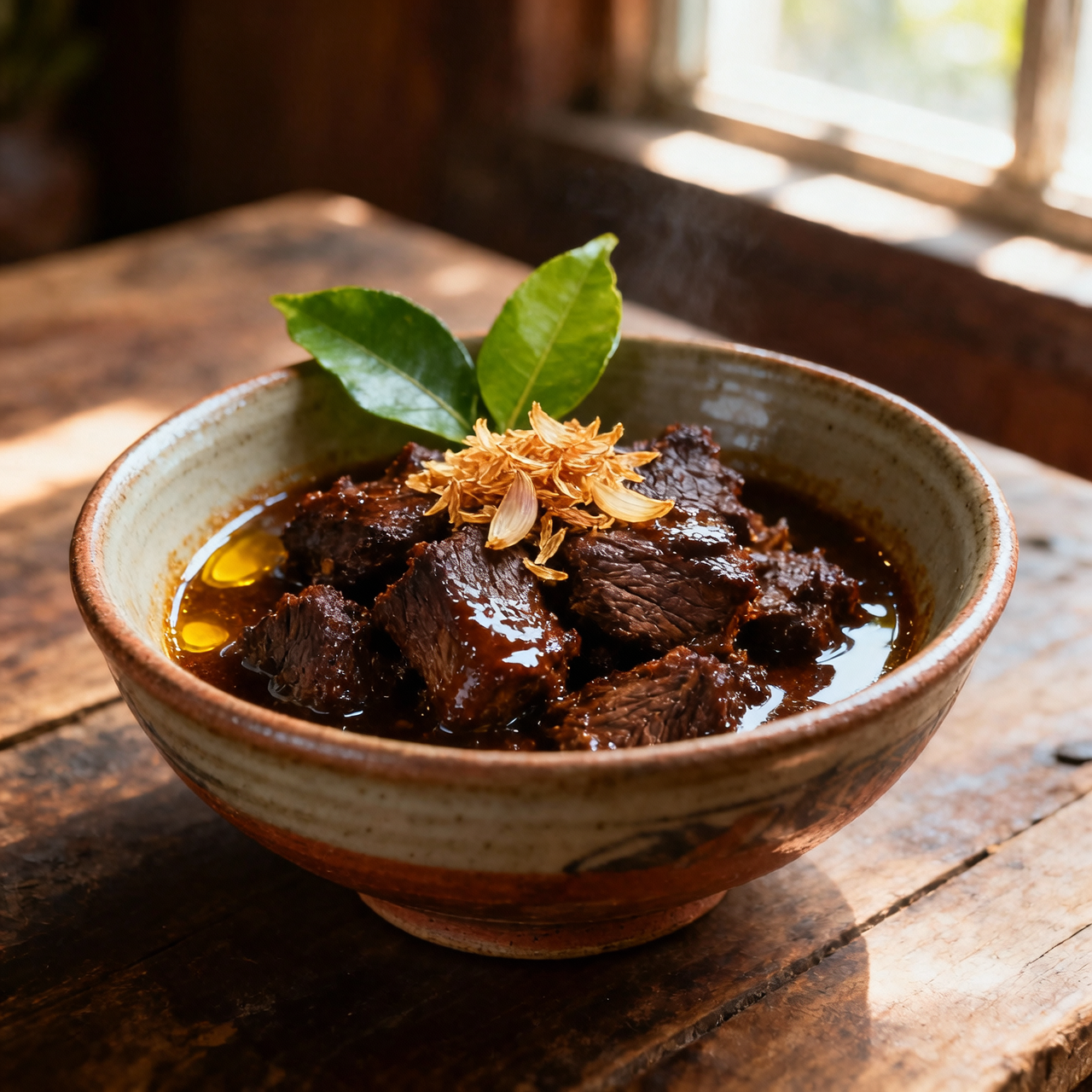
Beef Rendang
When I first encountered beef rendang in a bustling Padang kitchen in West Sumatra, I realized it was not just a dish but a slow-burning meditation on patience and tradition. The origins of rendang trace back centuries to the Minangkabau people, who developed this method as a brilliant way to preserve meat in a hot, humid climate without refrigeration. By simmering tough cuts of beef in a rich, spice-laden coconut milk bath until every last drop of liquid evaporates, they created a deeply caramelized, intensely aromatic masterpiece that could safely travel for days. That is why this dish matters to me: it represents a culinary philosophy where time is the most essential ingredient, and where transformation happens only when you surrender control. Yet, so many modern cooks rush it, treating it like a quick curry rather than a gradual reduction. The most common pitfalls I have seen include using lean beef that turns to stringy dust, adding too much water that dilutes the spice paste, and worst of all, walking away during the final dry-frying stage when the coconut oil separates and the meat must be gently stirred to prevent scorching. True rendang demands constant attention as the paste thickens, darkens, and clings to each fiber. You will know it is done not by a timer, but by the sound of the meat sizzling in its own rendered fat and the deep mahogany color that coats the wok. It is a dish that teaches you to listen, to watch, and to trust the slow alchemy of heat and spice.
Nutrition
| Per serving | Calories | Protein | Carbs | Fat | Sat fat | Fibre | Sugar | Sodium |
|---|---|---|---|---|---|---|---|---|
| beginner | 880kcal | 38g | 26g | 72g | 36g | 4g | 10g | 630mg |
| intermediate | 880kcal | 38g | 26g | 72g | 36g | 4g | 10g | 630mg |
| expert | 880kcal | 38g | 26g | 72g | 36g | 4g | 10g | 630mg |
Per serving · Ava-estimated — a guide, not a clinical figure.
- 800 gbeef chuck— cut into 5cm cubes
- 400 mlcoconut milk— full-fat, unsweetened
- 2 stalkslemongrass— bruised and tied into a knot
- 30 ggalangal— peeled and thinly sliced
- 20 gginger— fresh, peeled
- 100 gshallot— peeled, roughly chopped
- 6 clovesgarlic clove— peeled
- 50 gred chili— deseeded for milder heat
- 15 gturmeric root— peeled, fresh preferred
- 30 gcandlenut— toasted lightly
- 15 gcoriander seed— whole, lightly toasted
- 5 gcumin seed— whole
- 6 leaveskaffir lime leaf— fresh or frozen
- 15 mltamarind paste— thick concentrate
- 20 gpalm sugar— finely grated
- 5 gsea salt— to taste
- 30 mlneutral oil— for initial frying
This version prioritizes accessibility and confidence over tradition, substituting the labor-intensive spice paste with a high-quality commercial rendang curry paste. The process is streamlined to minimize active monitoring, allowing you to achieve the core flavor profile without mastering the intricate grinding technique. The primary difference lies in the initial bloom: instead of toasting whole aromatics, you will gently fry the jarred paste to wake its dormant oils before introducing the liquid. Watch closely during the simmer, as commercial pastes often contain thickeners or hidden sugars that can scorch faster than fresh ingredients. Keep your heat strictly at a low, steady bubble and stir the bottom of the pan every ten minutes to prevent sticking. The goal here is not the traditional dry, oil-separated finish, but a rich, cohesive braise where the beef becomes deeply tender and thoroughly coated. Do not rush the reduction phase; patience remains your most important tool. If the liquid evaporates too quickly, splash in a small amount of warm water to rescue the meat. By the end, you will have a deeply aromatic, restaurant-worthy main dish that proves shortcuts can still honor the spirit of the recipe.
Equipment
- Heavy-bottomed pan— non-stick is fine here
- Wooden spoon— heat-resistant silicone also works
- Measuring spoons— for precise paste ratios
Method
- 1
Heat oil in a heavy pan over medium heat until it shimmers.
Oil should ripple, not smoke.
heating~ 1 min - 2
Add jarred rendang paste and fry gently until fragrant.
Paste will darken slightly as oils release.
blooming~ 2 min - 3
Stir in beef cubes until evenly coated with the paste.
Ensure every piece touches the hot surface.
searing~ 3 minTricky bit - 4
Pour in coconut milk and add knotted lemongrass.
Bring to a bare simmer, never a rolling boil.
simmering~ 5 min - 5
Reduce heat to low and cook uncovered until thickened.
Stir bottom every 10 minutes to prevent scorching.
reducing~ 30 minTricky bit - 6
Remove lemongrass and rest before serving.
Flavors will meld during the resting period.
resting~ 5 min