
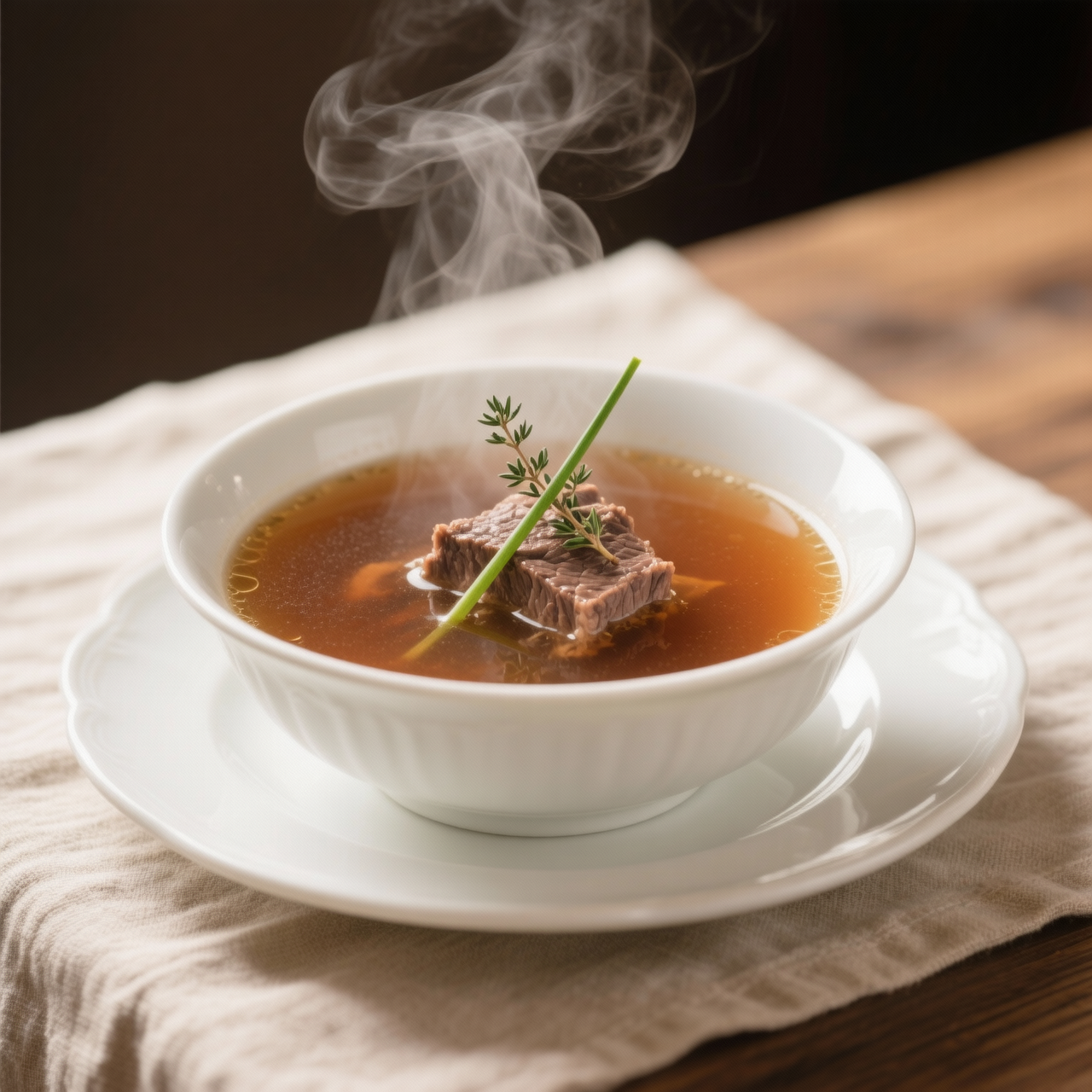
Beef stock
As a cook who believes deeply in the magic of transformation, I consider beef stock the ultimate culinary alchemy. It is the very foundation upon which countless sauces, braises, and soups are built, turning humble, inexpensive bones into liquid gold. The classical technique of roasting the bones until they are deeply caramelized before simmering them with mirepoix and tomato paste was perfected in French kitchens, giving us the rich, mahogany-colored fond brun that defines so much of our culinary heritage. But this isn't just about French tradition; it is a universal language of flavor that speaks to the resourcefulness of cooks everywhere. Why does this matter? Because a truly great beef stock provides an unctuous, gelatinous body and a profound depth of flavor that no commercial cube or powdered base could ever hope to replicate. It is the secret weapon in your freezer, ready to elevate a simple Tuesday night ragu into something spectacular. However, making it is not without its pitfalls. The most common mistake is rushing the roast; if the bones aren't browned sufficiently, you lose the Maillard reaction and end up with a pale, weak broth. Another frequent error is boiling the stock vigorously. A gentle, lazy simmer is crucial; a rolling boil will emulsify the fat and impurities into the liquid, resulting in a cloudy, greasy mess rather than a clear, pristine elixir. Finally, never skip the skimming. Taking the time to carefully remove the scum that rises to the surface during the first hour of cooking ensures a clean, pure flavor. When done right, and frozen in portions, it becomes your ultimate batch-cooking hero.
Nutrition
| Per serving | Calories | Protein | Carbs | Fat | Sat fat | Fibre | Sugar | Sodium |
|---|---|---|---|---|---|---|---|---|
| beginner | 45kcal | 3g | 5g | 1g | 0g | 1g | 2g | 850mg |
| intermediate | 45kcal | 6g | 1g | 2g | 1g | 0g | 0g | 65mg |
| expert | 45kcal | 6g | 1g | 2g | 1g | 0g | 0g | 600mg |
Per serving · Ava-estimated — a guide, not a clinical figure.
- 2000 gbeef bone— marrow and knuckle bones
- 4000 gwater— cold
- 400 gonion— peeled and roughly chopped
- 300 gcarrot— peeled and roughly chopped
- 200 gcelery stalk— roughly chopped
- 30 gtomato paste
- 50 ggarlic head— top sliced off
- 10 gblack peppercorn— whole
- 5 gbay leaf— dried
- 30 gapple cider vinegar
This beginner-friendly approach skips the traditional 12-hour bone simmer by using a high-quality jarred beef base or paste as the foundation. By blooming the paste with fresh aromatics—onions, carrots, celery, and tomato paste—you build deep, roasted flavors in a fraction of the time. Watch closely for the vegetables to soften and caramelize slightly before adding the water; this crucial step mimics the complex, Maillard-rich profile of a long-simmered bone broth. Keep the heat at a gentle, lazy simmer rather than a rolling boil to prevent the stock from becoming cloudy or bitter. This method is absolutely perfect for when you need a rich, beefy backbone for pan sauces, gravies, or hearty soups without committing to a full day of cooking. Once cooled completely, it freezes beautifully in ice cube trays or silicone molds for quick, portion-controlled future use.
Equipment
- Heavy-bottomed pot— Dutch oven or large saucepan works best
- Fine-mesh strainer— Essential for a clear final stock
- Airtight containers— Glass jars or silicone ice cube trays for freezing
Method
- 1
Dice the onion, carrots, and celery into uniform half-inch pieces.
Uniformity ensures even cooking and consistent flavor extraction.
mirepoix~ 5 min - 2
Heat a splash of oil in the pot over medium heat and add the diced vegetables.
Cook until the onions are translucent and the edges begin to brown.
sweating~ 8 min - 3
Stir in the tomato paste and jarred beef base, cooking until the mixture darkens and smells deeply savory.
This blooming step is critical for developing a roasted, complex flavor profile.
blooming~ 3 minTricky bit - 4
Pour in the cold water, add the bay leaves and peppercorns, and bring to a gentle boil.
Starting with cold water helps extract flavors more evenly as it heats.
extracting~ 5 min - 5
Reduce the heat to low, cover partially, and let it simmer gently for 30 minutes.
Do not let it roll boil, or the stock will turn cloudy and emulsify the fats.
simmering~ 30 min - 6
Remove from heat, strain through a fine-mesh sieve, and let cool completely before portioning and freezing.
Skim any excess fat from the surface once it cools for a cleaner sauce base.
straining~ 10 min
Cooking from frozen
Thaw overnight in the refrigerator or gently warm in a saucepan over low heat.
Storage times are a guide — always use your judgement and store food safely.