
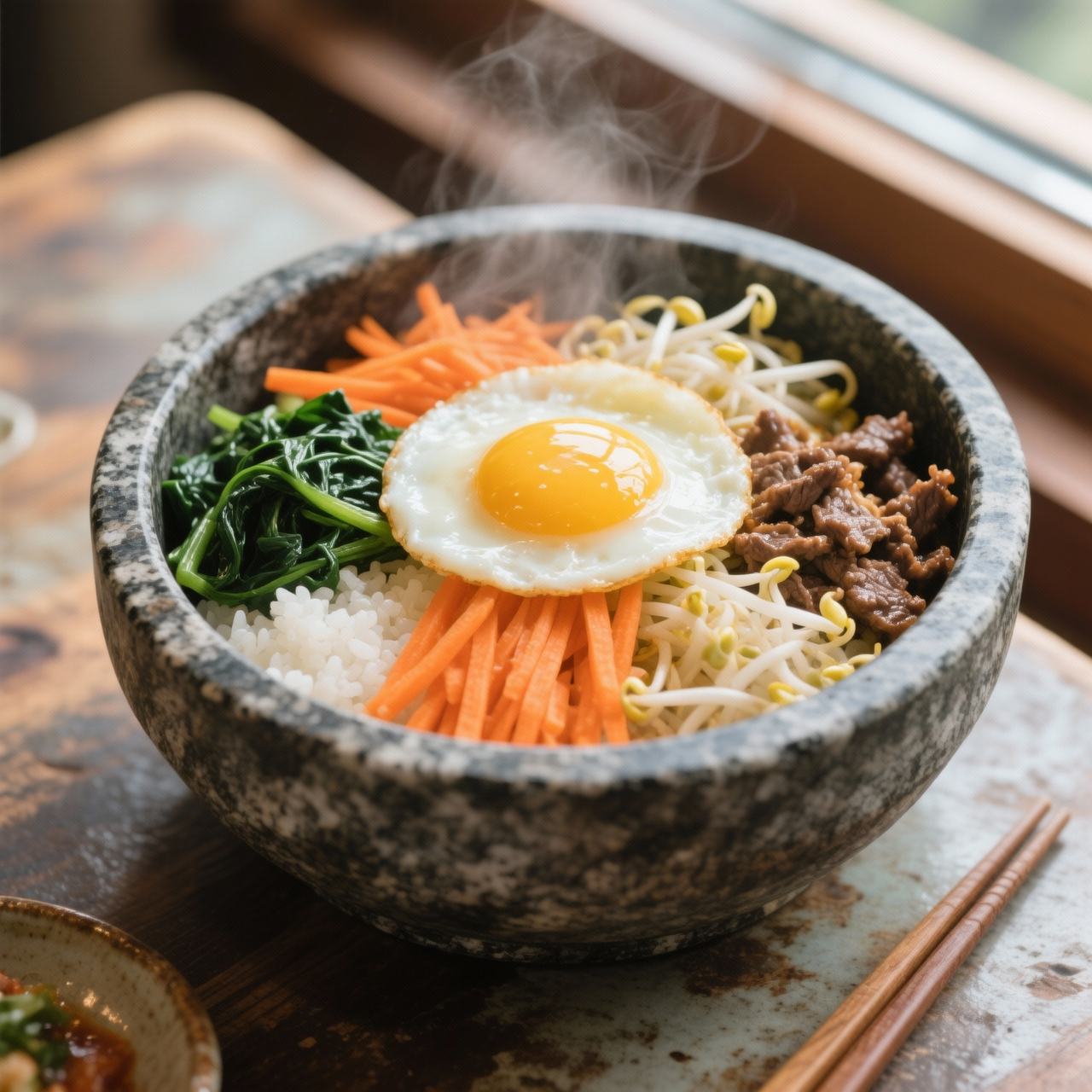
Bibimbap
When I first learned to assemble a proper bowl of bibimbap, I quickly realized it is far more than just a pretty arrangement of vegetables over rice. Historically rooted in Korea’s agricultural rhythms, the dish emerged as a practical way to use seasonal harvests and leftover banchan, eventually evolving into a celebrated centerpiece of both royal banquets and humble home kitchens. What draws me to bibimbap isn’t merely its vibrant palette, but the philosophy it embodies: balance. Every element, from the earthy spinach to the crisp bean sprouts and the rich, marinated beef, plays a distinct role in creating harmony. That balance is exactly where many home cooks stumble. I’ve seen countless bowls ruined by vegetables that steam instead of sauté, leaving the dish soggy rather than distinct. Others skip the crucial step of properly toasting the rice in a hot stone bowl, missing out on the coveted crispy nurungji crust that elevates the entire experience. The sauce is another frequent casualty; too much gochujang overwhelms the delicate vegetables, while too little leaves the dish bland. And perhaps the most common mistake is admiring the bowl without truly committing to the mix. Bibimbap demands that you break down those carefully arranged layers, folding everything together until the sesame oil, spice, and savory beef fully coat every grain. When done right, it becomes a deeply comforting ritual—a reminder that Korean cooking is as much about patience and integration as it is about bold, unapologetic flavor.
Nutrition
| Per serving | Calories | Protein | Carbs | Fat | Sat fat | Fibre | Sugar | Sodium |
|---|---|---|---|---|---|---|---|---|
| beginner | 810kcal | 36g | 106g | 26g | 6g | 6g | 12g | 2100mg |
| intermediate | 810kcal | 36g | 106g | 26g | 6g | 6g | 12g | 2100mg |
| expert | 810kcal | 36g | 106g | 26g | 6g | 6g | 12g | 2100mg |
Per serving · Ava-estimated — a guide, not a clinical figure.
- 400 gshort-grain white rice— uncooked weight
- 300 gbeef sirloin— trimmed of excess fat
- 150 gfresh spinach— tender leaves preferred
- 150 gbean sprout— tails trimmed
- 150 gcarrot— firm and bright
- 150 gzucchini— firm skin intact
- 30 gdried shiitake mushroom— whole caps
- 80 ggochujang— fermented chili paste
- 45 mlsoy sauce— traditional brewed
- 30 mlsesame oil— toasted and cold-pressed
- 15 mlrice vinegar— unseasoned
- 20 ggarlic— fresh cloves
- 15 gbrown sugar— finely packed
- 4 pcslarge egg— fresh and refrigerated
- 15 groasted sesame seed— golden toasted
- 30 mlneutral cooking oil— high smoke point
- 10 gkosher salt— fine grain
- 3 gblack pepper— freshly cracked
This version embraces accessible shortcuts to deliver a deeply satisfying bowl without demanding hours in the kitchen. We rely on a high-quality jarred chili paste and pre-washed greens to eliminate the most tedious prep work, while a rice cooker guarantees perfectly hydrated grains every time. The key here is temperature control and moisture management. Sauté your vegetables in quick, high-heat bursts so they retain their bright color and structural integrity, then immediately drain any excess liquid to prevent a soggy foundation. When combining your sauce, taste as you go and adjust the sweetness with a touch of honey or sugar until it matches your palate. The most common mistake at this level is overcrowding the pan, which steams the vegetables rather than searing them, or letting the sauce sit too long before serving, which dulls its vibrant punch. Keep your components organized in small bowls before assembly, and do not rush the final mix. A confident first attempt comes from trusting your instincts with the seasoning and allowing the ingredients to speak for themselves without overcomplicating the process. You will learn to recognize when the beef is properly caramelized and how to judge the perfect yolk consistency, building a reliable foundation for future iterations.
Equipment
- non-stick skillet— 12-inch diameter works best
- rice cooker— standard model
- mixing bowl— medium size
- chef knife— 8-inch blade
Method
- 1
Cook rice in a rice cooker according to package instructions.
Keep lid closed until cycle completes.
steaming~ 20 min - 2
Slice beef into thin strips and toss with half the sesame oil and soy sauce.
Marinate for ten minutes at room temperature.
macerating~ 10 min - 3
Blanch spinach and bean sprouts separately in boiling water for sixty seconds each.
Shock immediately in ice water to halt cooking.
shocking~ 2 min - 4
Sauté carrots, zucchini, and rehydrated mushrooms in a hot non-stick pan.
Cook until just tender but still crisp.
stir-frying~ 5 min - 5
Pan-fry the marinated beef over medium-high heat until browned.
Avoid overcrowding to ensure proper searing.
searing~ 4 min - 6
Whisk together gochujang, remaining sesame oil, rice vinegar, sugar, and garlic.
Adjust sweetness until balanced.
emulsifying~ 1 min - 7
Fry eggs in neutral oil until edges are crisp and yolks remain runny.
Cover briefly to cook the whites evenly.
frying~ 3 minTricky bit - 8
Divide warm rice into bowls and arrange vegetables, beef, and egg in neat sections.
Drizzle sauce over the center before serving.
plating~ 2 min