
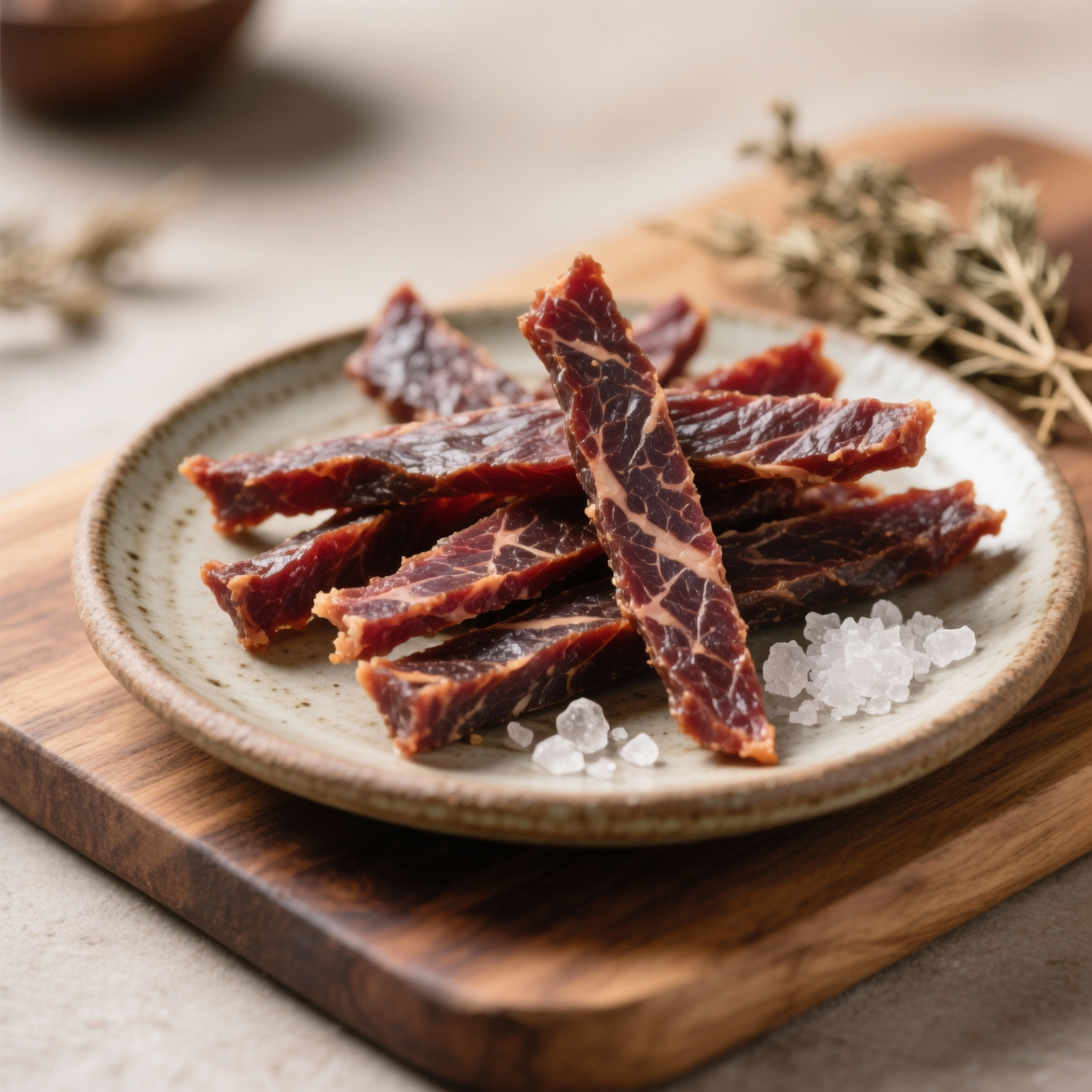
Biltong
When I first encountered biltong in Cape Town, it wasn’t in a vacuum-sealed tourist packet but hanging in strips from a butcher’s ceiling, smelling of coriander, malt vinegar, and patience. This air-dried spiced beef is South Africa’s ancestral preservation method, born from the practical need to keep meat edible without refrigeration during long wagon treks. Making it yourself matters deeply because the supermarket alternative is usually a pale imitation: those rubbery, overpriced sticks cost upwards of twelve dollars a pound, packed with artificial preservatives, excessive sugar, and liquid smoke that masks inferior cuts. True biltong relies on nothing but quality beef, coarse salt, cracked black pepper, toasted coriander, and a splash of brown vinegar. The process is deceptively simple but unforgiving if rushed. The most common pitfall I see is using lean, modern supermarket steak, which dries into brittle cardboard rather than yielding that prized chewy-yet-tender texture. You must choose a well-marbled cut like silverside or topside, and resist the urge to speed-dry it with heat or a dehydrator set too high. Airflow is your only engine here, and humidity is your quiet enemy. Another frequent mistake is under-salting or skipping the vinegar cure, which leaves the meat vulnerable to spoilage instead of safely drawing out moisture. When you embrace the traditional rhythm—marinating overnight, hanging strips in a cool, breezy space, and waiting five to seven days—you’re rewarded with a deeply savory, protein-rich snack that outlasts weeks and tastes unmistakably authentic. It’s a quiet rebellion against processed convenience, and a testament to how time, wind, and honest seasoning can transform humble beef into something extraordinary.
Nutrition
| Per serving | Calories | Protein | Carbs | Fat | Sat fat | Fibre | Sugar | Sodium |
|---|---|---|---|---|---|---|---|---|
| beginner | 165kcal | 28g | 2g | 5g | 2g | 0g | 1g | 850mg |
| intermediate | 310kcal | 42g | 2g | 12g | 4g | 0g | 1g | 950mg |
| expert | 175kcal | 32g | 1g | 5g | 2g | 0g | 0g | 850mg |
Per serving · Ava-estimated — a guide, not a clinical figure.
- 1000 gbeef— Lean cut such as silverside or topside, sliced into 2 cm strips along the grain
- 120 mlapple cider vinegar— Used for marinating and surface acidification
- 30 gcoarse sea salt— Non-iodized to prevent off-flavors during curing
- 15 gbrown sugar— Promotes even drying and balances acidity
- 15 gcoriander seed— Dry-toasted and lightly crushed
- 10 gblack peppercorn— Freshly cracked for optimal aroma
- 5 gred chili flake(optional)— Adds traditional mild heat, omit for mild version
This beginner-friendly approach strips away the intimidating equipment requirements of traditional biltong making, replacing vacuum sealers and specialized drying cabinets with a simple zip-lock bag and a well-ventilated kitchen corner. Instead of relying on commercial curing mixes packed with hidden nitrates and excessive sugar, you will hand-toast whole coriander seeds and crack fresh black pepper, then combine them with apple cider vinegar and coarse salt for a transparent, fully controllable marinade. The technique prioritises forgiving thickness and straightforward monitoring, so you can easily adjust the drying window to match your preferred chewiness without risking spoilage. Watch closely for moisture pockets near the meat’s thickest edge; if the surface feels tacky after forty-eight hours, simply increase airflow with a small desk fan rather than rushing the process. Store-bought biltong often costs over twenty dollars per pound, relies on cheap cuts, and contains artificial preservatives that dull the natural beef flavour. Making it at home costs less than half, guarantees premium lean beef, and delivers a cleaner, deeply savoury profile that improves with age.
Equipment
- Large resealable plastic bag— replaces vacuum sealing for beginner curing
- Small heavy skillet— essential for dry-toasting whole spices
- Sharp chef knife— keeps edges clean against the grain
- Wire cooling rack— place over a baking sheet to catch drips
Method
- 1
Slice the beef against the grain into uniform one-inch thick strips.
Consistent thickness prevents uneven drying and spoilage.
slicing~ 2 min - 2
Toast whole coriander seeds and black peppercorns in a dry skillet until fragrant.
Shake constantly to prevent scorching the delicate oils.
toasting~ 3 minTricky bit - 3
Crush the toasted spices and mix them with coarse salt, apple cider vinegar, and a teaspoon of sugar.
Dissolve the salt completely before coating.
crushing~ 3 min - 4
Place the meat in the resealable bag, pour the marinade over it, and massage until fully coated.
Refrigerate for forty-eight hours, turning the bag twice daily.
marinating~ 5 minTricky bit - 5
Remove the beef, pat it completely dry with paper towels, and hang the strips on the wire rack with space between each piece.
Run a small fan nearby for the first twenty-four hours to prevent surface mould.
air-drying~ 5 minTricky bit
Cooking from frozen
Thaw uncovered at room temperature for two hours before slicing, as reheating ruins the cured texture.
Storage times are a guide — always use your judgement and store food safely.