
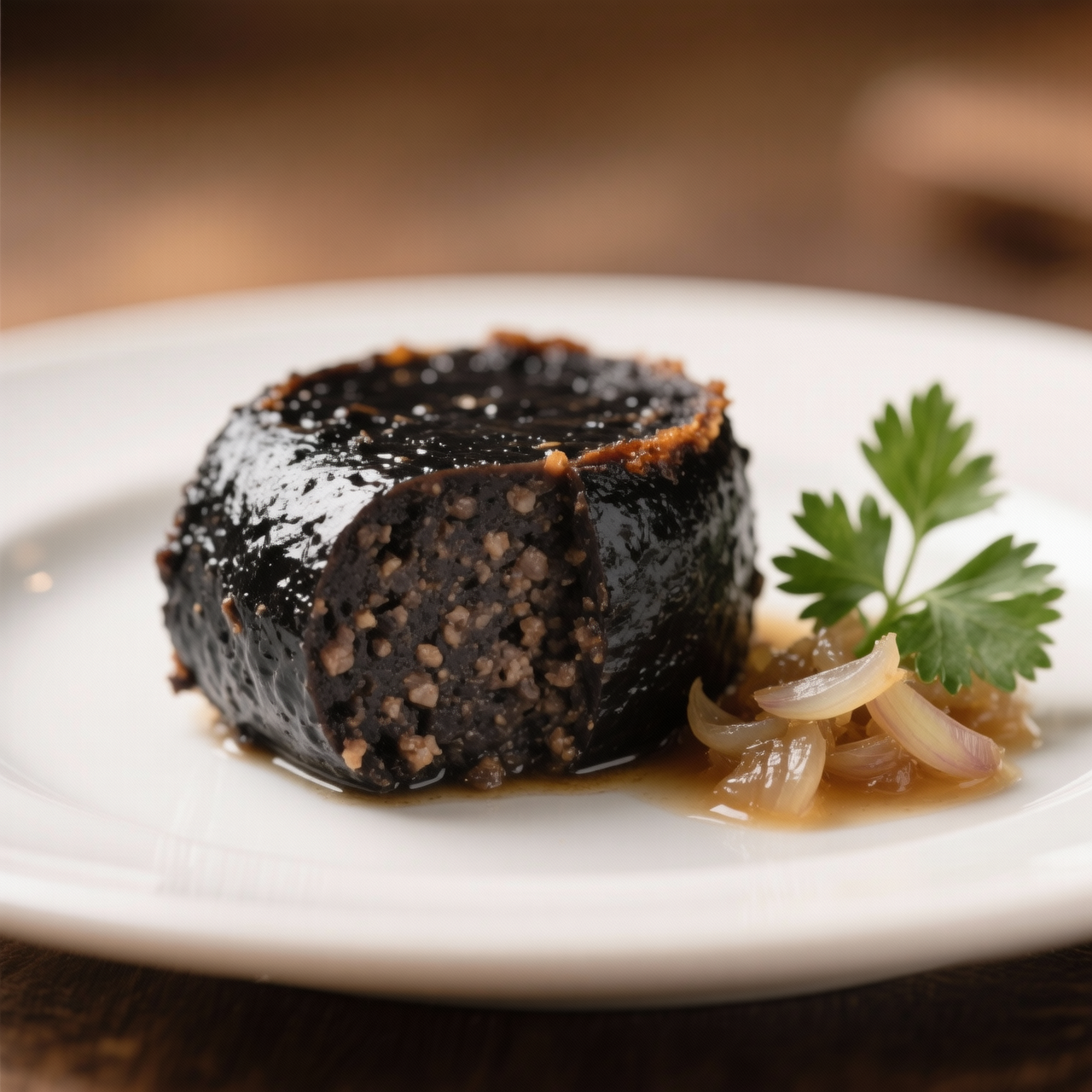
Black pudding
There is something profoundly elemental about black pudding. Originating as a frugal way to use every part of the pig, this British and Irish blood sausage has evolved into a breakfast cornerstone. I’ve always believed that making it from scratch transforms a humble staple into a culinary revelation. Shop-bought, vacuum-packed slices often cost nearly as much as premium sausages, yet they are frequently compromised by excessive oat fillers, stale spices, and a dense, rubbery texture that masks the rich, iron-laced depth of the blood and pork fat. When I make it myself, I control the quality of the pork belly, the freshness of the blood, and the exact balance of spices, resulting in a remarkably tender, deeply savoury crumb that shatters perfectly in the pan. The most common pitfall is overcooking or using the wrong ratio of liquid to grain, which leads to a mushy interior or a casing that violently splits and bursts. To avoid this, gentle poaching is absolutely crucial before the final fry, ensuring the proteins set gently without curdling. While the process of sourcing fresh blood and stuffing casings might seem daunting compared to tossing a plastic-wrapped disc into a hot pan, the reward is unparalleled. I am not just reclaiming a piece of culinary heritage; I am elevating a processed convenience food into a masterpiece of texture and flavour, proving that true British breakfast fare deserves to be crafted with care rather than mass-produced.
Nutrition
| Per serving | Calories | Protein | Carbs | Fat | Sat fat | Fibre | Sugar | Sodium |
|---|---|---|---|---|---|---|---|---|
| beginner | 410kcal | 18g | 26g | 22g | 8g | 4g | 2g | 850mg |
| intermediate | 340kcal | 16g | 5g | 28g | 11g | 2g | 0g | 480mg |
| expert | 650kcal | 28g | 18g | 52g | 19g | 3g | 2g | 850mg |
Per serving · Ava-estimated — a guide, not a clinical figure.
- 500 mlpig's blood— fresh and liquid, keep whisked to prevent clotting
- 300 gpork belly— skin removed, cut into small dice
- 250 mlpork stock— unsalted or low sodium
- 150 gpinhead oatmeal— also known as steel-cut oats
- 150 gonion— finely chopped
- 12 gsalt— fine sea salt
- 5 gblack pepper— freshly ground
- 2 gallspice— ground
- 2 mhog casing— flushed and soaked in warm water
Shop-bought black pudding typically costs around £4 for a small vacuum-packed roll, but it is often bulked out with cheap wheat rusk, vegetable oils, and preservatives, resulting in a mushy texture and lacking the deep, iron-rich savoury punch of proper pork blood and suet. This beginner-friendly from-scratch version bypasses those processed shortcuts while simplifying the traditional technique. Instead of laboriously hand-mincing the fat and using tricky natural casings, we use a food processor for a quick, even mince and accessible collagen casings that are far more forgiving to stuff. The key to success here is temperature control during the poaching stage; keeping the water strictly below a simmer ensures the casings don't split and the texture remains perfectly creamy rather than grainy. While it requires a bit of patience to soak the oats and stuff the links, the reward is a profoundly rich, authentic breakfast staple that slices beautifully and fries up with a crisp, snappy exterior. Once chilled, these freeze exceptionally well for future full English breakfasts.
Equipment
- Food processor— Fitted with the standard S-blade for mincing fat and onions.
- Sausage stuffer— A basic hand-crank or KitchenAid attachment works perfectly with collagen casings.
- Heavy-bottomed pan— Large enough to hold the sausages in a single layer without crowding.
Method
- 1
Combine the pinhead oatmeal and fresh pork blood in a large bowl, stirring well, and leave to soak for 20 minutes to soften the oats.
The oats should absorb most of the liquid, forming a thick, dark porridge.
soaking~ 20 min - 2
Pulse the diced pork fat and onion in a food processor until finely minced but not pureed, then transfer to the blood and oat mixture.
Stop pulsing before it turns into a paste; you want distinct little nuggets of fat.
pulsing~ 3 min - 3
Stir in the salt, black pepper, allspice, and a small splash of cold water if the mixture feels too stiff, ensuring a smooth, cohesive batter.
The mixture should drop slowly from a spoon, not pour like a liquid.
mixing~ 2 min - 4
Thread the collagen casings onto the stuffer nozzle and carefully fill, twisting into 10cm links without overstuffing to prevent bursting.
Prick any visible air bubbles with a sterilised needle immediately.
stuffing~ 5 minTricky bit - 5
Submerge the sausages in a heavy-bottomed pan of water held at exactly 75°C to 80°C, poaching gently for 45 minutes until firm to the touch.
Do not let the water boil; a gentle shimmer is all you need to keep the casings intact.
poaching~ 45 minTricky bit - 6
Immediately transfer the cooked black pudding to an ice bath to halt the cooking process, then pat dry and refrigerate until completely cold before slicing.
Chilling firms up the fat, making it much easier to slice cleanly for frying.
shocking~ 5 min
Cooking from frozen
Thaw overnight in the fridge before pan-frying to ensure the centre heats through without burning the exterior.
Storage times are a guide — always use your judgement and store food safely.