
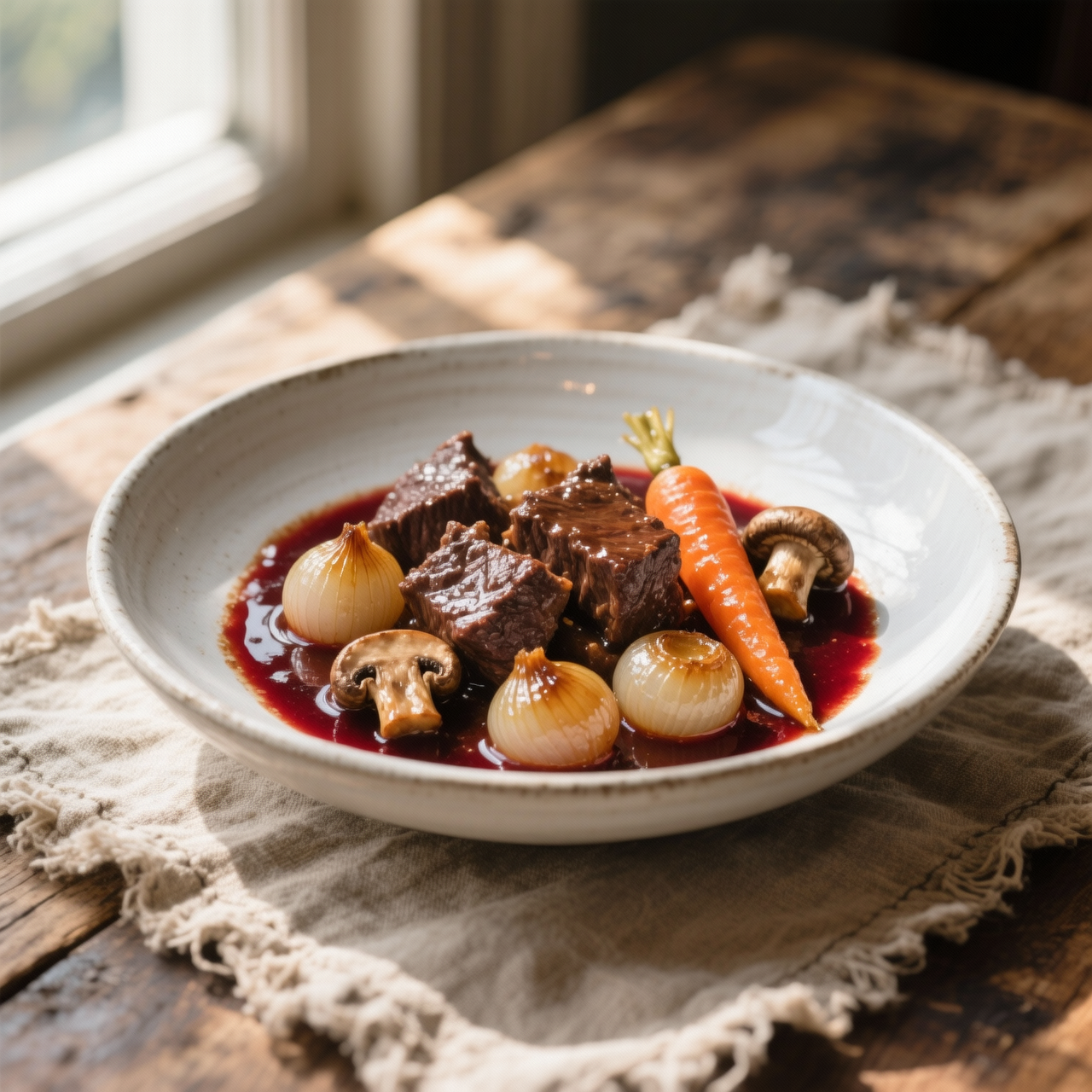
Boeuf Bourguignon
When I first learned to make boeuf bourguignon, I quickly realized it is less a rigid recipe and more a meditation on patience. Born in the damp, rolling vineyards of eastern France, this dish emerged from peasant necessity, transforming tough, inexpensive cuts of beef into something profoundly luxurious through slow, wine-soaked braising. It matters deeply to me because it represents the uncompromising heart of French culinary tradition: the quiet alchemy of time, temperature, and profound respect for simple ingredients. You simply cannot rush a bourguignon, nor should you ever compromise on the wine. The most common pitfall I encounter is reaching for a cheap, overly acidic cooking wine that turns the final sauce sharp and metallic; I always insist on pouring the same bottle of robust Pinot Noir or Gamay into the pot that I will later serve at the table. Another frequent mistake is overcrowding the Dutch oven during the initial sear, which inevitably steams the meat rather than forging that vital, deeply caramelized crust. I meticulously pat every cube bone-dry, season them aggressively, and work in careful batches before introducing any liquid. Rushing the fond, skipping the aromatic mirepoix, or boiling the stew rather than maintaining a bare simmer will strip away the dish’s delicate balance. The true magic unfolds during those long, quiet hours as collagen melts into silk, and the wine, pearl onions, carrots, and earthy mushrooms surrender into a unified, deeply savory sauce. When you finally lift the heavy lid, the rich, woodsy aroma should instantly anchor you to a rustic Burgundian hearth. It rewards restraint, demands attention, and ultimately proves that genuine comfort is forged through unwavering care.
Nutrition
| Per serving | Calories | Protein | Carbs | Fat | Sat fat | Fibre | Sugar | Sodium |
|---|---|---|---|---|---|---|---|---|
| beginner | 900kcal | 50g | 25g | 60g | 22g | 4g | 7g | 1500mg |
| intermediate | 900kcal | 50g | 25g | 60g | 22g | 4g | 7g | 1500mg |
| expert | 900kcal | 50g | 25g | 60g | 22g | 4g | 7g | 1500mg |
Per serving · Ava-estimated — a guide, not a clinical figure.
- 1000 gbeef chuck— cut into 5cm cubes, well-marbled
- 150 gbacon lardon— thick-cut, smoked
- 200 gpearl onion— peeled and whole
- 200 gcarrot— cut into 2cm batons
- 300 gbutton mushroom— quartered if large
- 750 mlred wine— Pinot Noir or Côtes du Rhône
- 500 mlbeef stock— low sodium, preferably homemade
- 30 gtomato paste— concentrated
- 45 gall-purpose flour— for dredging and thickening
- 4 sprigsfresh thyme— leaves stripped from tough stems
- 2 piecesbay leaf— dried, whole
- 15 ggarlic— finely minced
- 30 gunsalted butter— cold, cubed
- 15 mlolive oil— extra virgin
- 10 gkosher salt— to taste
- 5 gblack pepper— freshly cracked
This version prioritizes accessibility and confidence over strict tradition, using high-quality jarred tomato paste and pre-cut mirepoix to eliminate tedious prep. The goal is to deliver a deeply comforting result in under an hour without sacrificing the foundational flavors that define the dish. We rely on a single heavy pot to minimize cleanup and use a stovetop pressure cooker or rapid simmer to accelerate collagen breakdown. You will be guided through each critical transition, from properly drying the beef to prevent steaming, to safely deglazing with wine without splashing. Watch for the sauce to thicken naturally rather than relying on excessive flour; a gentle simmer is your best friend here. The biggest trap for newcomers is overcrowding the pan, which lowers the temperature and ruins the sear. Cook in batches, let the fond develop, and trust that the residual heat will finish the vegetables. This approach guarantees a restaurant-worthy braise on your very first attempt, proving that technique can be simplified without compromising soul.
Equipment
- Heavy-bottomed Dutch oven— non-stick is acceptable if heat control is poor
- Tongs— silicone-tipped preferred
- Wooden spoon— flat edge for scraping
Method
- 1
Pat the beef completely dry and season generously with salt and black pepper.
moisture prevents proper browning
seasoning~ 2 min - 2
Heat olive oil in a heavy pot over medium-high heat and sear the beef in single-layer batches until deeply browned.
do not crowd the pan or it will steam
searing~ 8 minTricky bit - 3
Pour in the red wine and scrape the bottom thoroughly to dissolve the browned bits.
use a wooden spoon to lift every speck
deglazing~ 2 min - 4
Add the stock, vegetables, herbs, and tomato paste, then bring to a gentle simmer and cover.
bubbles should barely break the surface
simmering~ 30 min - 5
Stir in the butter and adjust seasoning just before serving to create a glossy finish.
taste for balance between acidity and richness
mounting~ 1 min