
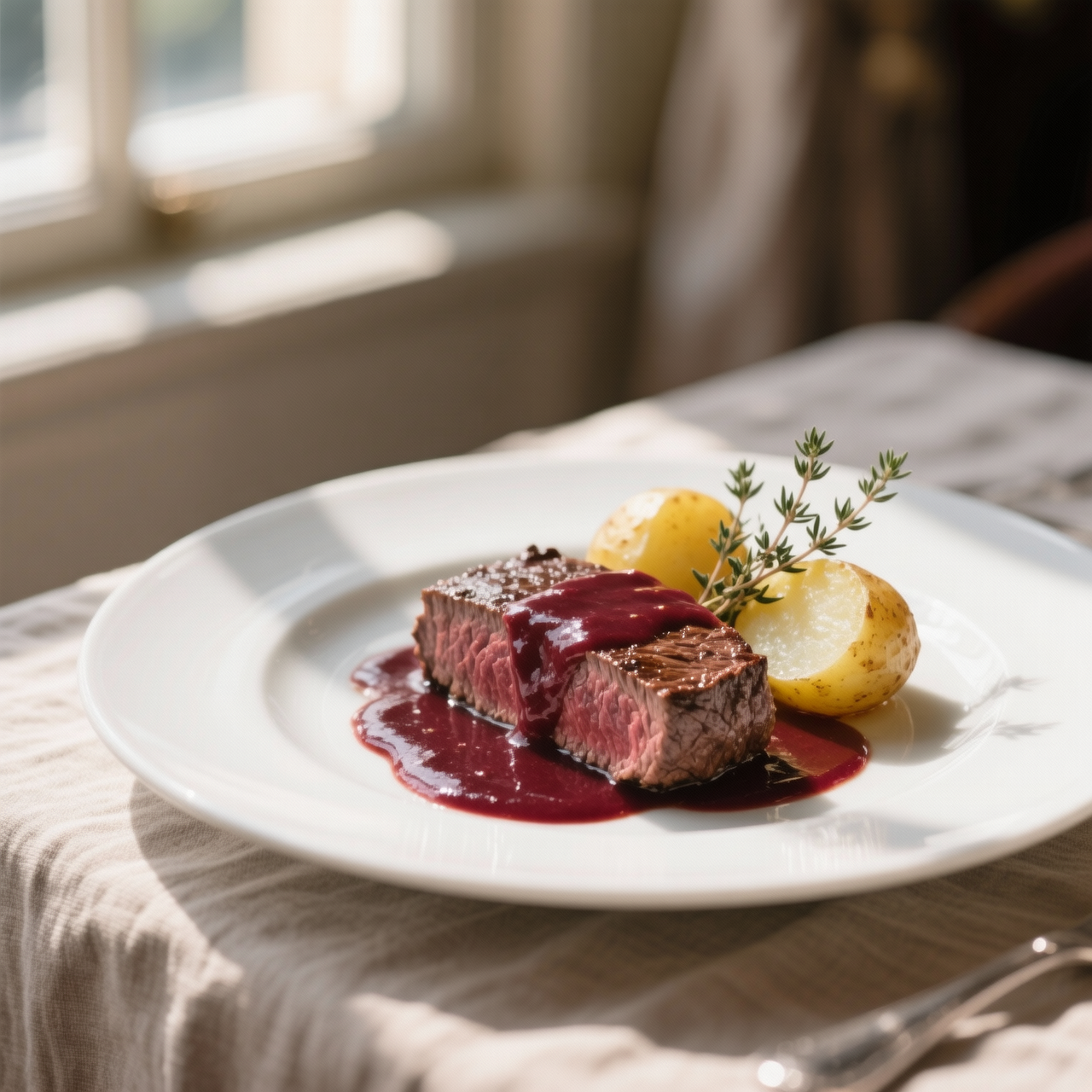
Bordelaise sauce
When I first learned to coax a proper Bordelaise from a heavy pan, I quickly understood why it has anchored French menus for centuries. Born in Bordeaux, this sauce was crafted to celebrate the region’s prized beef and robust red wines. To me, it represents classical technique: a masterclass in reduction and patience. You start by softening minced shallots until they surrender their sharpness, then pour in a dry, tannic red that forms the structural backbone. The magic happens during a slow simmer, where the wine reduces to a syrupy glaze, intensifying notes of dark fruit and earth. Once rich beef demi-glace joins the pan, the liquid transforms into something deeply savory. I always finish it off the heat, whisking in cold butter to create a glossy sheen. Yet, this elegance is easily ruined. The most common mistake is rushing the reduction, which leaves the alcohol harsh and the shallots bitter. Another frequent trap is boiling the sauce after adding butter, instantly breaking the emulsion into a greasy mess. You must also resist overcomplicating it with garlic; Bordelaise demands restraint, letting the wine speak. When executed with quiet discipline, it becomes the perfect partner for roasted cuts, elevating a simple plate into a timeless moment.
Nutrition
| Per serving | Calories | Protein | Carbs | Fat | Sat fat | Fibre | Sugar | Sodium |
|---|---|---|---|---|---|---|---|---|
| beginner | 135kcal | 4g | 6g | 8g | 4g | 1g | 3g | 420mg |
| intermediate | 125kcal | 3g | 4g | 9g | 5g | 1g | 2g | 420mg |
| expert | 145kcal | 3g | 7g | 11g | 6g | 1g | 3g | 380mg |
Per serving · Ava-estimated — a guide, not a clinical figure.
- 250 mlred wine— Dry Bordeaux-style red wine
- 50 gshallot— Finely minced
- 200 mlbeef stock— Rich demi-glace preferred
- 40 gbone marrow(optional)— Poached or softened
- 30 gunsalted butter— Cold and cubed for mounting
- 1 gblack pepper— Freshly cracked
- 2 gsalt— Fine sea salt
This beginner-friendly approach strips away the traditional hours-long bone simmering process by relying on high-quality jarred demi-glace or concentrated beef stock. You will still build the foundational flavor profile through a quick shallot and red wine reduction, but with clear visual cues instead of guesswork. The biggest watch point is the wine reduction step; you want it to lose its sharp, alcoholic bite and become lightly syrupy, which usually takes about eight to ten minutes over a steady simmer. Do not rush this with high heat, or the shallots will scorch and introduce bitterness. When adding the stock base, keep the temperature moderate to prevent splattering. The final enrichment relies on mounting cold butter off the direct heat, which guarantees a glossy, restaurant-style finish without the risk of breaking the emulsion. If the sauce looks too thin, let it bubble gently for another minute. If it becomes overly thick, simply whisk in a splash of warm water. This method prioritizes reliability and speed, ensuring you can confidently plate a rich, deeply flavored accompaniment to steak or roast beef on any weeknight.
Equipment
- Heavy-bottomed saucepan— non-stick is fine here
- Silicone whisk— heat-resistant for scraping corners
- Fine-mesh strainer— ensures a silky final texture
Method
- 1
Melt one tablespoon of butter in a heavy-bottomed saucepan over medium heat, then add two finely minced shallots.
Cook until soft and translucent, not browned.
sweating~ 3 min - 2
Pour one cup of dry red wine into the pan and maintain a steady simmer until the liquid reduces by half.
The mixture should coat the back of a spoon and smell sweet, not sharp.
reducing~ 9 minTricky bit - 3
Stir in one and a half cups of prepared beef demi-glace or concentrated beef stock and simmer gently for five minutes.
Whisk frequently to incorporate the concentrate evenly without scorching.
simmering~ 5 min - 4
Remove the pan completely from the heat and whisk in two tablespoons of cold butter until fully melted and glossy.
Never boil the sauce after adding butter, or it will separate.
mounting~ 1 minTricky bit - 5
Pour the finished sauce through a fine-mesh strainer into a serving vessel and adjust the seasoning with salt and black pepper.
Discard the solids to achieve a perfectly smooth, professional texture.
straining~ 1 min
Cooking from frozen
Thaw overnight in the fridge and gently reheat over low heat while whisking to restore the emulsion.
Storage times are a guide — always use your judgement and store food safely.