
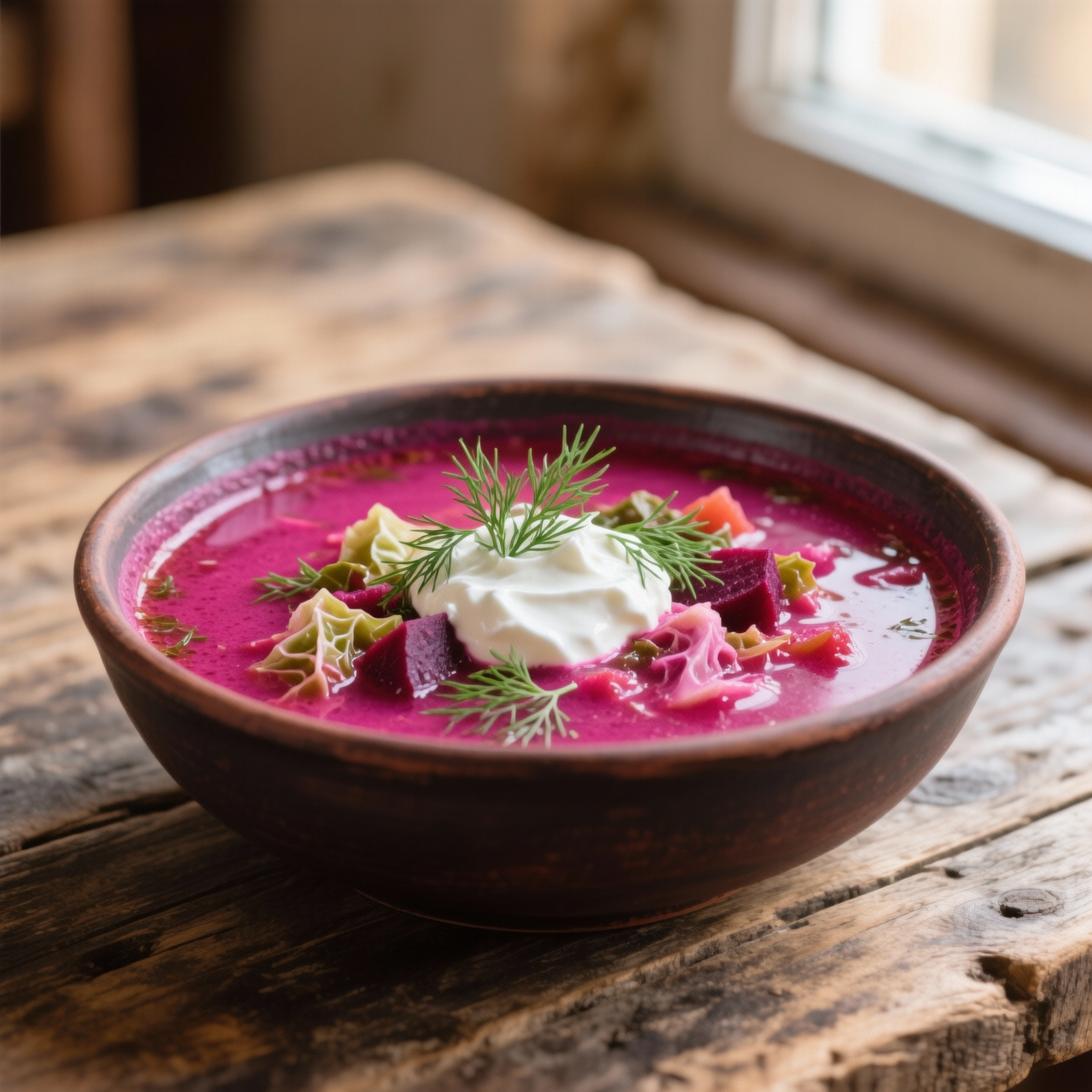
Borscht
When I first learned to coax borscht into existence, I quickly realized this soup is far more than a simple bowl of simmered roots. Born in the fertile river valleys of Eastern Europe, it carries centuries of peasant ingenuity, transforming humble beetroot, cabbage, and bone marrow into a deeply resonant dish that has crossed borders and survived empires. For me, making borscht is an exercise in patience and reverence. It matters because it embodies the rhythm of the seasons and the warmth of communal tables, where a single pot can feed a family for days while deepening its flavor with every reheating. Yet, I have watched countless cooks rush through the process, mistaking speed for efficiency, and in doing so, they strip the soup of its soul. The most frequent mistake I see is boiling the beets too aggressively, which bleaches their vibrant crimson and leaves behind a flat, metallic taste. Another pitfall is skipping the careful layering of acidity; a splash of vinegar or lemon juice added at the very end is not merely a garnish but a structural necessity that brightens the earthy base and balances the richness of the meat. I always remind myself to build the broth slowly, sautéing the vegetables separately before introducing them to the pot, allowing each component to develop its own character before they unite. When you respect these quiet steps, the result is not just a starter, but a living testament to resilience and comfort.
Nutrition
| Per serving | Calories | Protein | Carbs | Fat | Sat fat | Fibre | Sugar | Sodium |
|---|---|---|---|---|---|---|---|---|
| beginner | 190kcal | 5g | 30g | 7g | 1g | 6g | 11g | 1450mg |
| intermediate | 190kcal | 5g | 30g | 7g | 1g | 6g | 11g | 1450mg |
| expert | 190kcal | 5g | 30g | 7g | 1g | 6g | 11g | 1450mg |
Per serving · Ava-estimated — a guide, not a clinical figure.
- 300 gbeet— raw or pre-cooked
- 150 gyellow onion— peeled
- 100 gcarrot— peeled
- 200 gpotato— waxy variety
- 150 ggreen cabbage— core removed
- 30 gtomato paste— concentrated, unsweetened
- 15 ggarlic— peeled
- 800 mlvegetable broth— low sodium
- 15 mlapple cider vinegar— or fermented beet kvass
- 30 mlneutral oil— sunflower or canola
- 10 gfresh dill— finely chopped
- 1 piecebay leaf— dried
- 8 gkosher salt— adjust to taste
- 2 gblack peppercorn— freshly cracked
This version is designed to deliver the soul of traditional borscht without demanding hours of prep or specialized knife skills. You will lean on pre-cooked or jarred beets and pre-shredded cabbage, which cuts the active cooking time dramatically while preserving the signature earthy sweetness and vibrant color. The technique prioritizes gentle sautéing and straightforward simmering, allowing you to focus on balancing the flavors rather than perfecting complex vegetable prep. Watch the pot closely during the initial sauté; we want the aromatics to soften and release their natural sugars without browning, which keeps the broth clean and bright. When incorporating the tomato paste, give it a full two minutes to cook out its raw edge before adding the liquid, a small step that dramatically deepens the overall profile. The cabbage is added late in the process to prevent it from turning mushy, ensuring a pleasant textural contrast in every spoonful. Taste carefully before adding salt, as commercial beet preparations often carry hidden sodium. This approach guarantees a comforting, restaurant-adjacent bowl on a busy weeknight, proving that tradition and convenience can comfortably share a table.
Equipment
- large pot— at least 4 liters capacity
- cutting board— color-coded if possible
- chef knife— standard 8 inch
Method
- 1
Heat oil in a large pot over medium heat until it shimmers.
Test with a drop of water; it should sizzle gently.
heating~ 1 min - 2
Sauté diced onion and grated carrot until softened.
Do not let them brown; you are building a sweet base.
sweating~ 5 min - 3
Stir in tomato paste and cook for two minutes.
Use a jarred paste straight from the container.
blooming~ 2 min - 4
Add diced potatoes, broth, bay leaf, and pre-shredded beets to the pot.
Jarred or pre-cooked beets save time but rinse them first.
simmering~ 1 min - 5
Simmer uncovered until potatoes are fork-tender, then stir in cabbage and vinegar.
Add cabbage at the end to keep it crisp-tender.
braising~ 8 minTricky bit - 6
Remove from heat, season with salt and pepper, and garnish with fresh dill before serving.
Taste before salting; jarred bases can be salty.
seasoning~ 1 min