
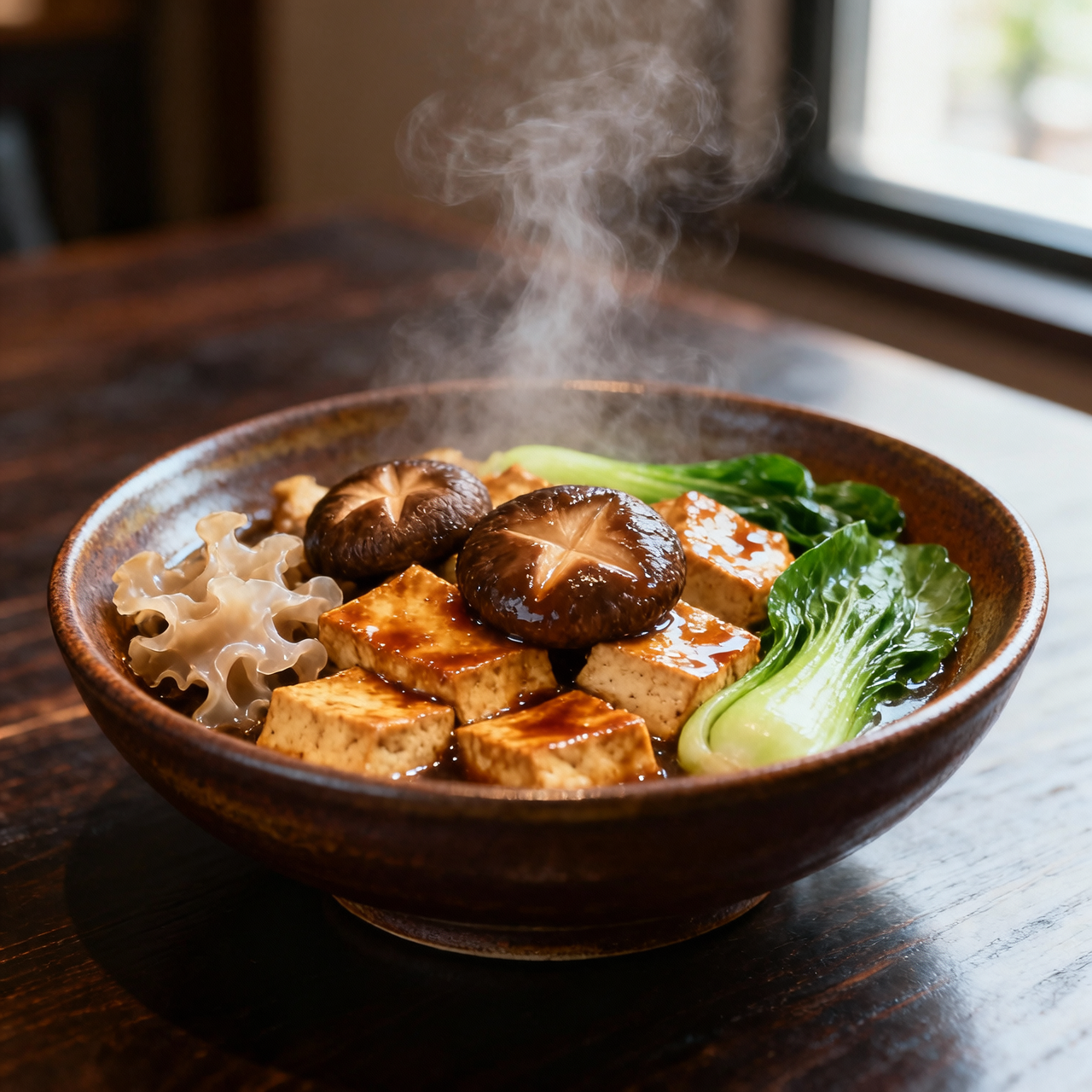
Buddha's Delight (Lo Han Jai)
When I first encountered Lo Han Jai, it was during a quiet winter visit to a temple in Guangdong, where the monks served it not as a mere meat substitute, but as a meditation on abundance. The name itself, often translated as Buddha’s Delight, hints at its roots in Buddhist vegetarian traditions, where it was historically prepared to honor the start of the lunar new year and to practice ahimsa, or non-harm. What draws me to this dish is its quiet philosophy: it transforms humble, preserved, and seasonal ingredients into a deeply layered harmony of textures and umami. Yet, I have watched countless cooks stumble by treating it like a simple stir-fry. The most common pitfall is rushing the preparation. Each component, whether it is cloud ear fungus, dried shiitake, lily buds, or braised wheat gluten, requires individual soaking, blanching, or gentle pre-cooking to release its distinct character. Tossing them raw into a hot wok guarantees a muddy, underwhelming result. Another frequent mistake is overcomplicating the seasoning. Lo Han Jai thrives on restraint; a light hand with soy sauce, a whisper of sesame oil, and the natural sweetness of slow-cooked napa cabbage are enough. When prepared patiently, the dish becomes a testament to mindful cooking, where every ingredient retains its integrity while contributing to a unified whole. For me, it is less about replicating a recipe and more about honoring a tradition that finds profound satisfaction in simplicity.
Nutrition
| Per serving | Calories | Protein | Carbs | Fat | Sat fat | Fibre | Sugar | Sodium |
|---|---|---|---|---|---|---|---|---|
| beginner | 400kcal | 26g | 30g | 22g | 3g | 8g | 10g | 870mg |
| intermediate | 400kcal | 26g | 30g | 22g | 3g | 8g | 10g | 870mg |
| expert | 400kcal | 26g | 30g | 22g | 3g | 8g | 10g | 870mg |
Per serving · Ava-estimated — a guide, not a clinical figure.
- 15 gdried shiitake mushroom— whole caps preferred
- 15 gdried wood ear mushroom— cleaned and trimmed
- 10 gdried lily bud— pale yellow, unsulfured
- 150 gfresh bamboo shoot— pre-boiled if packaged
- 300 gfirm tofu— pressed, excess water removed
- 8 piecesfried tofu puff— halved before cooking
- 200 gbaby bok choy— separated into individual leaves
- 150 gcarrot— peeled
- 100 gsnow pea— strings removed
- 50 groasted peanut— skin-on or blanched
- 45 mllight soy sauce— naturally brewed
- 10 mldark soy sauce— for color only
- 15 mltoasted sesame oil— cold-pressed
- 15 gfresh ginger— unpeeled
- 500 mlvegetable stock— unsalted, clear
- 10 grock sugar— pale yellow crystals
- 15 gcornstarch— for slurry
This version strips away intimidation by leveraging reliable shortcuts without sacrificing the dish’s soul. You will use a high-quality jarred vegetarian mushroom sauce as your flavor foundation, bypassing the need to balance individual seasonings from scratch. The key to success here is staggered addition. Because your heat source and timing will be forgiving, add the pre-soaked dried ingredients first to build a savory base, then introduce the quick-cooking vegetables and tofu puffs. Watch closely for moisture release; when the pan begins to steam rather than sizzle, reduce the heat immediately to prevent the tofu from turning soggy. Rely on visual cues over strict timers: the bamboo shoots should yield slightly to a fork, and the greens must remain bright and crisp. Keep your cornstarch slurry ready but whisked vigorously before pouring, adding it in thin streams until the sauce coats the back of a spoon. This approach guarantees a cohesive, deeply satisfying result that builds confidence.
Equipment
- Heavy-bottomed pan— non-stick is fine here
- Mixing bowl— medium size
Method
- 1
Submerge the dried shiitake mushrooms, wood ear mushrooms, and lily buds in warm water.
Cover completely.
rehydrating~ 15 minTricky bit - 2
Drain the softened ingredients thoroughly and gently squeeze out excess moisture.
Do not tear.
pressing~ 1 min - 3
Combine the light soy sauce, dark soy sauce, rock sugar, and vegetarian paste in a small bowl.
Stir until dissolved.
mixing~ 1 min - 4
Heat the heavy-bottomed pan over medium-high heat until the surface shimmers.
Test with a drop of water.
heating~ 2 min - 5
Add the pressed firm tofu and fried tofu puffs to the pan.
Do not crowd.
searing~ 3 minTricky bit - 6
Pour the reserved vegetable stock and the soy sauce mixture into the pan.
Expect immediate sizzle.
deglazing~ 1 min - 7
Simmer the liquid gently while adding the rehydrated fungi and bamboo shoots.
Maintain low bubbles.
simmering~ 5 minTricky bit - 8
Whisk the cornstarch with cold water until the slurry becomes completely smooth.
No lumps remain.
slurring~ 1 min - 9
Toss in the baby bok choy, snow peas, and carrots, then stir in the starch slurry.
Move quickly.
thickening~ 2 minTricky bit - 10
Remove the pan from the heat and fold in the toasted sesame oil and roasted peanuts.
Off-heat only.
finishing~ 1 min