
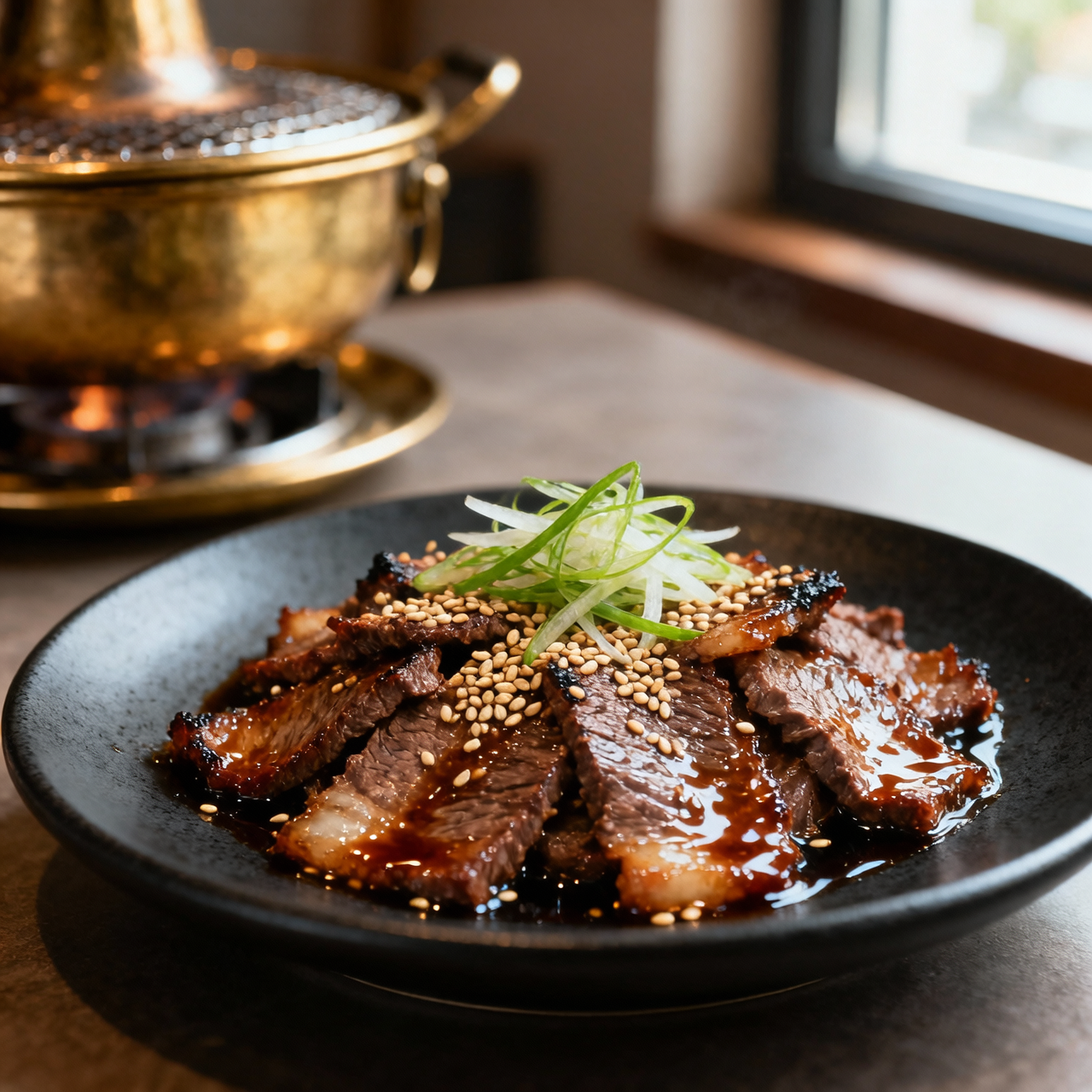
Bulgogi
When I first learned to prepare bulgogi, I didn’t realize I was stepping into a culinary lineage that spans centuries. Originally known as neobiani, this dish emerged during the Goryeo dynasty as thinly sliced, soy-marinated beef reserved for Korean royalty. Over generations, it gracefully transitioned into a beloved everyday staple, absorbing regional variations while keeping its soul intact. To me, bulgogi represents far more than a simple main course; it is a quiet celebration of Korean hospitality, a dish where the ritual of preparation becomes as meaningful as the meal itself. Yet, for all its approachable charm, it harbors subtle traps that can easily derail the final plate. The most frequent mistake I encounter is treating the marinade as an afterthought rather than a transformative agent. The enzymatic power of grated Asian pear or apple requires time to gently break down muscle fibers, but leaving the beef too long will dissolve its texture entirely. Equally damaging is overcrowding the skillet, which traps steam and robs the meat of its signature caramelized crust. I always remind myself to slice strictly against the grain, to let the meat breathe at room temperature before cooking, and to never rush the sear. Getting these details right isn’t mere technique; it’s how I honor the ancestors who first balanced sweet soy with smoky fire, and the families who still gather around it today.
Nutrition
| Per serving | Calories | Protein | Carbs | Fat | Sat fat | Fibre | Sugar | Sodium |
|---|---|---|---|---|---|---|---|---|
| beginner | 485kcal | 38g | 16g | 32g | 11g | 2g | 11g | 990mg |
| intermediate | 485kcal | 38g | 16g | 32g | 11g | 2g | 11g | 990mg |
| expert | 485kcal | 38g | 16g | 32g | 11g | 2g | 11g | 990mg |
Per serving · Ava-estimated — a guide, not a clinical figure.
- 600 gbeef ribeye steak— well-marbled, partially frozen for easier slicing
- 60 mlsoy sauce— standard Korean or Japanese variety
- 30 gbrown sugar— firmly packed
- 100 gAsian pear— ripe, grated with skin intact
- 15 mltoasted sesame oil— pure pressed, not blended with neutral oils
- 15 ggarlic— fresh cloves, peeled
- 30 gscallions— green tops only, thinly sliced on a bias
- 2 gblack pepper— freshly cracked coarse grind
- 10 gtoasted white sesame seeds— for both marinade integration and finishing
- 15 mlmirin— or substitute with dry sherry
This version prioritizes confidence and speed by leaning on high-quality jarred bulgogi marinade or a pre-blended paste, removing the guesswork from balancing sweet, salty, and umami notes. Your primary task is proper meat preparation and controlled cooking. Slice the beef thinly against the grain while it is still slightly frozen; this single step guarantees the tender texture that defines the dish. Toss the meat in your chosen jarred base and let it rest for at least fifteen minutes. When you cook, resist the urge to dump everything into the pan at once. Work in small batches so the beef actually sears rather than steams in its own juices. Listen for a steady, aggressive sizzle and watch for rapid caramelization along the edges. Flip only once to preserve the crust. If the pan starts to smoke or the sugar in the sauce threatens to burn, lower the heat immediately and add a splash of water. The goal here is not perfection, but reliable, restaurant-style flavor on your first try. Serve immediately over steamed rice with a simple side of kimchi, and trust that the shortcut foundation will still deliver a deeply satisfying result.
Equipment
- Large non-stick skillet— ensures even heat distribution for beginners
- Mixing bowl— for tossing meat and marinade
- Tongs— for flipping without piercing meat
Method
- 1
Slice the beef thinly against the grain while it is partially frozen.
Freeze for twenty minutes first for clean cuts.
slicing~ 5 min - 2
Toss the sliced meat thoroughly in the jarred bulgogi sauce.
Coat every strip evenly.
marinating~ 2 min - 3
Heat a large non-stick skillet over medium-high heat until a drop of water sizzles.
Pan must be hot before adding fat.
heating~ 3 min - 4
Cook the meat in small batches without moving it until a dark crust forms.
Crowding causes steaming instead of searing.
searing~ 3 minTricky bit - 5
Sprinkle toasted sesame seeds over the finished meat and serve immediately.
Resting is unnecessary for thin cuts.
plating~ 1 min