
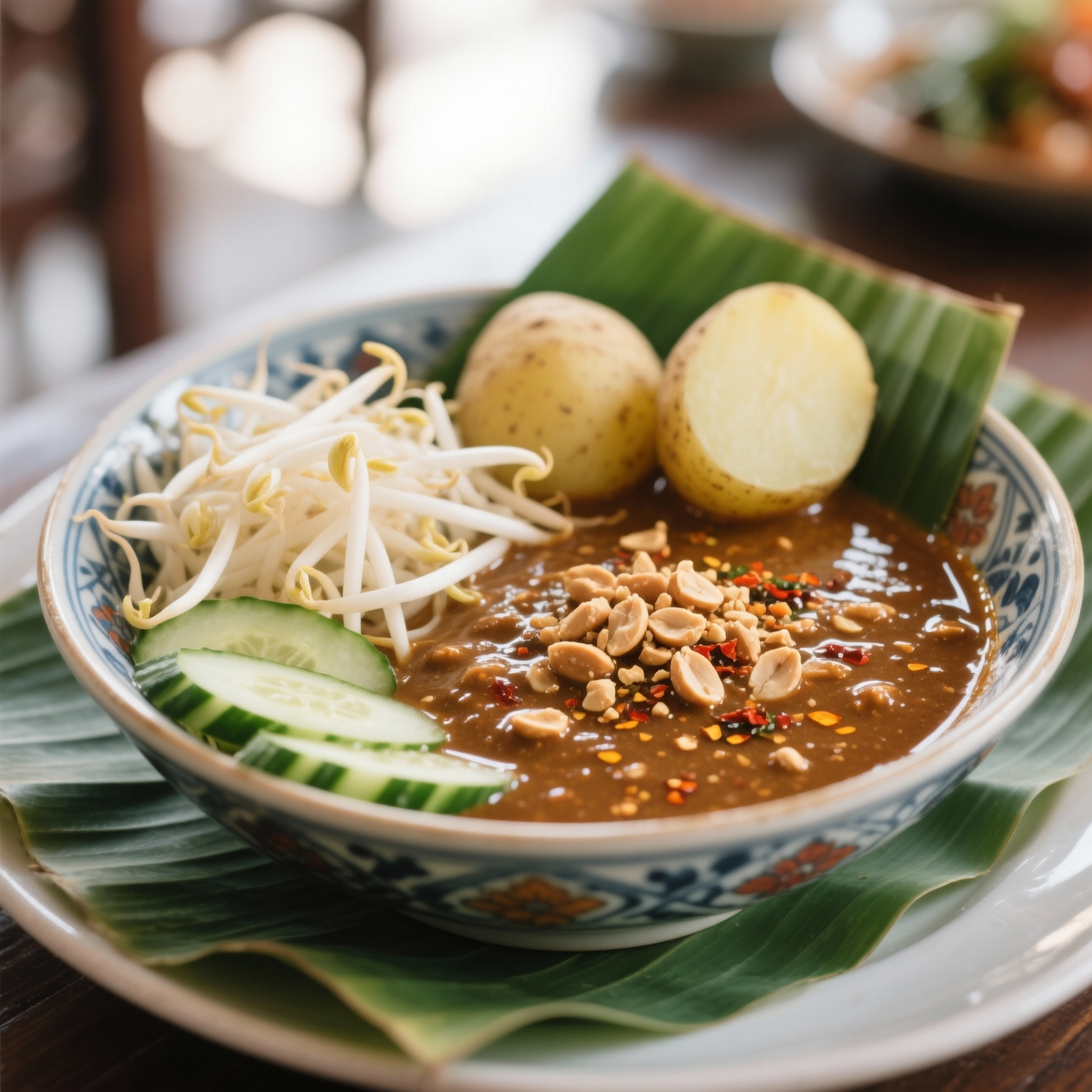
Bumbu Kacang (Peanut Sauce)
When I first learned to blend roasted peanuts with toasted spices in a traditional Indonesian stone mortar, I quickly realized that bumbu kacang is far more than a mere condiment. It is the liquid backbone of an entire culinary philosophy, bridging the earthy warmth of satay with the crisp, raw vibrancy of gado-gado. This sauce matters because it transforms humble vegetables and grilled proteins into a cohesive, deeply satisfying experience, relying on the alchemy of fat, acid, and umami rather than heavy animal products. Its roots trace back to the bustling street stalls of Java, where vendors perfected the balance of sweet palm sugar, sharp tamarind, and fiery chilies to complement the region’s abundant peanut harvest. Yet, for all its apparent simplicity, bumbu kacang is notoriously unforgiving. The most common pitfall I see home cooks fall into is rushing the grinding process, leaving the peanuts coarse and the sauce separated. Another frequent mistake is neglecting to bloom the aromatics like garlic, galangal, and lemongrass before incorporating them, which strips away the sauce’s complex fragrance. Many also add water directly to thin it out, diluting the flavor instead of achieving that luxurious, clinging consistency. To truly honor this recipe, patience is non-negotiable. You must allow the peanuts to cool completely before crushing them, simmer the spice paste until the oil separates, and whisk slowly as you incorporate the tamarind and sweet soy. When done right, the result is a glossy, deeply aromatic sauce that clings beautifully to everything it touches, carrying centuries of street-food wisdom in every spoonful.
Nutrition
| Per serving | Calories | Protein | Carbs | Fat | Sat fat | Fibre | Sugar | Sodium |
|---|---|---|---|---|---|---|---|---|
| beginner | 215kcal | 7g | 14g | 15g | 3g | 2g | 8g | 380mg |
| intermediate | 195kcal | 6g | 11g | 15g | 2g | 2g | 7g | 340mg |
| expert | 380kcal | 12g | 16g | 29g | 4g | 4g | 11g | 280mg |
Per serving · Ava-estimated — a guide, not a clinical figure.
- 200 gRoasted unsalted peanut— Skin removed
- 15 gGarlic— Peeled
- 50 gRed shallot— Peeled
- 15 gRed bird's eye chili— Stems removed
- 60 gPalm sugar— Shaved or grated
- 20 mlTamarind concentrate— Diluted if very thick
- 5 gFine sea salt— Adjust to taste
- 300 mlWater— Room temperature
- 30 mlNeutral vegetable oil— For sautéing aromatics
- 15 mlFresh lime(optional)— Juiced
This beginner-friendly Bumbu Kacang prioritizes accessibility without sacrificing the rich, savory depth expected in traditional Indonesian cuisine. Instead of dry-roasting and laboriously grinding raw peanuts from scratch, this method relies on high-quality natural peanut butter or a pre-mixed Indonesian paste to completely shortcut the heavy lifting. The absolute key to success here is gentle heat management: maintain a steady low simmer and stir continuously to keep the natural oils integrated and prevent the sugars from scorching on the pan floor. You will actively taste and adjust throughout the process, carefully balancing sweet, salty, and tangy notes using standard, easy-to-find pantry staples. This hands-on but highly forgiving approach guarantees a smooth, restaurant-ready satay or gado-gado sauce in under half an hour, making it perfect for confident first attempts and reliable weeknight meal prep. Watch closely for a glossy surface and a consistency that heavily coats the back of a spoon, which serves as your foolproof visual cue that the emulsion has properly thickened and is ready to serve.
Equipment
- Heavy-bottomed saucepan— prevents hot spots and scorching during simmer
- Silicone spatula— flexible edge scrapes pan corners efficiently
- Measuring cups and spoons— ensures consistent flavor ratios
Method
- 1
Combine peanut butter, warm water, soy sauce, and brown sugar in a heavy-bottomed saucepan.
Whisk thoroughly off the heat until completely smooth before turning on the stove.
emulsifying~ 2 min - 2
Place the pan over medium-low heat and stir continuously until the mixture begins to bubble gently around the edges.
Never use high heat; peanut sauce burns rapidly and separates.
simmering~ 5 min - 3
Stir in minced garlic, chili paste, and tamarind concentrate or lime juice, then immediately drop the heat to low.
Taste a cooled drop and adjust sugar or acid until the flavors feel balanced.
seasoning balance~ 3 min - 4
Simmer uncovered for six minutes, stirring every thirty seconds until the sauce heavily coats the back of a spoon.
Slight oil separation at the edges is normal and indicates proper fat integration.
reducing~ 6 minTricky bit - 5
Remove the pan from heat and let it rest for two minutes before transferring to a serving bowl or storage jar.
The sauce will continue to thicken as it cools to room temperature.
resting~ 2 min
Cooking from frozen
Thaw overnight in the refrigerator, then whisk vigorously with a splash of warm water to restore its smooth emulsion before gently reheating.
Storage times are a guide — always use your judgement and store food safely.