
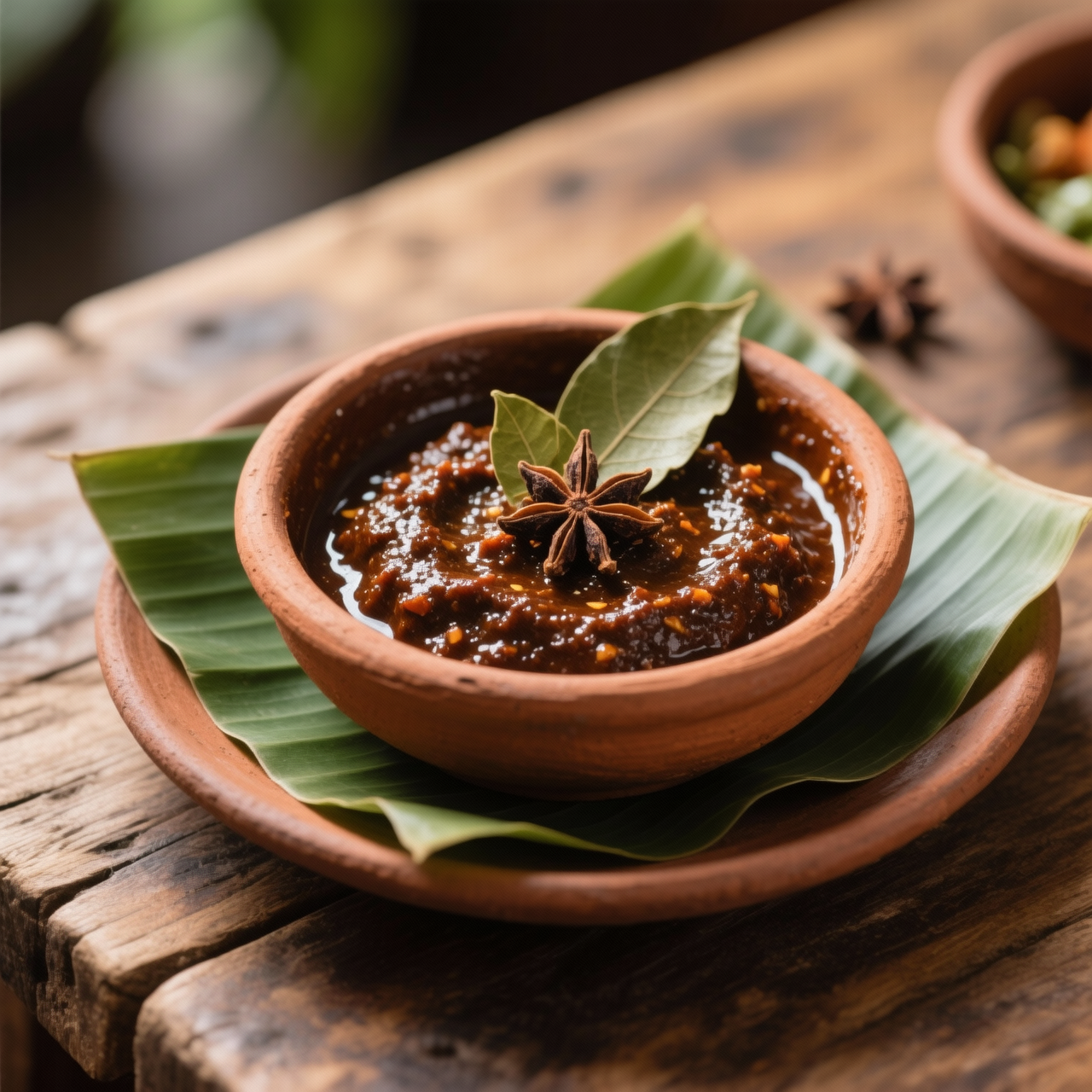
Bumbu Rendang Paste
When I first learned to make bumbu rendang, I quickly understood why it’s considered the beating heart of West Sumatran cooking. This isn’t just a sauce; it’s a deeply layered foundation born from the Minangkabau tradition of patiently coaxing out essential oils from fresh aromatics until they transform into something rich, complex, and profoundly savory. What matters most to me about this paste is how it bridges generations. Traditional cooks would spend hours grinding chilies, lemongrass, galangal, and turmeric in heavy stone mortars, a rhythm that simply cannot be rushed. The real magic happens when you toast it properly. Too often, I see home cooks skip the slow frying stage, treating it like a quick curry base. That’s a critical misstep. If you don’t gently coax the moisture out over low, steady heat, the paste will taste raw, bitter, and watery, completely missing that signature caramelized depth. Another common trap is overcrowding the wok or turning up the flame to save time. The delicate spices will scorch before they properly bloom, leaving you with an acrid, uneven foundation. I always recommend starting with a generous pour of neutral oil and letting the mixture whisper rather than shout. When done right, the paste darkens to a deep mahogany, the oil separates cleanly to the surface, and the kitchen fills with an intoxicating, earthy perfume. Because the process demands such focused attention, I treat this as a batch project. Preparing a large quantity and freezing it means you are always just a spoonful away from an authentic, deeply layered meal, without sacrificing the soulful patience this culinary cornerstone deserves.
Nutrition
| Per serving | Calories | Protein | Carbs | Fat | Sat fat | Fibre | Sugar | Sodium |
|---|---|---|---|---|---|---|---|---|
| beginner | 160kcal | 3g | 12g | 11g | 4g | 3g | 4g | 320mg |
| intermediate | 145kcal | 2g | 11g | 10g | 2g | 3g | 3g | 290mg |
| expert | 105kcal | 2g | 12g | 6g | 1g | 3g | 4g | 135mg |
Per serving · Ava-estimated — a guide, not a clinical figure.
- 300 gshallot— Peeled and roughly chopped
- 100 ggarlic— Peeled
- 150 gred chili— Stems removed, seeds optional for heat adjustment
- 50 gginger— Peeled and sliced
- 40 ggalangal— Outer skin scraped off
- 30 gfresh turmeric— Peeled
- 60 glemongrass— Tender inner stalks only, roughly chopped
- 80 gcandlenut— Dry toasted until fragrant
- 20 gcoriander seed
- 10 gcumin seed
- 50 gpalm sugar— Grated if using block form
- 120 mlneutral vegetable oil— Used for blending and toasting the paste
This beginner-friendly Bumbu Rendang Paste recipe is designed for confidence and convenience, relying on high-quality store-bought shortcuts without sacrificing authentic flavor. Instead of sourcing and grinding a dozen individual spices, you’ll start with a trusted jarred rendang or Indonesian curry paste as your foundation. We then gently toast it with fresh aromatics like minced shallots, garlic, and lemongrass to wake up the dormant oils and bridge the gap between pantry convenience and scratch-made depth. The key technique here is low-and-slow toasting in a heavy-bottomed pan; keep the heat at medium-low and stir constantly to prevent the sugars and spice solids from scorching, which would turn your paste bitter. You’ll know it’s ready when the oil begins to separate slightly around the edges and the kitchen fills with a warm, fragrant aroma. This paste scales beautifully for batch cooking, so once your confidence is built, try doubling the recipe, portioning it into ice cube trays, and freezing it for future weeknight dinners. With this streamlined approach, you’ll bypass the intimidation factor of traditional spice preparation while still capturing that signature rich, savory-sweet profile that makes rendang a beloved classic.
Equipment
- Heavy-bottomed pan— non-stick is fine here
- Silicone spatula— prevents scratching and scrapes every corner
- Ice cube tray or silicone mold(optional)— ideal for freezing uniform portions
Method
- 1
Finely mince the shallots, garlic, ginger, and lemongrass until uniformly smooth.
Use a mini food processor for speed, but scrape the sides frequently to avoid uneven chunks.
fine mincing~ 5 min - 2
Heat two tablespoons of neutral oil in a heavy-bottomed pan over medium-low heat.
Wait until the oil shimmers slightly before adding the paste to prevent sticking.
heating~ 1 min - 3
Add the jarred base paste and your fresh minced aromatics to the pan, stirring continuously to combine.
The mixture will sizzle immediately; maintain steady movement to distribute heat evenly.
blooming~ 7 minTricky bit - 4
Continue toasting the paste for five to seven minutes until it darkens slightly and oil begins to separate at the edges.
Lower the heat if you notice rapid bubbling or smell acrid smoke.
toasting~ 6 minTricky bit - 5
Transfer the finished paste to a clean jar, let it cool completely to room temperature, then portion into airtight containers.
Label with the date; it will keep refrigerated for two weeks or frozen for up to three months.
portioning~ 3 min
Cooking from frozen
Thaw overnight in the fridge or drop frozen chunks directly into a hot pan to simmer.
Storage times are a guide — always use your judgement and store food safely.