
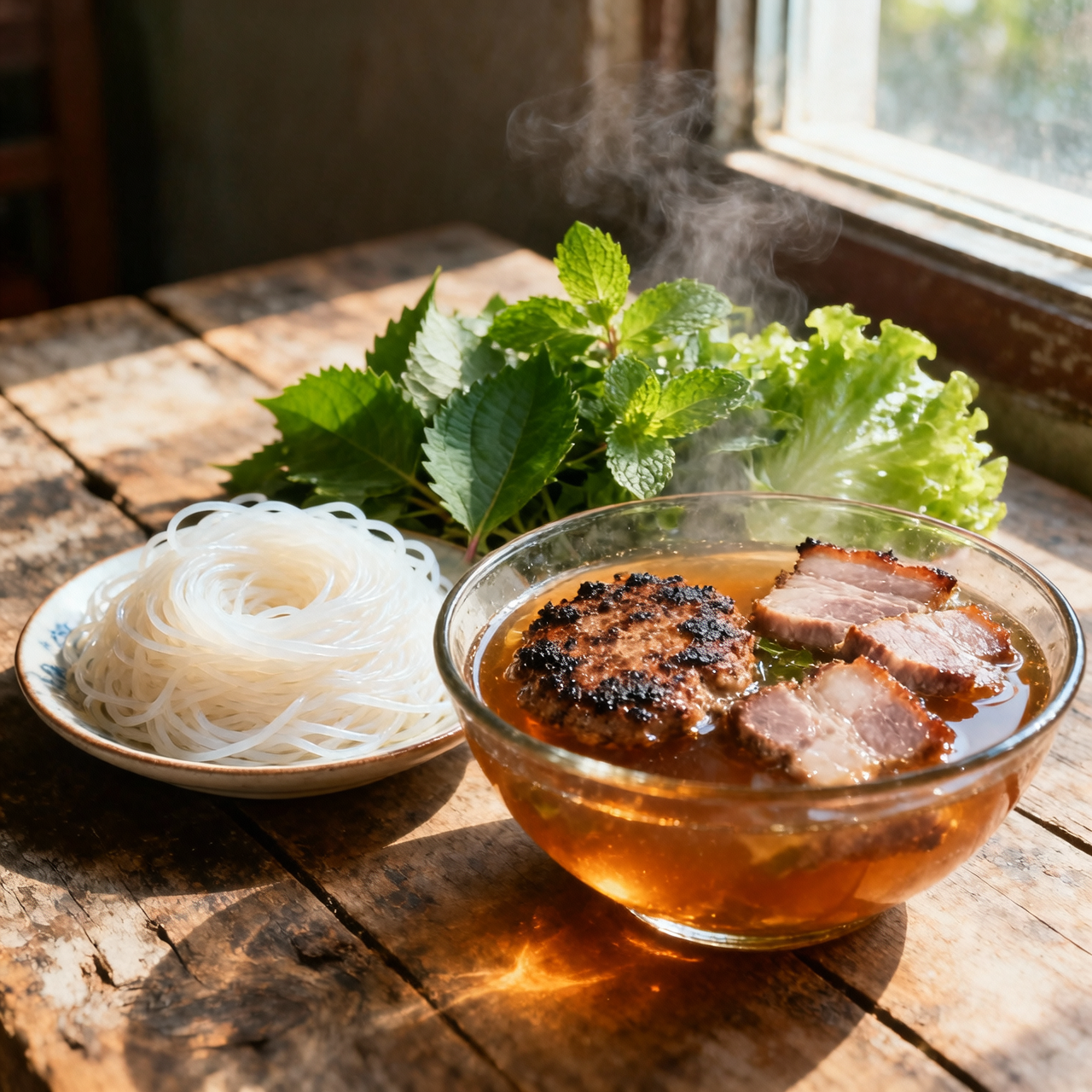
Bun Cha
I still remember the first time I stood over a charcoal brazier in Hanoi’s Old Quarter, the smoke curling around me like an invitation to slow down. Bun cha isn’t just a bowl of noodles and grilled meat; it’s a quiet ritual of balance, born from the resourcefulness of street vendors who turned humble pork scraps into something transcendent. The dish emerged in the mid-twentieth century as a working-class staple, where the sweet-savory broth, charred patties, and herbaceous greens spoke to a philosophy of harmony rather than excess. To me, bun cha matters because it refuses to be rushed. Every element asks for patience: the careful marination of the pork, the slow blistering over glowing coals, the precise tempering of fish sauce, sugar, and lime so the dipping broth sings without overwhelming. I’ve watched countless home cooks stumble by treating the components as separate tasks rather than a unified system. They overcook the patties until they’re dry, drown the herbs in the broth, or sweeten the nuoc cham until it masks the bright acidity that should cut through the fat. The real secret lies in restraint and temperature control. You want the pork to caramelize at the edges while staying juicy inside, and the dipping liquid should be room-temperature or slightly cool, so the fresh herbs and vermicelli don’t wilt the moment they touch it. When you finally bring it together, the contrast between smoky, sweet, tangy, and crisp should feel effortless. That’s what I always aim for—not a perfect recipe, but a living rhythm that honors the streets where it began.
Nutrition
| Per serving | Calories | Protein | Carbs | Fat | Sat fat | Fibre | Sugar | Sodium |
|---|---|---|---|---|---|---|---|---|
| beginner | 790kcal | 26g | 105g | 28g | 8g | 3g | 18g | 2000mg |
| intermediate | 790kcal | 26g | 105g | 28g | 8g | 3g | 18g | 2000mg |
| expert | 790kcal | 26g | 105g | 28g | 8g | 3g | 18g | 2000mg |
Per serving · Ava-estimated — a guide, not a clinical figure.
- 200 gpork belly— sliced into thin, uniform pieces
- 300 gpork shoulder— trimmed of excessive silver skin
- 120 mlfish sauce— first-press or premium grade
- 60 gpalm sugar— finely chopped or grated
- 30 ggarlic— peeled
- 40 gshallot— peeled
- 40 glime— juiced, seeds removed
- 400 grice vermicelli— dried, thin strands
- 20 gfresh mint— leaves picked
- 20 gperilla— leaves picked
- 50 ggreen leaf lettuce— torn into bite-sized pieces
- 300 mlwater— room temperature
- 10 gbird's eye chili— thinly sliced
- 3 gblack pepper— freshly cracked
- 30 mlcooking oil— for brushing grates
This pathway prioritizes confidence and consistency, replacing labor-intensive prep with reliable shortcuts. You will lean on a high-quality jarred bun cha seasoning base to build the marinade, saving precious time while guaranteeing a balanced flavor profile. The focus shifts to mastering heat control and timing, ensuring your pork develops a satisfying char without drying out. Watch your pan temperature closely; a medium-high setting prevents the sugar in the sauce from scorching before the meat cooks through. Do not crowd the cooking surface, as trapped steam will boil the pork instead of searing it. The noodles are soaked in advance to guarantee a tender, non-sticky texture that pairs seamlessly with the herbs. Keep your workspace organized, moving swiftly from the mixing bowl to the hot surface. This version removes guesswork, letting you experience the vibrant interplay of sweet, savory, and fresh elements on your very first attempt. By the time you sit down, you will understand how simple technique and smart shortcuts yield a deeply satisfying meal.
Equipment
- Heavy-bottomed grill pan— non-stick is acceptable for beginners
- Mixing bowls— glass or stainless steel
- Kitchen tongs— silicone-tipped preferred
Method
- 1
Soak the rice vermicelli in room-temperature water for fifteen minutes until pliable.
Do not boil yet.
soaking~ 15 min - 2
Combine the fish sauce, palm sugar, and jarred marinade paste in a medium bowl until completely dissolved.
Sugar should fully melt into the liquid.
dissolving~ 3 min - 3
Toss the minced pork shoulder and sliced belly in the marinade until evenly coated.
Cover and rest in the refrigerator for twenty minutes.
marinating~ 20 minTricky bit - 4
Heat a heavy grill pan over medium-high heat until lightly smoking.
A drop of water should sizzle and evaporate instantly.
preheating~ 3 min - 5
Grill the marinated pork in batches, turning once, until deeply caramelized and cooked through.
Avoid moving the meat until a crust forms.
searing~ 8 minTricky bit - 6
Drain and briefly boil the noodles for one minute, then divide them into bowls alongside fresh herbs.
Serve the hot dipping broth immediately.
plating~ 5 min