
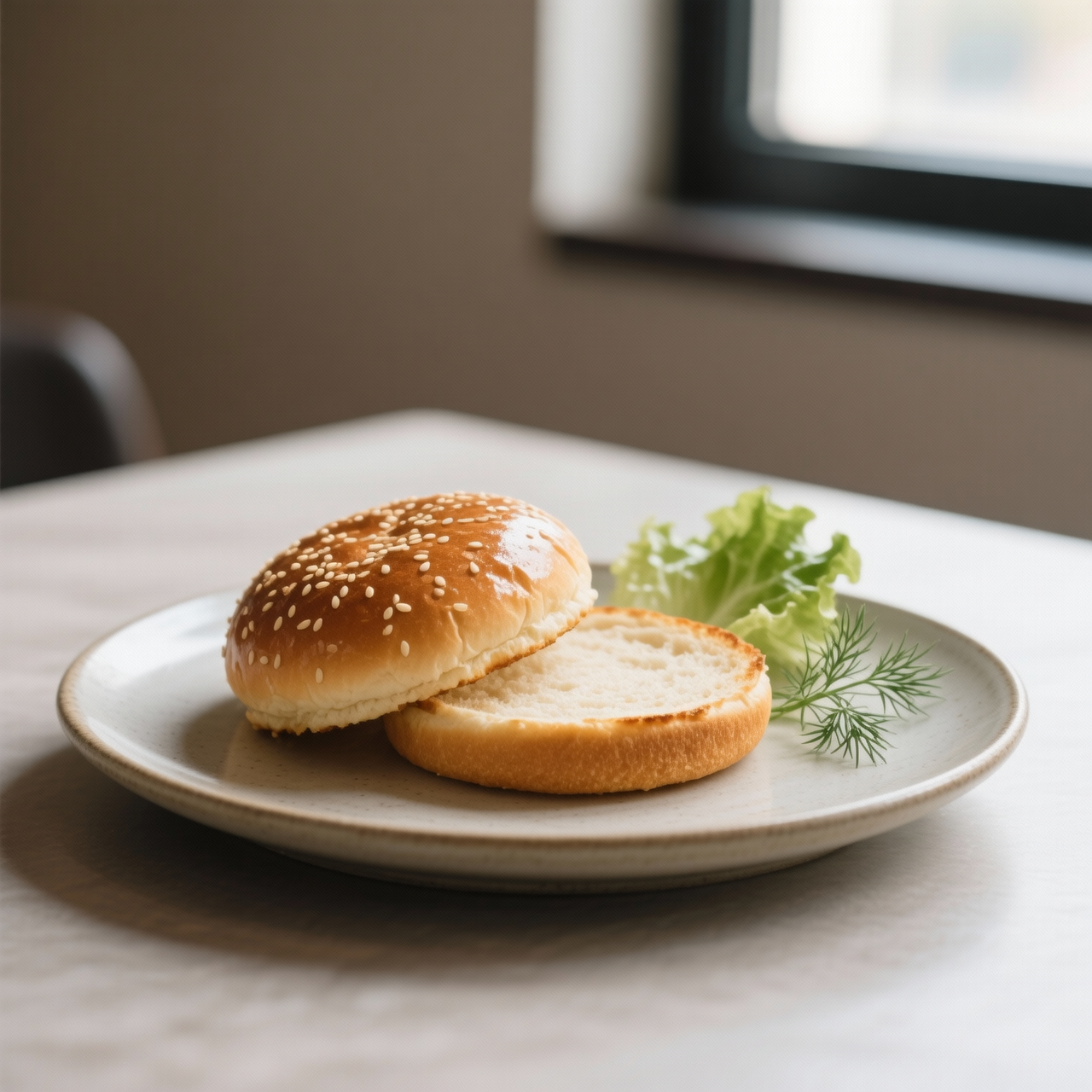
Burger buns
The hamburger bun, as we know it today, was popularized in the United States in the early twentieth century to make eating ground beef sandwiches less messy. But a truly great burger bun is about far more than just a functional vessel; it is a soft, pillowy brioche-style cloud that holds up to juicy patties and rich sauces without disintegrating. Supermarket burger buns might cost a couple of pounds for a pack of six, but they are a profound disappointment. They are pumped full of artificial dough conditioners, high-fructose corn syrup, and harsh preservatives just to achieve an unnaturally spongy texture that lasts for weeks on a shelf. They taste like sweetened cardboard and often tear the very moment you bite into them. Making them entirely from scratch with real butter, whole milk, and quality flour yields a tender, rich crumb and a glossy, sesame-flecked crust that elevates your entire meal. The biggest pitfalls when making brioche-style buns at home are under-proofing the enriched dough, which leads to dense, heavy pucks, and baking them at too high a temperature, causing the surface sugars to burn before the centers fully cook. Because this is a true batch-hero recipe, I always scale up the dough. They freeze beautifully, meaning you can spend a couple of hours on a Sunday baking a large batch, freeze the leftovers, and enjoy perfect, scratch-made buns for months without ever resorting to the plastic-wrapped supermarket aisle.
Nutrition
| Per serving | Calories | Protein | Carbs | Fat | Sat fat | Fibre | Sugar | Sodium |
|---|---|---|---|---|---|---|---|---|
| beginner | 250kcal | 6g | 35g | 9g | 5g | 1g | 5g | 180mg |
| intermediate | 475kcal | 13g | 72g | 16g | 9g | 2g | 10g | 650mg |
| expert | 280kcal | 7g | 34g | 13g | 7g | 1g | 6g | 290mg |
Per serving · Ava-estimated — a guide, not a clinical figure.
- 500 gbread flour— plus extra for dusting
- 50 gsugar
- 10 gsalt— fine sea salt
- 7 ginstant yeast
- 240 mlmilk— warmed to 38C
- 2 wholeegg— large, at room temperature
- 115 gbutter— unsalted, softened and cubed
- 1 wholeegg— beaten with 15ml milk for egg wash
- 15 gsesame seed(optional)— for garnish
Shop-bought brioche buns cost around $6 for a flimsy pack of four, often loaded with high-fructose corn syrup, dough conditioners, and preservatives that leave them tasting spongy and stale within hours. This beginner-friendly from-scratch version ditches the processed cheats and complex laminations for a straightforward, forgiving mixing method that yields a genuinely soft, bakery-quality crumb without needing advanced kneading skills. By using a simple stand-mixer or vigorous hand-mixing technique and a single bulk rise, you eliminate the intimidation of traditional brioche. The dough is slightly wetter and highly forgiving, ensuring a tender, rich crumb that freezes beautifully for future batch-cooking. You'll achieve that signature glossy, egg-washed crust and pillowy interior for a fraction of the artisan bakery price, with zero unpronounceable additives. It’s the ultimate foundational bake for your freezer, proving that mastering a classic from-scratch staple is entirely accessible on your very first attempt.
Equipment
- Large mixing bowl— glass or stainless steel is ideal for watching the dough rise
- Baking sheet— rimmed to catch any stray egg wash
- Parchment paper— prevents sticking and makes cleanup effortless
- Pastry brush— silicone bristles work perfectly for the egg wash
Method
- 1
Warm the milk to 105°F, then whisk in the sugar and active dry yeast until frothy.
Milk should feel like a warm bath, not hot.
blooming~ 5 min - 2
Mix in the flour, salt, egg, and softened butter until a shaggy, slightly sticky dough forms.
The dough will look messy at first; this is completely normal.
mixing~ 3 min - 3
Knead the dough on a lightly floured surface for 8 to 10 minutes until it becomes smooth, elastic, and pulls away from the counter.
Use a bench scraper if the dough sticks to your hands.
kneading~ 10 minTricky bit - 4
Place the dough in a lightly oiled bowl, cover with a damp towel, and let rise in a warm spot until doubled in size.
A turned-off oven with the light on is a perfect proofing spot.
proofing~ 45 min - 5
Punch down the risen dough, divide it into 12 equal pieces, and roll each piece into a tight, smooth ball.
Tuck the edges underneath to create surface tension for a tall rise.
shaping~ 10 min - 6
Arrange the dough balls on a parchment-lined baking sheet, cover loosely, and let them proof again until puffy and nearly doubled.
They should spring back slowly when gently poked.
proofing~ 20 min - 7
Brush the buns gently with the beaten egg wash and bake until they are deep golden brown and sound hollow when tapped.
Internal temperature should reach 190°F for a fully baked crumb.
baking~ 15 min
Cooking from frozen
Thaw at room temperature and refresh in a warm oven for five minutes.
Storage times are a guide — always use your judgement and store food safely.