
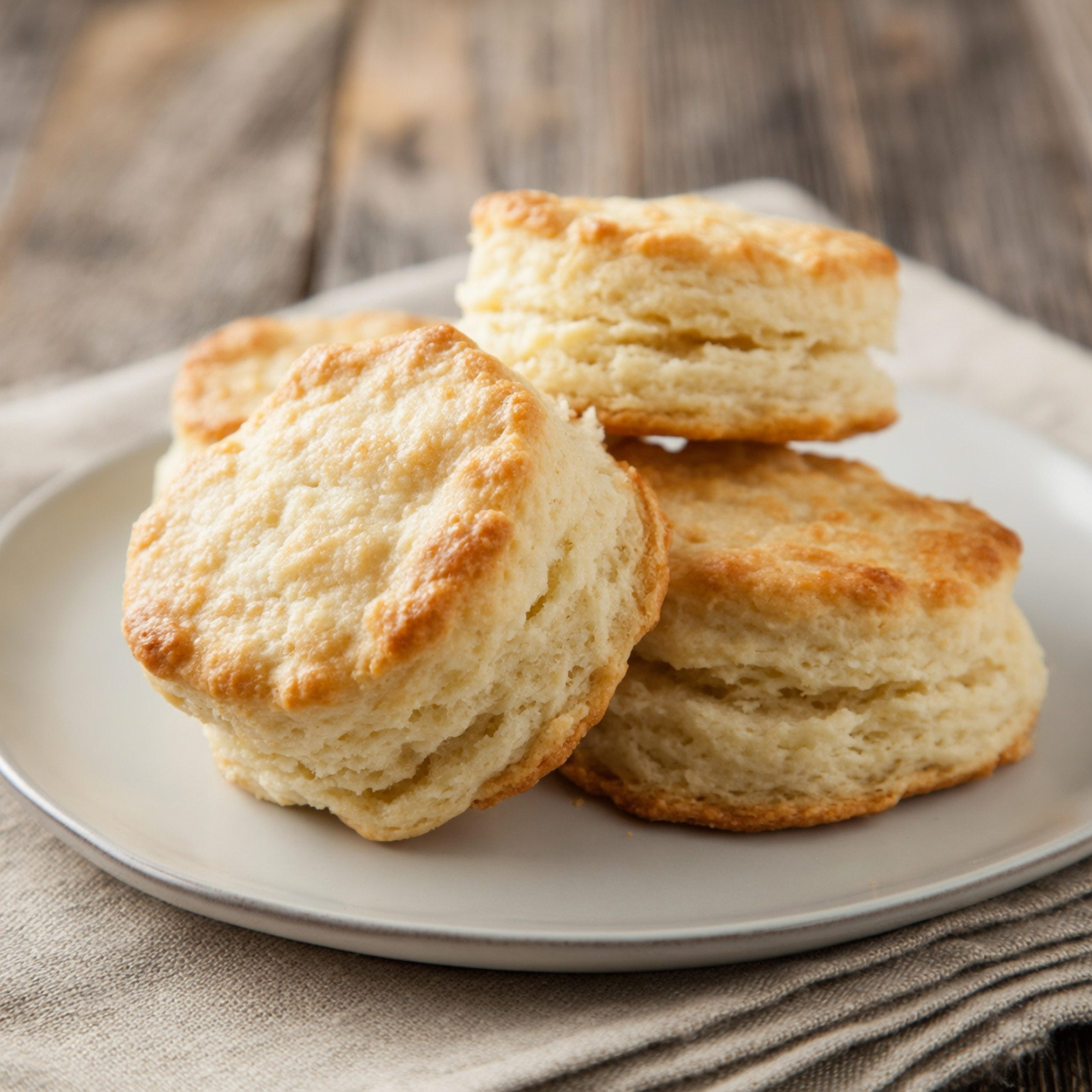
Buttermilk biscuits
True buttermilk biscuits are a cornerstone of Southern American breakfast tables, born from the historical necessity of using up slightly soured milk before modern refrigeration. Making them from scratch is a revelation, especially when you consider the sad reality of their shop-bought counterparts. Those refrigerated canned biscuits cost around four dollars for a tiny tube of eight, yet they are loaded with hydrogenated oils, artificial preservatives, and a distinct, unpleasant chemical tang from the aluminum-lined packaging. Worse, they never truly puff up correctly, leaving you with a dense, gummy interior that no amount of butter can save. A proper homemade biscuit, by contrast, is shatteringly crisp on the outside and tender, flaky, and cloud-like within. The secret lies in keeping everything ice-cold and handling the dough as little as possible. The most common pitfalls I see are overworking the dough, which develops the gluten and turns your tender crumb into a tough hockey puck, and letting the butter warm up, which completely destroys those coveted flaky layers. Because these are such a batch hero in my kitchen, I always shape and cut my raw biscuits, then freeze them solid on a parchment-lined tray before transferring them to a freezer bag. This simple step means I can bake them straight from frozen whenever the urge strikes, giving me fresh, warm biscuits in just a few extra minutes of baking time without any of the processed shortcuts.
Nutrition
| Per serving | Calories | Protein | Carbs | Fat | Sat fat | Fibre | Sugar | Sodium |
|---|---|---|---|---|---|---|---|---|
| beginner | 340kcal | 6g | 48g | 15g | 9g | 2g | 2g | 380mg |
| intermediate | 640kcal | 11g | 93g | 22g | 14g | 3g | 3g | 950mg |
| expert | 680kcal | 11g | 58g | 46g | 28g | 2g | 3g | 820mg |
Per serving · Ava-estimated — a guide, not a clinical figure.
- 250 gall-purpose flour
- 10 gbaking powder
- 2 gbaking soda
- 5 gsalt
- 12 gsugar
- 113 gunsalted butter— cold and cubed
- 180 gbuttermilk— cold
Shop-bought refrigerated tube biscuits cost about $5 for a handful of dense, highly processed discs loaded with palm oil and preservatives, yielding a cardboard-like crumb. This beginner from-scratch version ditches the tube for real butter and buttermilk, delivering genuine flaky layers without complex lamination. The secret to this forgiving technique is grating frozen butter directly into the flour, which guarantees perfect pea-sized fat pockets without needing a pastry blender. We use a simple rough fold method—gently gathering and folding the shaggy dough just three times—to create distinct layers without the stress of traditional rolling. Watch your handling: the biggest mistake beginners make is overworking the dough or twisting the biscuit cutter, both of which seal the edges and stunt the rise. Keep everything ice-cold, handle the dough as little as possible, and press the cutter straight down. Because they freeze brilliantly, you can shape a batch, freeze them raw on a tray, and bake straight from frozen whenever you need fresh, flaky breakfast biscuits without the processed shortcuts.
Equipment
- Box grater— Use the largest holes for the butter
- Large mixing bowl— Chill it in the freezer beforehand if your kitchen is warm
- Baking sheet— Line with parchment paper to prevent sticking
- Round biscuit cutter— A sharp 3-inch cutter is ideal, or use a clean glass
Method
- 1
Place the butter in the freezer for 20 minutes and measure the buttermilk into a separate bowl to chill.
Keeping the fat ice-cold is the most critical rule for flaky biscuits.
chilling~ 20 min - 2
Grate the frozen butter directly into the bowl of dry ingredients using the large holes of a box grater, tossing gently to coat the shreds.
The shreds should remain separate and cold, looking like coarse crumbs.
grating~ 2 min - 3
Pour the cold buttermilk over the flour mixture and stir with a fork just until a shaggy, sticky dough forms.
Stop mixing as soon as no dry flour remains; it will look very messy.
mixing~ 1 min - 4
Turn the dough onto a floured surface, gently pat it into a rectangle, and fold it in half three times to build flaky layers.
Handle the dough as little as possible to avoid melting the butter.
folding~ 2 minTricky bit - 5
Pat the dough to one inch thick and cut out biscuits with a sharp cutter, pressing straight down without twisting.
Twisting the cutter seals the edges and prevents the biscuits from rising properly.
cutting~ 2 minTricky bit - 6
Place biscuits on the prepared baking sheet so they are just touching, and bake in a preheated 425°F oven until golden brown.
Baking them touching forces them to rise upward rather than spreading outward.
baking~ 15 min
Cooking from frozen
Reheat frozen cooked biscuits in a 350F oven for about 10 minutes until warmed through.
Storage times are a guide — always use your judgement and store food safely.