
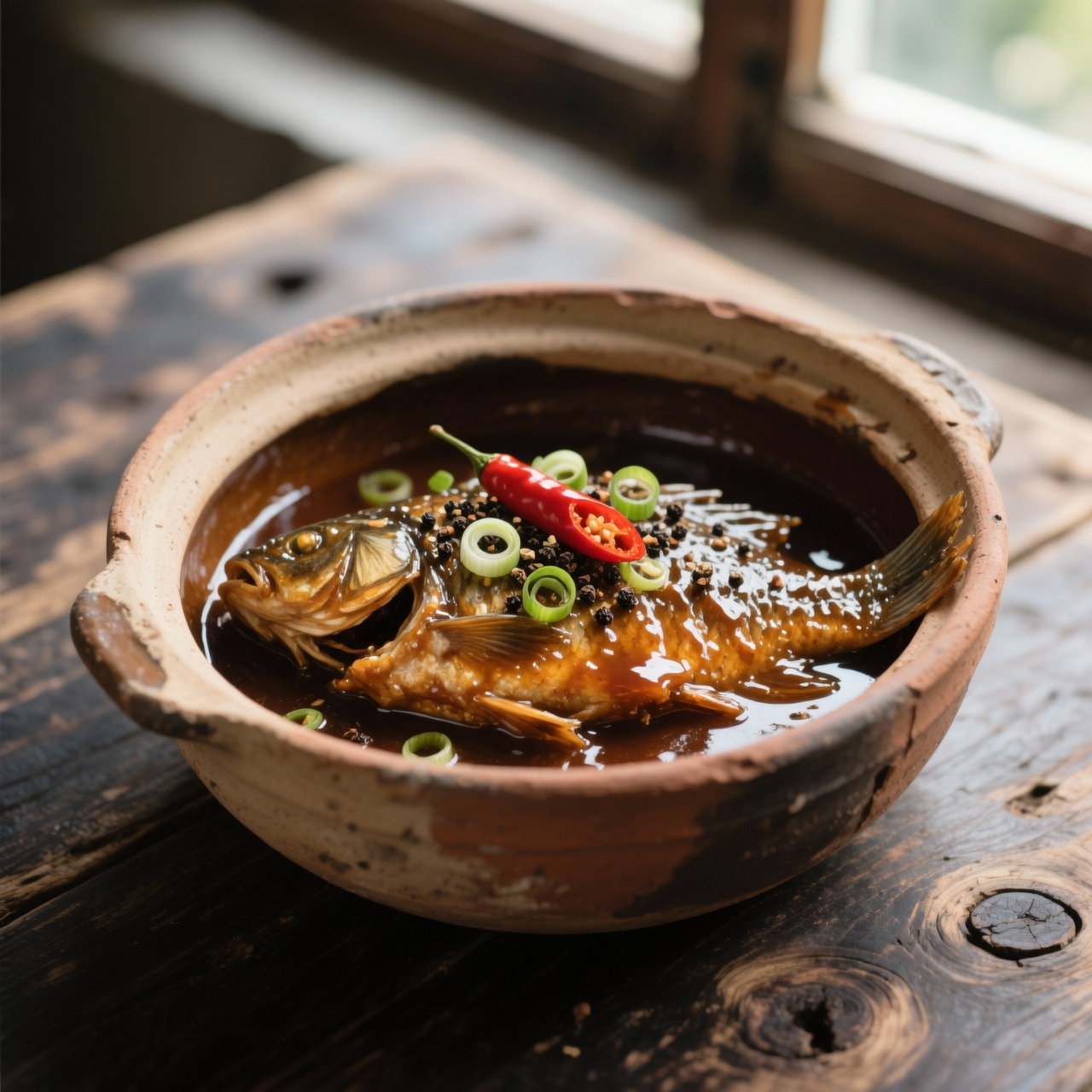
Ca Kho To
I first learned to watch the caramel bubble when my grandmother stood over a crackling clay pot in her Saigon kitchen, the heavy lid trapping a symphony of sizzling fish, black pepper, and sweetened coconut water. Cá kho tộ is not just a dish to me; it is a quiet anchor in Vietnamese home cooking, born from the practical need to preserve fish in the humid Mekong Delta before evolving into the deeply savory centerpiece it is today. The clay pot is not merely traditional; it is functional, distributing gentle heat that coaxes the sauce into a glossy, lacquer-like coating without scorching the delicate flesh. I have seen countless home cooks rush the caramelization, tossing in the fish before the sugar and water have properly darkened, which leaves you with a thin, one-note broth instead of that profound, bittersweet umami. Others forget the resting step, lifting the lid too soon and breaking apart the tender fillets that need time to reabsorb the glaze. When done patiently, the dish becomes a meditation on balance: the sharp bite of shallots and black pepper cutting through the rich sweetness, the fish flaking away in moist, caramel-drenched layers. I always tell beginners to listen to the pot. The sound changes as the water evaporates, shifting from a rapid boil to a slow, rhythmic pop. That is your cue to lower the flame. Getting it right means honoring a lineage of quiet kitchens, where time and attention are the truest seasonings, and every bite carries the weight of generations who knew how to coax magic from simple ingredients.
Nutrition
| Per serving | Calories | Protein | Carbs | Fat | Sat fat | Fibre | Sugar | Sodium |
|---|---|---|---|---|---|---|---|---|
| beginner | 273kcal | 26g | 20g | 10g | 2g | 1g | 15g | 1540mg |
| intermediate | 273kcal | 26g | 20g | 10g | 2g | 1g | 15g | 1540mg |
| expert | 273kcal | 26g | 20g | 10g | 2g | 1g | 15g | 1540mg |
Per serving · Ava-estimated — a guide, not a clinical figure.
- 600 gcatfish steak— fresh, cut into 1-inch thick rounds, bones intact
- 60 mlfish sauce— high-quality, first-press preferred
- 250 mlcoconut water— unsweetened, natural
- 45 ggranulated sugar— white or light brown
- 15 mlneutral oil— rice bran or canola
- 2 wholeshallot— peeled and thinly sliced
- 4 wholegarlic clove— minced
- 2 wholebird's eye chili(optional)— halved lengthwise
- 3 wholescallion— trimmed and cut into 2-inch pieces
- 5 gblack peppercorn— freshly cracked or whole
This path prioritizes confidence and consistency over tradition. You will work with a forgiving, medium-low heat and rely on a straightforward sequence that minimizes active monitoring. The caramel stage, usually the most intimidating part of this dish, is simplified by dissolving sugar and fish sauce together at a gentle simmer rather than pushing dry crystals to the brink of burning. Watch closely as the liquid reduces; the moment the bubbles grow larger and the sauce coats the back of a spoon, the braise is ready. Keep the fish pieces undisturbed during the first ten minutes to prevent them from breaking apart in the pan. A non-stick skillet replaces the traditional clay vessel here, giving you reliable heat distribution and easier cleanup. Do not rush the final reduction, as a watery sauce will dilute the flavor and fail to cling to the delicate flesh. This version teaches you the rhythm of Vietnamese braising without demanding perfect timing. Trust the visual cues, keep your spatula gentle, and let the pot do the heavy lifting. By the end, you will have a deeply savory, restaurant-style glaze that proves technique can be learned one controlled simmer at a time.
Equipment
- Heavy-bottomed skillet— non-stick coating recommended
- Silicone spatula— flexible for basting
Method
- 1
Combine sugar and 30ml of fish sauce in a cold pan over medium-low heat.
Stir constantly until fully dissolved.
dissolving~ 1 min - 2
Add the remaining fish sauce, coconut water, shallots, and garlic to the pan.
Bring to a gentle simmer.
simmering~ 2 min - 3
Nestle the catfish steaks into the liquid in a single layer.
Do not overlap pieces.
submerging~ 1 min - 4
Cover and cook undisturbed for ten minutes.
Fish should turn opaque halfway through.
steaming~ 10 min - 5
Uncover and spoon sauce over the fish while simmering until thickened.
Bubbles should coat the back of a spoon.
reducing~ 5 minTricky bit - 6
Garnish with scallions and chili, then remove from heat.
Let rest for two minutes before serving.
resting~ 2 min