
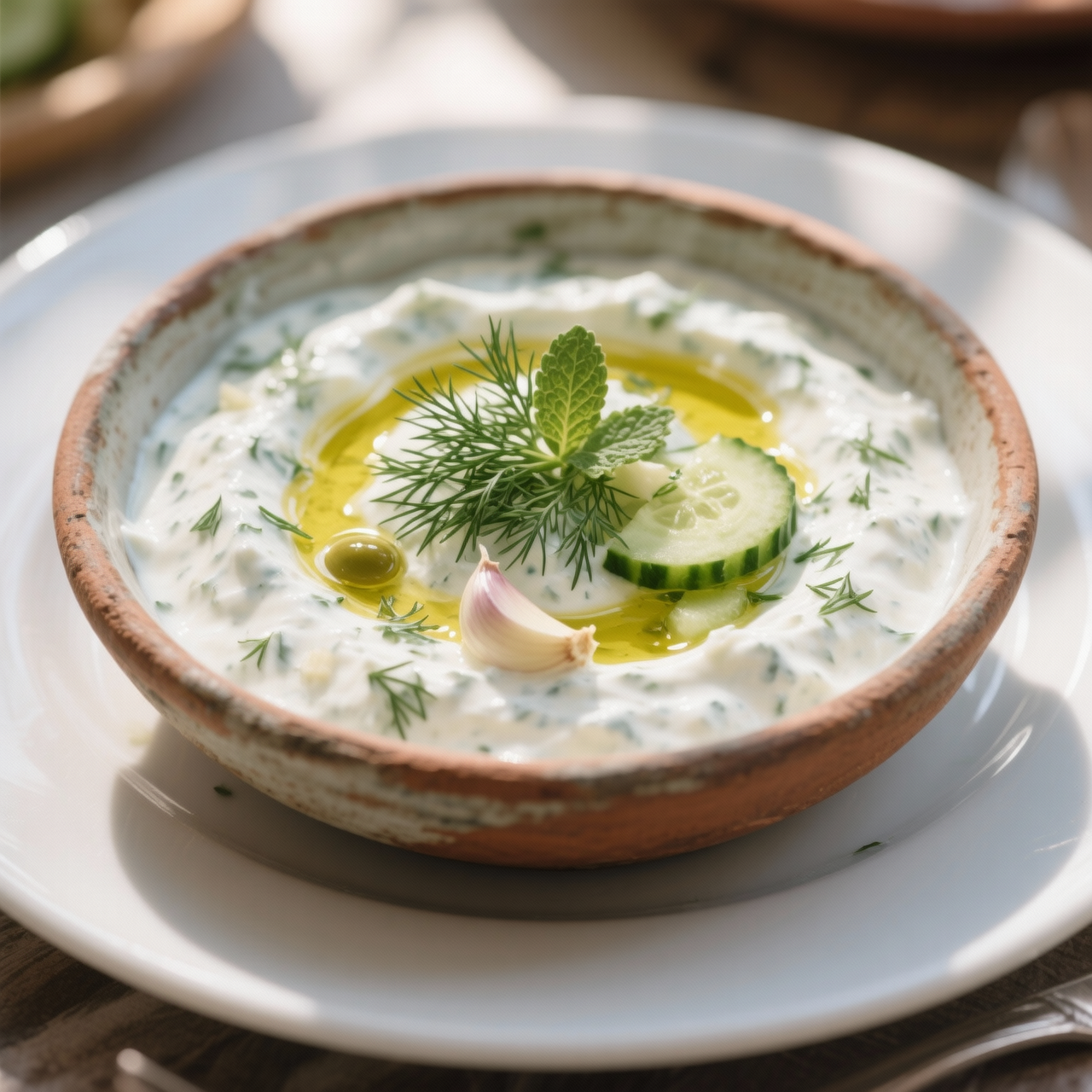
Cacık
When I first encountered cacık in a sun-drenched courtyard in Anatolia, I realized it was far more than a simple condiment. It is a quiet testament to the Turkish mastery of balance, where the tang of strained yogurt meets the cool, crisp bite of grated cucumber, all lifted by a whisper of fresh dill, garlic, and olive oil. Historically rooted in the nomadic traditions of Central Asia and refined across the Ottoman table, this sauce or soup—depending on how much water you whisk in—has survived centuries precisely because it adapts to the rhythm of the seasons. What makes cacık truly matter to me is its unpretentious elegance. It doesn’t demand attention; it simply offers relief, especially alongside grilled meats, rich pilafs, or even a heavy summer feast. Yet, its simplicity is exactly where home cooks stumble. The most common pitfall I see is using watery, unstrained yogurt that separates into a sad, thin puddle. Always drain your yogurt first, even briefly. Another mistake is overworking the cucumber; if you don’t salt it and squeeze out the excess moisture, you’ll dilute the entire dish and lose that essential creamy texture. And please, resist the urge to drown it in vinegar or heavy spices. The garlic should be a gentle hum, not a shout, and the olive oil a finishing ribbon, not a pool. When prepared with patience and restraint, cacık becomes a cooling sanctuary on the plate, a reminder that sometimes the most profound flavors emerge from the fewest ingredients.
Nutrition
| Per serving | Calories | Protein | Carbs | Fat | Sat fat | Fibre | Sugar | Sodium |
|---|---|---|---|---|---|---|---|---|
| beginner | 140kcal | 8g | 6g | 10g | 5g | 1g | 5g | 220mg |
| intermediate | 175kcal | 6g | 9g | 13g | 5g | 2g | 7g | 310mg |
| expert | 195kcal | 5g | 8g | 16g | 4g | 2g | 7g | 320mg |
Per serving · Ava-estimated — a guide, not a clinical figure.
- 400 gyogurt— Full-fat plain or strained yogurt recommended
- 300 gcucumber— Peel, deseed if desired, and finely dice or grate
- 3 clovegarlic— Finely minced or crushed into a paste
- 120 mlcold water— Adjust amount based on desired sauce thickness
- 15 mlolive oil— Extra virgin
- 5 gdried mint— Crushed lightly between palms to release aroma
- 5 gsalt— Adjust to taste
This beginner-friendly approach prioritizes speed and confidence, relying on accessible supermarket staples like pre-grated cucumber, thick store-bought Greek or Turkish yoghurt, and jarred dried mint. The main technique to master is moisture management: cucumbers release a lot of water, which can dilute your sauce into a soupy mess if left unchecked. We will use a quick salt-and-drain method with a standard colander or paper towels to keep the texture rich and creamy. You will also learn to mellow raw garlic by mixing it directly into the yoghurt first, allowing the dairy to soften its sharp bite before folding in olive oil and seasonings. Watch closely for liquid pooling at the bottom of the bowl; simply pour it off or leave it for a lighter consistency. Keep all ingredients chilled until serving to preserve that signature refreshing snap. No special equipment is required, just a few mixing bowls and a whisk.
Equipment
- Fine-mesh sieve— essential for draining cucumber
- Large mixing bowl— glass or ceramic retains cold well
- Rubber spatula(optional)— prevents scratching the bowl
Method
- 1
Grate the cucumber and toss it with a pinch of salt, then let it sit in a colander for ten minutes.
Salt draws out excess moisture to prevent a watery sauce.
sweating~ 10 min - 2
Transfer the grated cucumber to a clean kitchen towel and squeeze firmly to remove all remaining liquid.
Press until the towel feels damp but no water drips out.
wringing~ 1 minTricky bit - 3
Whisk the yoghurt and finely minced garlic together in a large mixing bowl until completely smooth.
Let the mixture rest for five minutes to mellow the raw garlic bite.
tempering~ 6 min - 4
Fold the drained cucumber into the yoghurt mixture, then drizzle with olive oil and sprinkle with dried mint and a final pinch of salt.
Taste and adjust salt before chilling; cold dulls flavor perception.
folding~ 2 min
Storage times are a guide — always use your judgement and store food safely.