
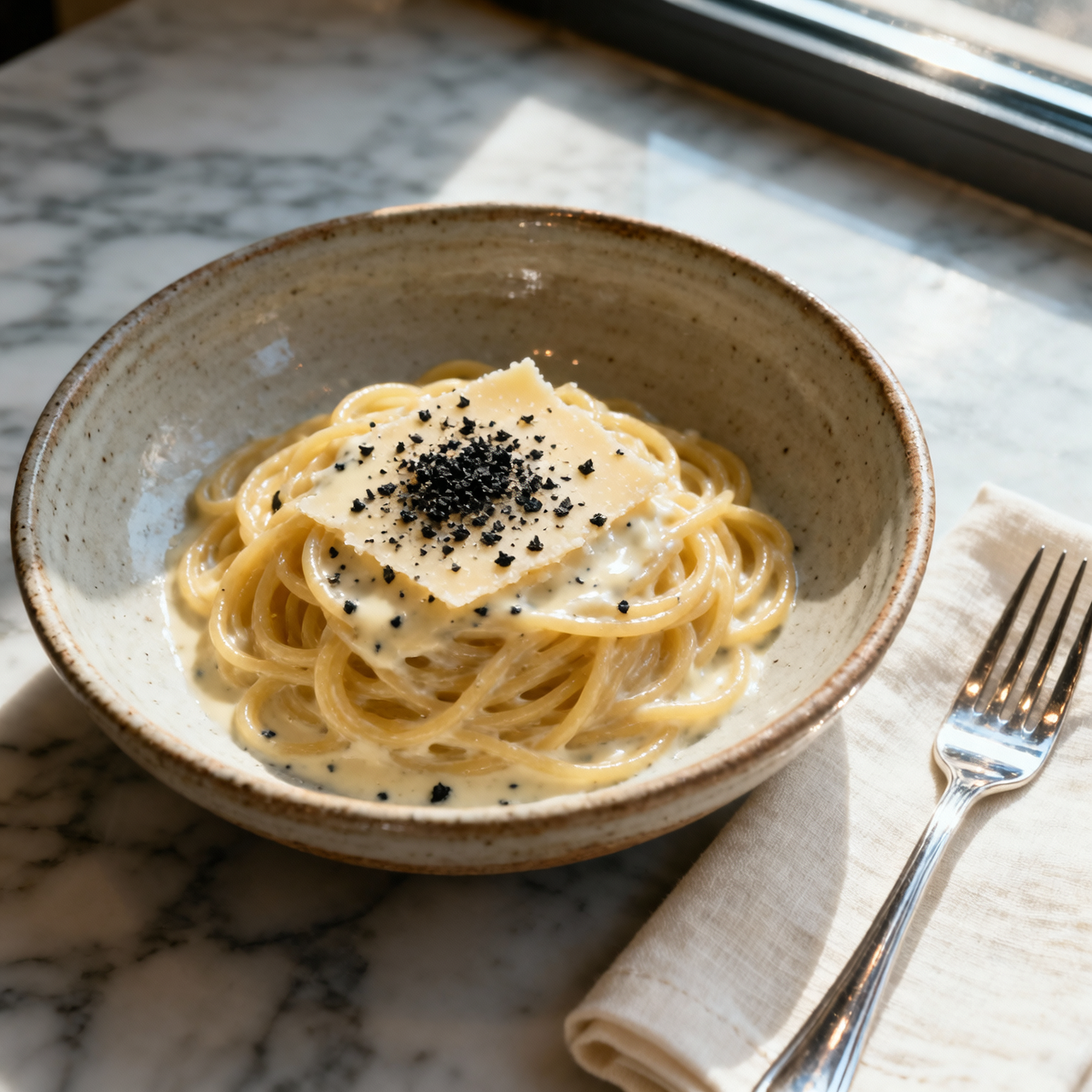
Cacio e Pepe
When I first approached cacio e pepe, I thought it was just cheese and pepper tossed with pasta. How wrong I was. Born in the rugged hills of Lazio, this dish was originally the sustenance of shepherds who carried hard pecorino romano and dried peppercorns in their packs, relying on starchy pasta water to coax them into a velvety emulsion. What makes it matter to me, and to anyone who truly respects Roman cooking, is its ruthless honesty. There is nowhere to hide behind heavy creams, garlic, or butter. You have exactly three elements, and their success hinges entirely on technique and timing. I have learned the hard way that the difference between restaurant-quality silk and a greasy, clotted mess lies in temperature control and agitation. Too much heat, and the cheese proteins seize and split. Too little, and you are left with a dry, uneven coating. Many home cooks reach for pre-grated cheese or skip the crucial step of creating a thick, room-temperature paste with the pecorino and pepper before introducing it to the pan. I always stress the importance of vigorously tossing the pasta off direct heat, adding the starchy water one spoonful at a time until the sauce emulsifies into a glossy, clinging ribbon. When done right, it is a quiet triumph of patience, a reminder that Italian cuisine does not need complexity to be profound, only respect for the ingredients and the rhythm of the pan.
Nutrition
| Per serving | Calories | Protein | Carbs | Fat | Sat fat | Fibre | Sugar | Sodium |
|---|---|---|---|---|---|---|---|---|
| beginner | 340kcal | 19g | 41g | 11g | 7g | 3g | 1g | 800mg |
| intermediate | 340kcal | 19g | 41g | 11g | 7g | 3g | 1g | 800mg |
| expert | 340kcal | 19g | 41g | 11g | 7g | 3g | 1g | 800mg |
Per serving · Ava-estimated — a guide, not a clinical figure.
- 200 gspaghetti— bronze-die cut for optimal sauce adhesion
- 150 gPecorino Romano cheese— aged 12 months, rind removed
- 15 gblack peppercorn— whole, freshly cracked
- 12 gcoarse sea salt— for pasta water only
- 2 Lwater— filtered
This pathway prioritizes consistency and confidence over strict tradition. Here, we lean on a few reliable kitchen shortcuts to guarantee success without sacrificing flavor. Instead of wrestling with a temperamental cheese paste, you will use a pre-measured slurry method that separates the cheese from the heat entirely until the final moment. We also recommend using a reliable non-stick skillet and a sturdy whisk to physically guide the emulsion into place. Watch closely for the moment the starchy pasta water meets the grated cheese; it will look thin and watery at first, but steady, low-speed whisking will transform it into a glossy coating. The primary goal is to avoid high heat, which is the most common cause of broken sauces. By keeping the skillet at a gentle simmer and removing it completely from the burner before adding the cheese, you remove the guesswork. This version is designed to teach you the visual and textural cues of a proper emulsion. Once you recognize the creamy sheen and feel the sauce cling to your spoon, you have mastered the foundational rhythm of this dish.
Equipment
- Large pot— for boiling pasta
- Non-stick skillet— reduces sticking and simplifies cleanup
- Whisk— essential for preventing clumps
Method
- 1
Bring a large pot of water to a rolling boil.
Use enough water so the pasta can swim freely.
boiling~ 5 min - 2
Add the spaghetti and cook until just shy of al dente.
Check package timing and subtract two minutes.
parboiling~ 8 min - 3
Reserve one cup of the cloudy pasta water before draining.
Starch is the emulsifier here.
reserving~ 1 min - 4
Toast the cracked peppercorns in a dry skillet until fragrant.
Medium-low heat prevents burning.
blooming~ 2 min - 5
Add the reserved pasta water to the skillet and bring to a gentle simmer.
Do not let it boil vigorously.
simmering~ 2 min - 6
Remove the skillet from heat and whisk in the grated cheese until smooth.
Keep the pan off the flame to prevent seizing.
emulsifying~ 3 minTricky bit - 7
Toss the pasta into the skillet until every strand is coated.
Add more pasta water if the sauce thickens too quickly.
tossing~ 2 min