
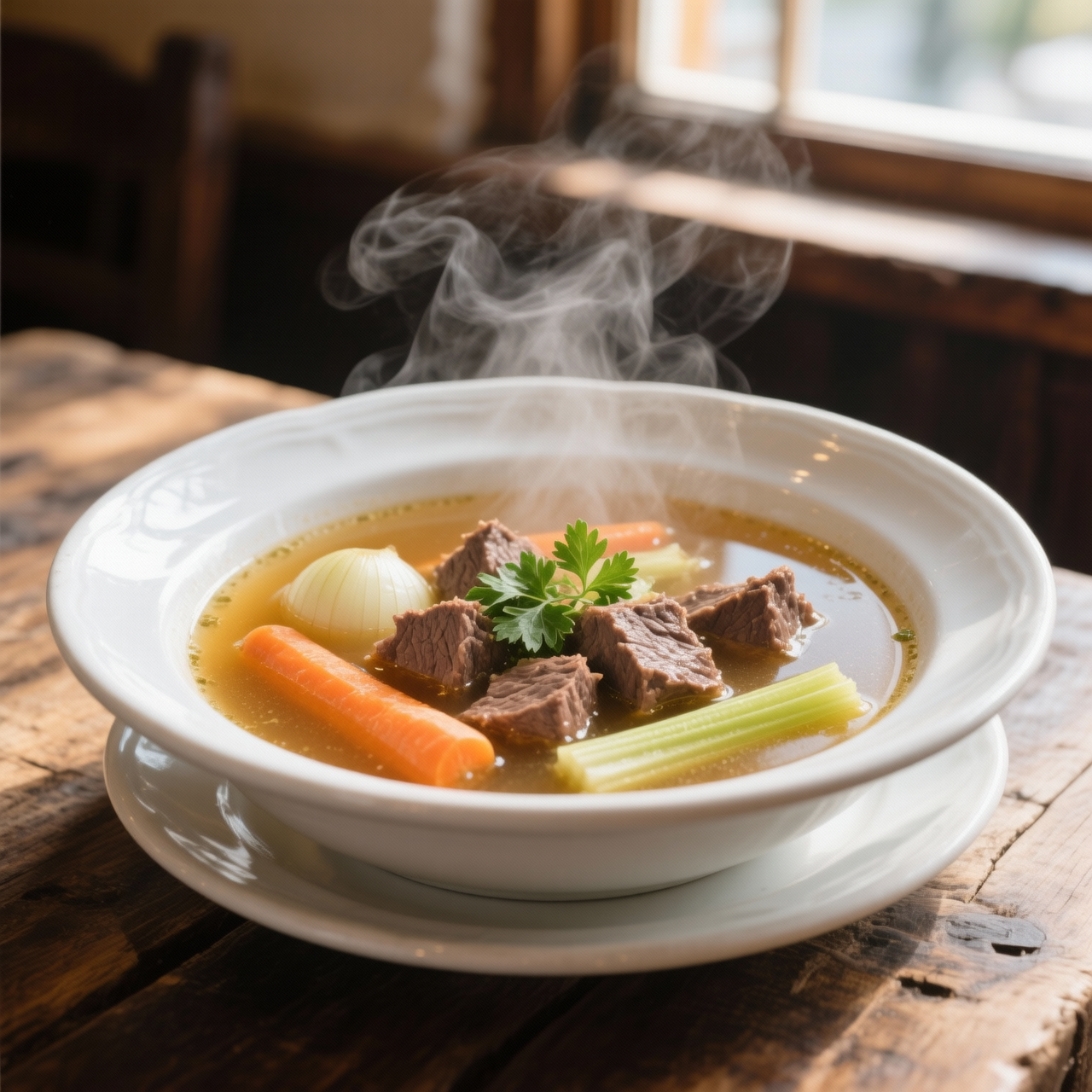
Caldo de carne (beef stock)
When I think of the rich, soulful foundation of Argentine home cooking, my mind immediately goes to a deeply simmering pot of caldo de carne. While the world often associates our cuisine with the spectacular asado, the true magic of our kitchen happens long before the meat hits the grill. This beef stock is the unsung hero, the liquid gold that elevates a simple risotto, gives depth to our hearty stews, and forms the base of the most luxurious sauces. In Argentina, where beef is practically a religion, making stock from the bone is a way of honoring the entire animal, ensuring that nothing goes to waste and every ounce of flavor is extracted. The secret lies in patience and technique. A common pitfall I see home cooks make is rushing the process by cranking the heat to a rolling boil. This emulsifies the fats and impurities, resulting in a cloudy, greasy broth rather than a clear, pristine consommé. You must keep it at a gentle, lazy simmer. Another mistake is skipping the initial roast; toasting your beef bones and aromatics in a hot oven until they are deeply caramelized before they ever touch the water builds a complex, mahogany depth that raw bones simply cannot achieve. Finally, never neglect the skimming. Those first twenty minutes of cooking will yield a grayish foam that must be carefully ladled away. When you treat this process with the reverence it deserves, reducing it down and freezing it in concentrated cubes, you are bottling the very essence of the Argentine pampas, ready to transform any weeknight dinner into a masterpiece.
Nutrition
| Per serving | Calories | Protein | Carbs | Fat | Sat fat | Fibre | Sugar | Sodium |
|---|---|---|---|---|---|---|---|---|
| beginner | 30kcal | 2g | 2g | 1g | 0g | 0g | 1g | 900mg |
| intermediate | 120kcal | 10g | 3g | 7g | 3g | 0g | 1g | 600mg |
| expert | 140kcal | 14g | 3g | 8g | 3g | 0g | 1g | 650mg |
Per serving · Ava-estimated — a guide, not a clinical figure.
- 1000 gbeef bone— marrow or knuckle bones, cut into pieces
- 1 unitonion— peeled and halved
- 1 unitcarrot— peeled and cut into large chunks
- 1 unitcelery stalk— washed and cut into large chunks
- 2 unitgarlic clove— peeled and smashed
- 3 unitparsley sprig— fresh
- 1 unitbay leaf— dried
- 5 unitblack peppercorn— whole
- 3 Lwater— cold
- 10 gsalt(optional)— omit if reducing heavily for sauces
This beginner-friendly approach to Argentine caldo de carne skips the traditional all-day simmer by utilizing a high-quality jarred beef base or paste to achieve a rich, concentrated stock in under an hour. The goal here is a confident first attempt at building deep, foundational beef flavor without the time commitment. You will gently sauté basic aromatics like onion, garlic, and carrot to build a fresh aromatic base, then dissolve the jarred beef paste into water. As it simmers, the liquid reduces, concentrating the savory notes and melding the fresh vegetables with the robust beef base. Keep a close eye on the salt levels; jarred pastes vary wildly in sodium content, so taste before adding any extra seasoning. Once reduced to a potent, flavorful liquid, you will strain out the solids and pour the concentrated stock into ice cube trays. This batch-hero technique ensures you always have portion-controlled, frozen beef stock cubes ready to elevate weeknight pan sauces, risottos, or quick soups, giving you the rich taste of traditional caldo with modern convenience.
Equipment
- Heavy-bottomed pan— non-stick is fine here
- Fine-mesh strainer— essential for a clear stock
- Silicone ice cube trays— makes popping out frozen cubes easy
Method
- 1
Heat olive oil in a heavy-bottomed pan over medium heat and add the diced onion, carrot, and minced garlic.
Sweat the vegetables until translucent, about 5 minutes.
sweating~ 5 min - 2
Stir in the water and the jarred beef base paste, whisking until the paste is completely dissolved.
Scrape the bottom of the pan to incorporate any fond.
dissolving~ 2 min - 3
Bring the mixture to a gentle boil, then reduce the heat to low and simmer uncovered until the liquid is reduced by half.
Taste for salt before reducing further, as the paste is already seasoned.
reducing~ 20 min - 4
Pour the concentrated stock through a fine-mesh strainer into a heatproof bowl, pressing on the solids to extract all liquid.
Discard the spent vegetables.
straining~ 5 min - 5
Allow the stock to cool to room temperature, then ladle it evenly into silicone ice cube trays and freeze until solid.
Transfer frozen cubes to a sealed bag for long-term storage.
freezing~ 5 min
Cooking from frozen
Thaw overnight in the fridge or melt directly in a saucepan over low heat.
Storage times are a guide — always use your judgement and store food safely.