
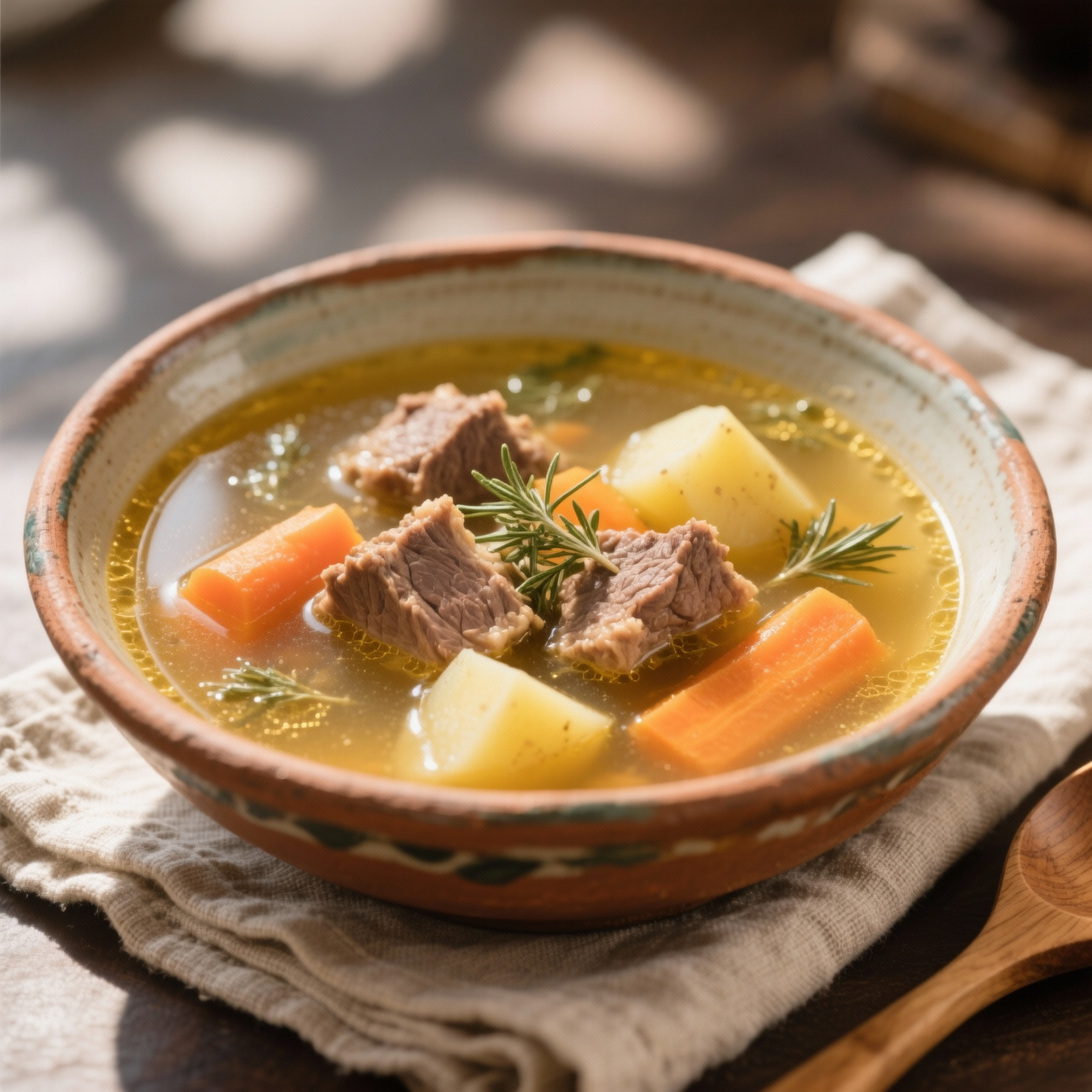
Caldo (Spanish stock)
There is a quiet rhythm to Spanish kitchens that begins long before the main event, and it always starts with a simmering pot of caldo. In my experience, this humble stock is the invisible backbone of everything from a vibrant paella to a comforting lentil stew, yet it rarely gets the credit it deserves. Historically, Spanish home cooks have never wasted a single bone, vegetable peel, or herb stem; instead, they coax out every last drop of flavor through slow, patient extraction. What makes a truly great caldo isn’t complexity, but restraint. I’ve seen too many well-meaning cooks rush the process or drown their pots in heavy spices, completely missing the point. The magic lies in letting the ingredients speak for themselves. A common pitfall is boiling the stock too aggressively, which turns it cloudy and bitter rather than clear and aromatic. Another mistake is skipping the initial cold-water soak for the bones and vegetables; that slow temperature rise is what pulls out the gelatin and delicate flavors without emulsifying the fat. When I make this, I keep the heat at a bare whisper, barely disturbing the surface, and I never let it reduce past a gentle concentration. It matters because this liquid gold dictates the soul of your final dish. If your caldo lacks depth, your paella will taste flat, and your soups will feel hollow. Treat it with patience, strain it through a fine mesh without pressing the solids, and you’ll have a versatile foundation that transforms ordinary weeknight meals into something deeply rooted in Spanish tradition.
Nutrition
| Per serving | Calories | Protein | Carbs | Fat | Sat fat | Fibre | Sugar | Sodium |
|---|---|---|---|---|---|---|---|---|
| beginner | 35kcal | 3g | 4g | 2g | 0g | 1g | 2g | 620mg |
| intermediate | 38kcal | 4g | 2g | 2g | 1g | 0g | 1g | 420mg |
| expert | 28kcal | 4g | 3g | 1g | 0g | 1g | 2g | 780mg |
Per serving · Ava-estimated — a guide, not a clinical figure.
- 1000 gChicken carcass— Rinse well and pat dry
- 500 gBeef marrow bone— Ask butcher to crack for maximum extraction
- 200 gYellow onion— Quartered, skin left on for color
- 150 gCarrot— Peeled and roughly chopped
- 100 gCelery stalk— Roughly chopped
- 15 gGarlic clove— Crushed
- 100 gTomato— Halved
- 3 leavesBay leaf— Dried
- 10 gFresh thyme sprig— Tied with kitchen twine
- 5 gBlack peppercorn— Whole
- 2500 mlWater— Cold
- 10 gSalt— Fine sea salt
This beginner-friendly version of traditional Spanish caldo strips away the hours of simmering and complex ingredient prep, delivering a deeply savory base perfect for first-time cooks. Instead of toasting whole spices and roasting bones, you will use a high-quality jarred sofrito paste and store-bought broth as your foundation. The focus here is on building flavor quickly while learning the fundamental rhythm of stock-making: gentle heat, patience, and careful seasoning. Keep the heat strictly at a bare simmer because a rolling boil will cloud the liquid and make it taste harsh. Watch the surface closely for the first ten minutes to skim away any foam that rises, which ensures a clean, bright flavor. Do not worry about perfect knife cuts for the vegetables since everything gets strained anyway. The goal is a confident, foolproof first attempt that tastes authentic enough for paella or bean soups, without the intimidation factor of traditional methods. Once cooled, portion it into freezer-safe containers so you always have a Spanish-flavored shortcut ready for busy weeknights.
Equipment
- Large heavy-bottomed pot— 4-quart minimum for gentle simmering
- Fine-mesh strainer— essential for clear broth
- Silicone spatula(optional)— helps press solids when straining
- Freezer-safe containers(optional)— 1-cup portions work best
Method
- 1
Heat the oil in a large pot over medium heat and add the chopped vegetables and jarred sofrito paste, stirring constantly until fragrant.
Do not let the garlic brown or it will turn bitter.
blooming~ 2 min - 2
Pour in the liquid base and bay leaf, then slowly increase the heat until small bubbles just break the surface.
Taste now to gauge baseline salt before reducing.
simmering~ 5 min - 3
Reduce the heat to low, loosely cover the pot, and let it gently bubble while skimming any foam that rises to the top.
A rolling boil will cloud your stock and make it bitter.
skimming~ 20 minTricky bit - 4
Remove from heat, carefully pour the hot liquid through a fine-mesh strainer into a clean bowl, and press lightly on the solids.
Do not mash the vegetables, or the stock will turn cloudy.
straining~ 3 min
Cooking from frozen
Thaw overnight in the refrigerator or gently melt in a saucepan over low heat before using.
Storage times are a guide — always use your judgement and store food safely.