
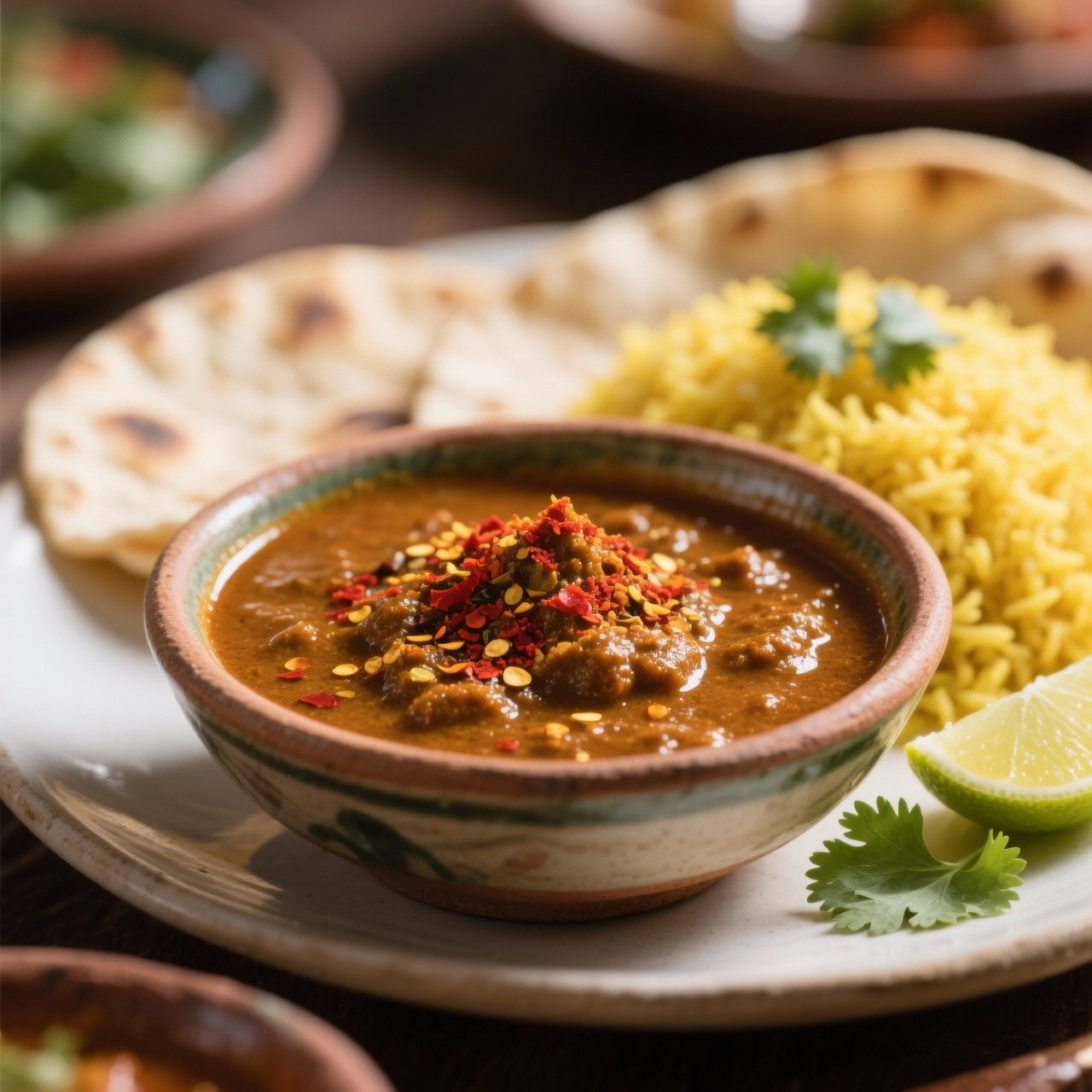
Cape Malay curry paste
When I first learned to grind Cape Malay curry paste in a quiet kitchen overlooking the Atlantic, I quickly understood that this isn’t just a condiment; it’s a living archive of resilience and trade. Born in the Cape Flats, this paste carries the fingerprints of enslaved people from Indonesia, Malaysia, and India, blended with indigenous South African ingredients like apricots, tamarind, and fiery local chilies. What makes it matter to me today is its gentle, aromatic warmth—it’s a mild curry by design, meant to comfort rather than overwhelm, relying on toasted spices and slow-cooked onions to build depth. I’ve seen many home cooks rush the process or substitute dried powders for freshly ground seeds, which instantly flattens the flavor profile. The most common pitfall is skipping the dry-toasting stage. If you don’t coax the essential oils out of the coriander, cumin, and mustard seeds before grinding, you lose that foundational nuttiness that defines the Cape Malay style. Another mistake is over-blending without enough oil, which creates a gritty, separated mess instead of a smooth, emulsified paste. I always take my time, letting the onions sweat until they’re nearly caramelized, then slowly incorporating the spice mix with a splash of vinegar and a touch of brown sugar to balance the heat. When you treat it as a slow craft rather than a quick convenience, the paste becomes a versatile kitchen anchor, ready to elevate everything from slow-simmered bobotie to vibrant vegetable stews. It’s a quiet reminder that the best flavors, like the best histories, require patience and respect to unfold properly.
Nutrition
| Per serving | Calories | Protein | Carbs | Fat | Sat fat | Fibre | Sugar | Sodium |
|---|---|---|---|---|---|---|---|---|
| beginner | 135kcal | 2g | 11g | 8g | 1g | 2g | 5g | 350mg |
| intermediate | 175kcal | 2g | 14g | 13g | 2g | 3g | 7g | 260mg |
| expert | 145kcal | 3g | 19g | 7g | 1g | 4g | 8g | 380mg |
Per serving · Ava-estimated — a guide, not a clinical figure.
- 300 gonion— peeled and roughly chopped
- 30 ggarlic— peeled
- 50 gginger— peeled and roughly chopped
- 45 gmild curry powder— preferably a traditional South African blend
- 15 gground turmeric
- 60 gtomato paste
- 40 gapricot jam— provides traditional Cape Malay sweetness
- 30 mlwhite vinegar
- 80 mlsunflower oil
- 100 mlwater— adjust as needed for desired paste consistency
This beginner-friendly approach swaps labor-intensive whole-spice grinding for reliable store-bought curry powder and ready-to-blend aromatics, guaranteeing a consistently fragrant, mild Cape Malay curry paste without the guesswork. The key difference here is reliance on pre-measured, shelf-stable spice blends that you gently toast to wake up their essential oils before blending with fresh onion, garlic, ginger, and a touch of oil. Watch your heat closely during the blooming step; pre-ground spices burn faster than whole ones, turning bitter in seconds. Keep the skillet at medium-low and stir constantly until the mixture smells deeply aromatic rather than sharp or smoky. When blending, add the oil gradually to help your processor emulsify a smooth, spreadable paste instead of a dry crumb. If the texture feels too thick, a splash of water or vegetable broth will loosen it without diluting flavor. Once cooled, this batch divides neatly into freezer-safe portions, giving you a reliable, weeknight shortcut that captures the sweet, earthy, and gently spiced character of traditional Cape Malay cooking. Follow the visual and aromatic cues closely, and you will build confidence in layering flavors from scratch.
Equipment
- Heavy-bottomed skillet— distributes heat evenly to prevent spice scorching
- Food processor or blender— a small chopper works fine for this batch size
- Silicone spatula(optional)— heat-resistant and flexible for scraping the pan
Method
- 1
Combine the curry powder, ground coriander, and cumin in a dry skillet over medium-low heat.
Stir constantly until fragrant, about 60 seconds.
toasting~ 1 min - 2
Transfer the toasted spices to a bowl and add the chopped onion, garlic, ginger, and apricot jam.
No need to pre-cook the aromatics; the blender will break them down.
combining~ 1 min - 3
Pulse the mixture in your food processor while slowly drizzling in the vegetable oil.
Scrape down the sides halfway through to ensure even texture.
emulsifying~ 2 min - 4
Return the blended paste to the skillet and cook gently over low heat until the raw onion scent disappears.
The oil should begin to separate slightly at the edges, signaling it is ready.
sweating~ 5 minTricky bit - 5
Transfer the finished paste to a clean jar and let it cool completely before sealing.
Cooling prevents condensation that could cause spoilage during storage.
cooling~ 10 min
Cooking from frozen
Thaw overnight in the refrigerator, then whisk vigorously to recombine any separated oils before use.
Storage times are a guide — always use your judgement and store food safely.