
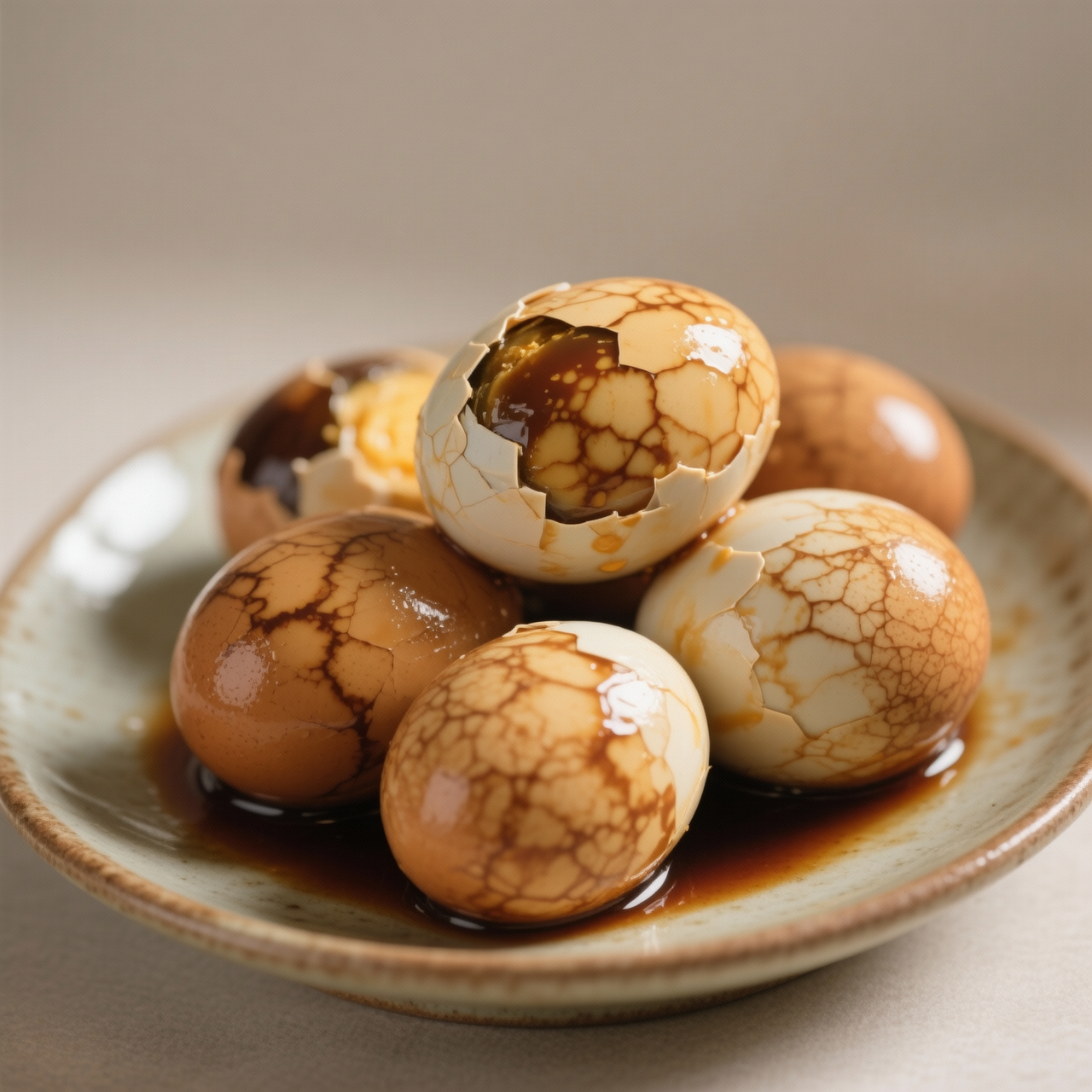
Century-Style Tea Eggs
I’ve always found it strange that we accept rubbery, neon-stained convenience store eggs as the standard for a quick snack. The real century-style tea egg, born on bustling Chinese street corners and passed down through generations of home cooks, is a quiet masterpiece of slow steeping and patience. Instead of the factory-sealed versions that cost upwards of a dollar and deliver a mouthful of aggressive sodium, artificial dyes, and a texture closer to erasers, this from-scratch method relies on nothing but cracked shells, black tea, star anise, cinnamon, and time. The beauty lies in the alchemy of the broth seeping through fine fractures, painting the whites with delicate, web-like marbling while the yolk remains rich and custardy. Why bother making them yourself? Because you control the salt, you avoid chemical preservatives, and you actually taste the tea. The biggest pitfall I see beginners fall into is treating these like standard hard-boiled eggs. If you boil the broth violently after the tea goes in, you’ll extract harsh tannins that make everything taste bitter. Crack the shells gently with the back of a spoon; too much force shatters the egg and ruins that signature lace effect. And please, resist the urge to rush the steep. The magic doesn’t happen on the stovetop; it happens when the pot is turned off, covered, and left to rest for hours, sometimes overnight. This is how you replace the processed aisle with something genuinely nourishing.
Nutrition
| Per serving | Calories | Protein | Carbs | Fat | Sat fat | Fibre | Sugar | Sodium |
|---|---|---|---|---|---|---|---|---|
| beginner | 155kcal | 13g | 2g | 11g | 3g | 0g | 1g | 780mg |
| intermediate | 158kcal | 12g | 4g | 10g | 3g | 0g | 3g | 610mg |
| expert | 180kcal | 12g | 4g | 11g | 4g | 1g | 1g | 650mg |
Per serving · Ava-estimated — a guide, not a clinical figure.
- 12 largeegg— hard-boiled and gently cracked all over with the back of a spoon
- 15 gblack tea leaf— loose leaf or 2 standard tea bags
- 60 mlsoy sauce— dark soy sauce preferred for deeper marbling color
- 25 grock sugar
- 3 wholestar anise
- 1 wholecinnamon stick— approximately 5 cm long
- 5 gSichuan peppercorn— lightly crushed
- 1000 mlwater— enough to fully submerge eggs during steeping
- 5 gsalt(optional)
This beginner-friendly approach strips away the traditional multi-day brining process, delivering deeply marbled, shop-worthy eggs in under an hour. Instead of relying on pre-packaged tea egg kits or heavily processed convenience snacks that cost upwards of three dollars per pack and hide excessive sodium, artificial colorants, and preservatives, this method uses just six pantry staples you likely already own. You will gently simmer whole eggs, carefully tap them to create a fine web of cracks, and submerge them in a straightforward, simmered broth of black tea, soy sauce, star anise, and cinnamon. The key here is patience during the steep: keep the heat strictly at a bare simmer after cracking, as vigorous boiling will shatter the delicate shell pattern and force the white to toughen. Watch for the broth to darken to a rich mahogany hue, which signals that the tannins and spices have properly penetrated the cracks. Once cooled and peeled, the eggs reveal a striking, naturally marbled appearance. The result is a deeply savory, aromatic snack that completely outclasses the rubbery, artificially dyed alternatives sold at convenience stores, proving that authentic Chinese street food requires zero shortcuts or industrial additives.
Equipment
- Medium heavy-bottomed saucepan— holds at least 2 quarts
- Slotted spoon— for gentle egg handling
- Ice bath bowl— to halt cooking instantly
Method
- 1
Place eggs in a single layer in the saucepan and cover with one inch of cold tap water.
Crowding causes uneven cooking.
cold_water_start~ 1 min - 2
Bring the pot to a rolling boil over high heat, then immediately reduce to medium-low and cook for exactly eight minutes.
Timer starts when bubbles break the surface.
soft_boiling~ 8 min - 3
Transfer the cooked eggs directly into an ice water bath and let them rest until completely cool to the touch.
This shrinks the meat slightly, making cracking easier.
thermal_shock~ 5 min - 4
Gently tap each egg with the back of a fork until a fine network of cracks covers the entire shell.
Do not peel; keep the membrane intact.
shell_crazing~ 3 min - 5
Return the cracked eggs to the pot, pour in two cups of water, add two loose black tea bags, three tablespoons of soy sauce, two whole star anise, and one cinnamon stick.
Ensure eggs are fully submerged.
infusion_base~ 1 min - 6
Bring the liquid to a bare simmer, cover partially with a lid, and cook for twenty minutes.
Never let it boil vigorously after cracking.
gentle_steeping~ 20 minTricky bit - 7
Turn off the heat and leave the eggs resting in the hot broth until the liquid reaches room temperature.
Longer steeping deepens the marbling without overcooking.
carryover_rest~ 15 min
Storage times are a guide — always use your judgement and store food safely.