
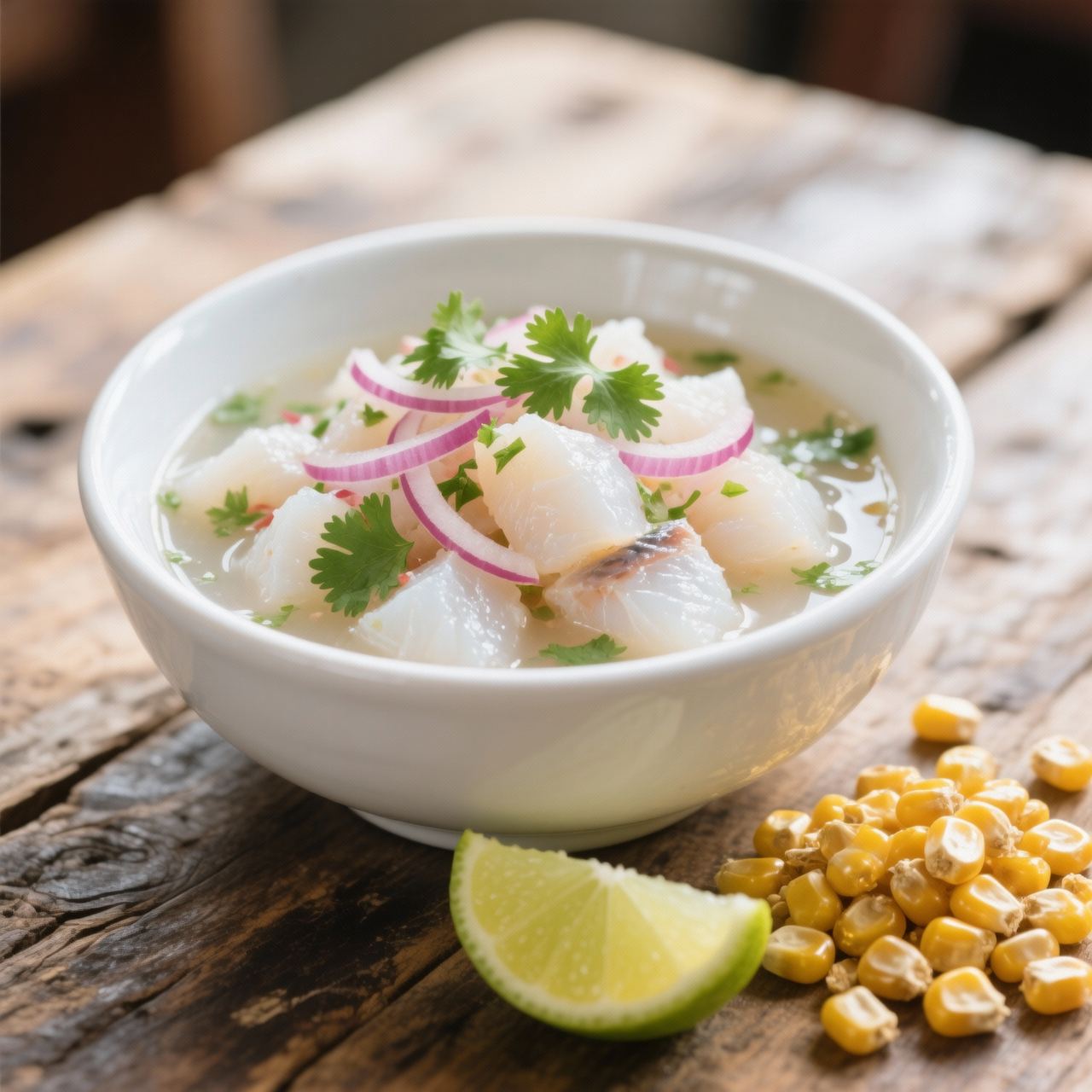
Ceviche
When I first tasted true Peruvian ceviche along the coast of Lima, I realized I had been eating a pale imitation my entire life. This dish isn’t just a recipe; it’s a living archive of Peru’s maritime soul, born from centuries of indigenous coastal traditions refined by Spanish colonization and elevated by Japanese immigrant techniques. The magic lies in the leche de tigre, that vibrant citrus marinade that doesn’t technically cook the fish but transforms it through gentle, precise acidification. I’ve spent years perfecting this balance because ceviche demands absolute respect. Too often, home cooks treat it like a simple salad, drowning the seafood in cheap bottled lime juice until the proteins turn rubbery and bitter. The first pitfall is patience. Rushing the cure strips away texture and leaves you with a mushy disappointment. The second is temperature control; everything must stay ice-cold, from the cutting board to the serving bowl, because this dish is a celebration of freshness that sours instantly if neglected. I always insist on fresh corvina or sea bass, cut into uniform half-inch cubes so the citrus penetrates evenly. A touch of aji limo brings the necessary heat, while thinly sliced red onion, quickly rinsed to tame its sharpness, adds crunch without overwhelming the delicate equilibrium. Why does this matter to me? Because ceviche teaches that restraint and timing are the truest forms of culinary mastery. It refuses to be rushed, demanding quiet attention to quality and a deep respect for the ocean’s bounty. When you get it right, you don’t just eat ceviche—you taste the Pacific itself.
Nutrition
| Per serving | Calories | Protein | Carbs | Fat | Sat fat | Fibre | Sugar | Sodium |
|---|---|---|---|---|---|---|---|---|
| beginner | 240kcal | 27g | 25g | 3g | 1g | 4g | 7g | 640mg |
| intermediate | 240kcal | 27g | 25g | 3g | 1g | 4g | 7g | 640mg |
| expert | 240kcal | 27g | 25g | 3g | 1g | 4g | 7g | 640mg |
Per serving · Ava-estimated — a guide, not a clinical figure.
- 500 gsea bass fillet— sushi-grade, skinless and boneless
- 8 pieceslime— for juicing, yield should be about 250ml
- 150 gred onion— thinly sliced
- 2 piecesaji limo pepper— fresh
- 1 piecegarlic clove— peeled
- 10 gfresh ginger root— peeled
- 15 gfresh cilantro— stems removed
- 5 gsea salt— fine grain
- 1 gblack pepper— freshly cracked
- 200 gsweet potato— peeled and cut into wedges
- 100 gcorn kernels— boiled or roasted
This version prioritizes accessibility and safety, removing the intimidation factor from your first attempt. Instead of sourcing and grinding fresh peppers, you will use a high-quality jarred aji paste, which delivers consistent heat without the guesswork. The focus here is on mastering the acid cure timing, which is the single most critical element of ceviche. You will follow a strict, measured schedule to ensure the fish firms up perfectly without turning chalky. I have simplified the leche de tigre by combining pre-strained lime juice with straightforward pantry staples, eliminating the need for a blender or mortar. Pay close attention to the onion preparation, as a quick cold-water rinse will strip away the harsh sulfurous bite that often overwhelms beginners. The goal is to build muscle memory around tasting and adjusting seasoning before the fish fully sets. Keep your workspace cold and your movements deliberate. This approach guarantees a reliable, restaurant-quality bowl on your very first try. You will learn exactly how the citrus transforms texture, giving you the foundational confidence to experiment freely in future iterations. Trust the clock, respect the fish, and let the acidity do its work.
Equipment
- Large mixing bowl— glass or ceramic preferred
- Fine mesh strainer— for draining onions and lime juice
- Chef knife— sharp blade ensures clean cuts
- Cutting board— dedicated for raw fish
- Medium saucepan— for boiling sweet potato and corn
Method
- 1
Boil the sweet potatoes and corn in a pot of salted water until fork-tender.
Do not overcook the corn.
boiling~ 15 min - 2
Rinse the sliced red onions under cold running water for thirty seconds.
This removes harsh sulfur compounds.
rinsing~ 1 min - 3
Whisk the fresh lime juice, jarred aji paste, minced garlic, grated ginger, and sea salt together in a large bowl.
Ensure the paste fully dissolves.
whisking~ 1 min - 4
Cut the chilled sea bass into uniform one-inch cubes and gently fold them into the citrus mixture.
Keep the bowl on ice if your kitchen is warm.
folding~ 2 minTricky bit - 5
Refrigerate the fish mixture for exactly fifteen minutes and stir it gently halfway through.
Timing is critical for texture.
curing~ 15 minTricky bit - 6
Drain the onions thoroughly and fold them into the fish along with chopped cilantro and cracked black pepper.
Pat the onions dry to avoid diluting the marinade.
incorporating~ 2 min - 7
Transfer the ceviche to chilled plates and serve immediately with the cooked sweet potato and corn.
Serve within five minutes for optimal freshness.
plating~ 2 min