
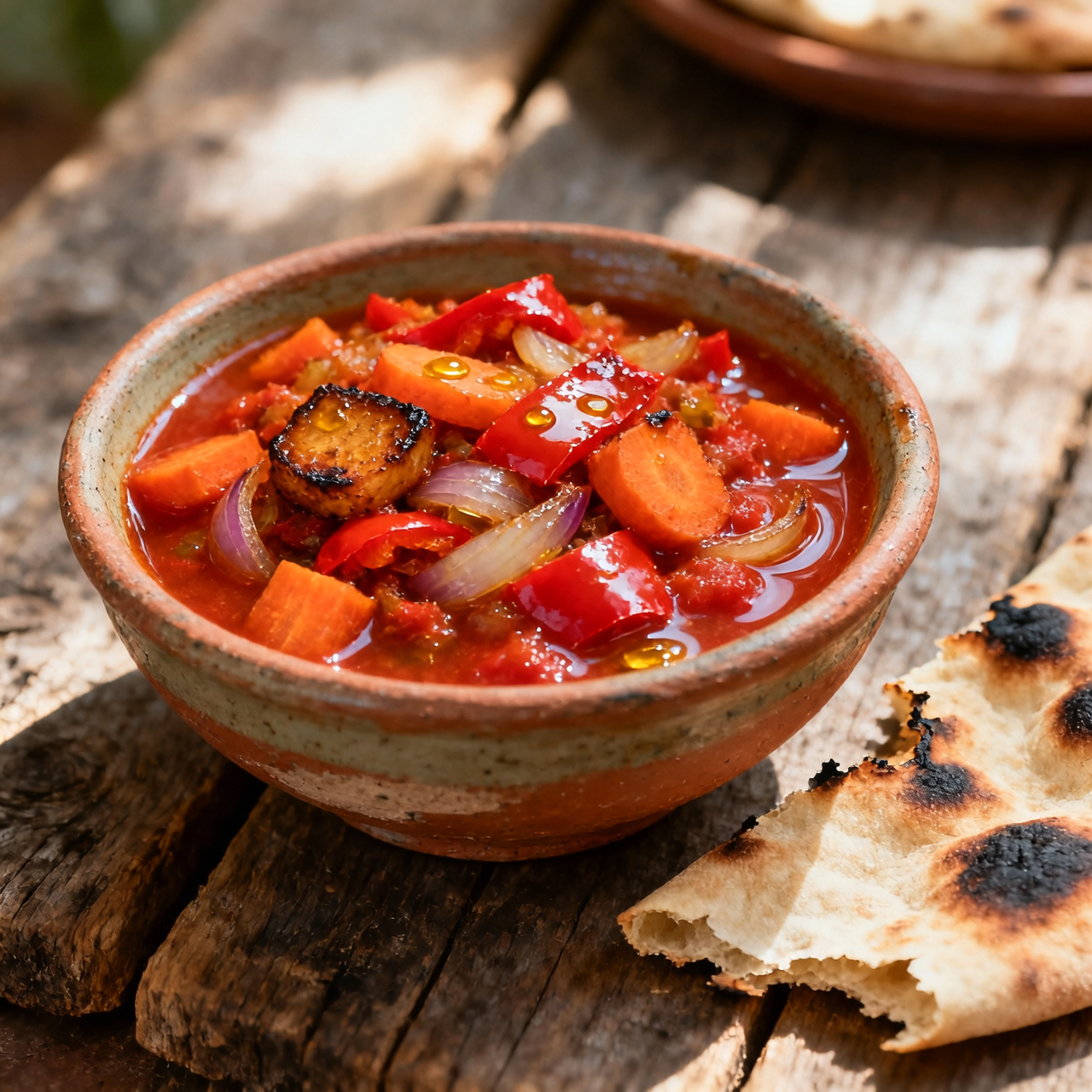
Chakalaka
I’ve always believed that Chakalaka is less a recipe and more a philosophy of making do. Born in the bustling townships around Johannesburg during the 1950s and 60s, it started as a clever way for mine workers and migrant communities to stretch meager rations into something vibrant, spicy, and deeply nourishing. What began as a humble mix of leftover vegetables, beans, and whatever curry powder or chutney was on hand has since become a beloved staple across South African tables, transcending class and culture. I cherish it because it refuses to be pinned down; every family, every street vendor, every Sunday gathering has its own rhythm for balancing heat and sweetness. Yet, that very freedom is where home cooks often stumble. The most common pitfall I see is rushing the aromatics or drowning the dish in liquid, which turns what should be a chunky, caramelized relish into a watery stew. Another misstep is treating the spice blend like an afterthought rather than the foundation—Chakalaka needs its curry powder, chili, and garlic to bloom properly in oil before the vegetables even meet the pan. And please, don’t skip the slow simmer. That low, patient heat is what coaxes the tomatoes into a rich glaze and lets the carrots and beans absorb every layer of flavor. When done right, this side dish doesn’t just accompany your meal; it elevates it, bringing a bright, tangy fire that cuts through heavier starches and reminds us that constraint, met with creativity, is often the truest kind of abundance.
Nutrition
| Per serving | Calories | Protein | Carbs | Fat | Sat fat | Fibre | Sugar | Sodium |
|---|---|---|---|---|---|---|---|---|
| beginner | 320kcal | 8g | 35g | 16g | 2g | 9g | 16g | 1000mg |
| intermediate | 320kcal | 8g | 35g | 16g | 2g | 9g | 16g | 1000mg |
| expert | 320kcal | 8g | 35g | 16g | 2g | 9g | 16g | 1000mg |
Per serving · Ava-estimated — a guide, not a clinical figure.
- 60 mlvegetable oil— neutral, high smoke point
- 150 gyellow onion— finely diced
- 10 ggarlic— fresh cloves, minced
- 20 gfresh ginger— peeled and grated
- 150 gred bell pepper— seeds removed, diced
- 150 gcarrot— peeled, finely diced
- 400 gcanned chopped tomatoes— unsalted, drained slightly
- 400 gcanned baked beans— drained and rinsed
- 15 gcurry powder— mild to medium heat
- 5 gdried chili flakes— adjust to taste
- 10 gwhite sugar— balances tomato acidity
- 5 gkosher salt— to season layers
- 100 mlwater— for deglazing and simmering
This version prioritizes accessibility and confidence without sacrificing the soul of the dish. You will rely on a high-quality jarred curry paste and pre-drained canned beans to eliminate tedious prep, allowing you to focus entirely on heat control and timing. The goal is a forgiving, one-pan process that yields a deeply flavorful relish in under an hour. Watch your pan temperature closely; beginners often rush the onion stage, which results in a harsh, raw flavor rather than a sweet foundation. Use medium-low heat and stir consistently until the onions turn translucent and slightly golden before adding the paste. The jarred components already contain balanced salt and sugar, so resist the urge to over-season early. Let the mixture simmer uncovered until it thickens naturally. If it looks too wet at the end, simply extend the cooking time by five minutes. This approach teaches you the fundamental flavor architecture of chakalaka while guaranteeing a reliable, crowd-pleasing result on your very first attempt.
Equipment
- Large non-stick skillet— 12-inch diameter ideal for even heat distribution
- Silicone spatula— heat-resistant for gentle stirring
- Measuring spoons— for accurate paste and spice ratios
Method
- 1
Heat vegetable oil in a large non-stick skillet over medium heat.
Ensure the pan is fully heated before adding fat to prevent sticking.
heating~ 1 min - 2
Add diced yellow onion and cook until soft and translucent.
Stir frequently to prevent browning.
sweating~ 5 min - 3
Stir in curry powder, dried chili flakes, and minced garlic.
Cook exactly until fragrant to avoid bitter scorching.
blooming~ 2 minTricky bit - 4
Add diced carrots, red bell pepper, and grated ginger.
Toss to coat evenly in the spiced oil.
sautéing~ 3 min - 5
Pour in canned tomatoes, water, sugar, and salt.
Scrape the pan bottom to release stuck fond.
deglazing~ 1 min - 6
Simmer uncovered until thickened, then fold in rinsed baked beans.
Extend time by five minutes if sauce remains watery.
reducing~ 15 minTricky bit