
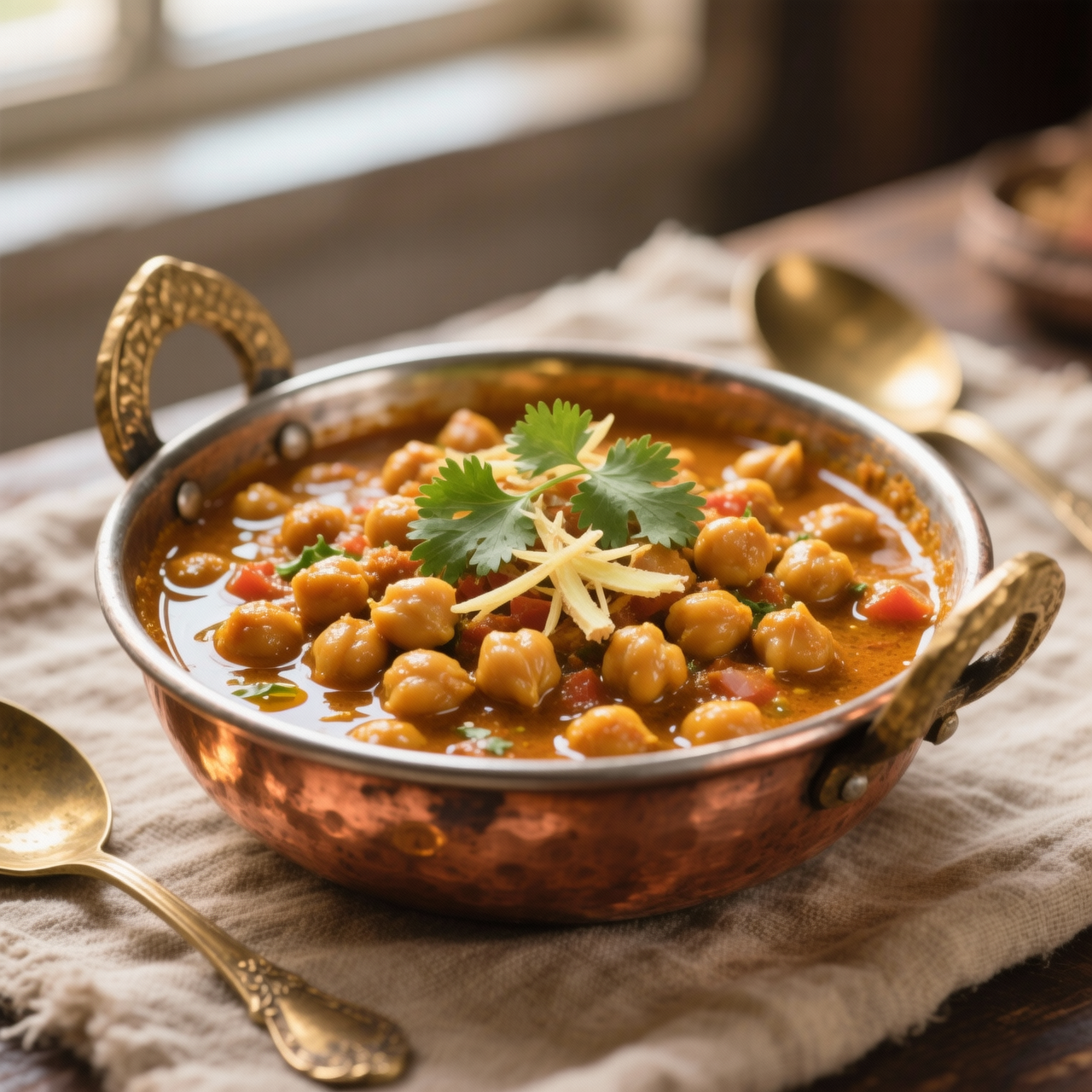
Chana Masala
When I first stepped into the bustling markets of Old Delhi, the scent of toasted cumin and simmering chickpeas immediately anchored me to the earth. Chana masala is far more than a simple stew of legumes and tomatoes; it is a testament to the resourceful ingenuity of North Indian home cooks who transformed humble pantry staples into a vibrant, deeply spiced celebration. At its core, this dish relies on the ancient alchemy of slow-cooking dried chickpeas until they surrender their starches to a rich, tangy gravy. For me, it matters because it bridges generations, carrying the quiet wisdom of mothers and grandmothers who understood that true flavor cannot be rushed. Yet, so many modern attempts fall short. The most common pitfall I see is the reliance on canned chickpeas straight from the tin, which lack the structural integrity and nutty depth required to hold up against robust spice blends. Another frequent misstep is skipping the crucial step of bhuna, the careful sautéing of onions until they caramelize into a dark, fragrant base. Without that foundation, the dish tastes flat and disjointed. I also watch people drown the masala in heavy cream or excess ghee, forgetting that traditional versions thrive on the bright acidity of dried mango powder and the earthy warmth of whole spices. When you respect the slow simmer, balance the tartness with just a pinch of black salt, and let the spices bloom properly in oil, you unlock a deeply satisfying, inherently vegan masterpiece that has sustained communities across centuries.
Nutrition
| Per serving | Calories | Protein | Carbs | Fat | Sat fat | Fibre | Sugar | Sodium |
|---|---|---|---|---|---|---|---|---|
| beginner | 520kcal | 20g | 72g | 18g | 2g | 20g | 15g | 850mg |
| intermediate | 520kcal | 20g | 72g | 18g | 2g | 20g | 15g | 850mg |
| expert | 520kcal | 20g | 72g | 18g | 2g | 20g | 15g | 850mg |
Per serving · Ava-estimated — a guide, not a clinical figure.
- 800 gChickpea— cooked, drained, and rinsed
- 300 gYellow onion— finely diced
- 400 gTomato— ripe, finely chopped
- 30 gFresh ginger— peeled and grated
- 20 gGarlic clove— minced
- 60 mlVegetable oil— neutral or cold-pressed mustard oil
- 5 gCumin seed
- 5 gCoriander seed
- 3 gBlack peppercorn
- 5 gCinnamon stick
- 2 gClove
- 3 gDried red chilli— whole
- 5 gTurmeric powder
- 10 gGround coriander
- 10 gGround cumin
- 10 gDried mango powder— amchoor
- 8 gFine sea salt
- 15 mlLemon juice— freshly squeezed
- 15 gFresh coriander— chopped, for finishing
This version removes the intimidation factor by leaning on a reliable store-bought masala paste that already contains our exact spice profile. You will not need to measure individual powders or worry about burning delicate whole spices. The focus shifts entirely to timing and texture control. I want you to treat the paste as your flavor anchor, adding it directly to softened onions and ginger-garlic to guarantee consistent results on your first try. Watch the pan closely during the initial sauté; medium heat is your best friend here, preventing the tomato base from seizing while allowing the oil to gently separate from the paste. I have deliberately kept the equipment list minimal and the steps strictly linear. You will learn to recognize the visual cue of oil splitting, which signals that the masala has cooked down properly and will coat the chickpeas evenly. Do not rush the simmer stage. A gentle, uncovered bubble allows excess moisture to evaporate without turning the legumes mushy. Taste before finishing with acid. If the flavor feels flat, a pinch of salt or an extra squeeze of lemon will instantly lift the dish. This approach builds muscle memory without demanding advanced knife skills or spice-blending knowledge. By the time you plate it, you will have a deeply satisfying, restaurant-style curry that proves great flavor is accessible to every home cook.
Equipment
- Non-stick skillet— 12-inch diameter works best
- Wooden spoon— heat-safe silicone spatula acceptable
Method
- 1
Heat vegetable oil in a large skillet over medium heat until it shimmers.
Oil should ripple but not smoke.
tempering~ 2 min - 2
Add diced yellow onion to the pan and cook until translucent.
Stir occasionally to prevent sticking.
sweating~ 5 min - 3
Stir in grated ginger and minced garlic until fragrant.
Lower heat if edges begin to brown too quickly.
sautéing~ 1 min - 4
Add the jarred chana masala paste to the pan and cook until oil separates.
Scrape the bottom constantly to prevent scorching.
blooming~ 2 minTricky bit - 5
Incorporate chopped tomatoes and cook until the mixture softens.
The paste will loosen as moisture releases.
reducing~ 5 min - 6
Fold in the cooked chickpeas and add enough water to cover by one inch.
Gentle folding preserves the bean structure.
incorporating~ 1 min - 7
Simmer the mixture uncovered until the gravy thickens and coats the chickpeas.
Bubbles should be slow and steady.
simmering~ 10 min - 8
Remove from heat, stir in fresh lemon juice, and garnish with chopped coriander.
Acid should brighten, not overpower.
finishing~ 1 min