
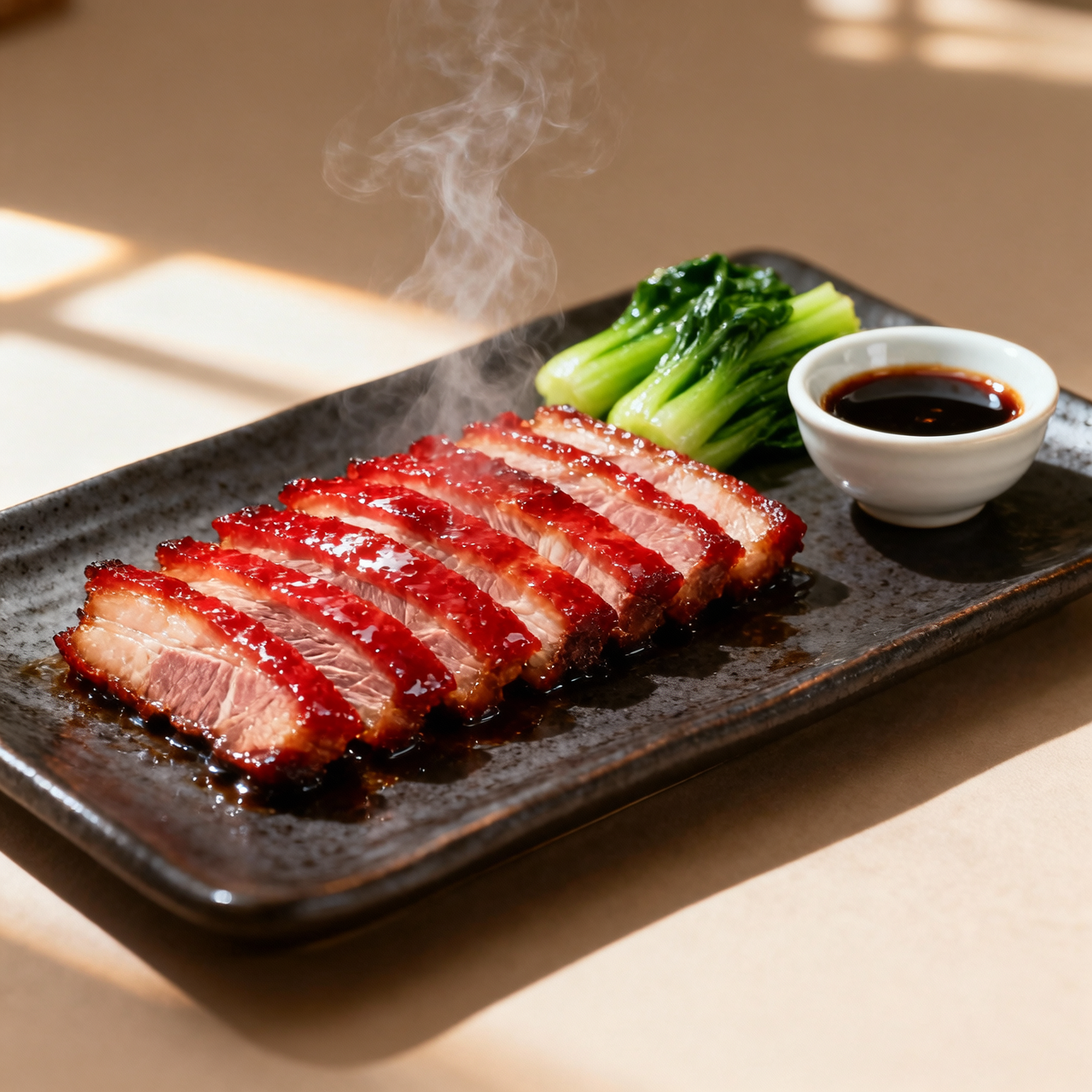
Char Siu
When I first stepped into a bustling Cantonese siu mei shop, the glossy crimson ribs hanging in the window immediately captivated me. Char siu, which translates quite literally to fork roasted, is more than just a staple of Cantonese barbecue; it is a testament to centuries of culinary ingenuity. Historically, street vendors would roast marinated pork over open flames using long metal forks, allowing the meat to rotate evenly while the sugars caramelized into that signature sticky glaze. To me, this dish matters because it bridges humble origins with profound flavor complexity, transforming relatively inexpensive cuts like pork shoulder into something truly celebratory. Yet, I have seen countless home cooks stumble over a few predictable traps. The most common pitfall is rushing the marinade. Char siu demands patience, as the meat must absorb the sweet-savory depth of fermented red bean curd, hoisin, and maltose for at least twenty-four hours. Another frequent mistake lies in the heat management. Many cooks crank the oven to blister the exterior too quickly, leaving the interior dry while the sugar burns into a bitter crust. The secret, which I always emphasize, is a gentle initial roast followed by a careful broil, paired with periodic basting using a thinned maltose glaze. When executed properly, the result is a harmonious balance of smoky char, tender meat, and a lacquered finish that practically glistens under kitchen lights. It is a dish that rewards precision, but more importantly, it rewards respect for time and tradition.
Nutrition
| Per serving | Calories | Protein | Carbs | Fat | Sat fat | Fibre | Sugar | Sodium |
|---|---|---|---|---|---|---|---|---|
| beginner | 470kcal | 24g | 27g | 28g | 9g | 1g | 22g | 1220mg |
| intermediate | 470kcal | 24g | 27g | 28g | 9g | 1g | 22g | 1220mg |
| expert | 470kcal | 24g | 27g | 28g | 9g | 1g | 22g | 1220mg |
Per serving · Ava-estimated — a guide, not a clinical figure.
- 500 gpork shoulder— boneless, well-marbled
- 60 mlhoisin sauce— check label for wheat content if gluten-free
- 45 mllight soy sauce— use low-sodium if preferred
- 15 mldark soy sauce— primarily for color
- 90 ghoney— wildflower or clover works best
- 45 mlShaoxing wine— authentic fermented rice wine
- 5 gfive-spice powder— star anise, cloves, cinnamon, Sichuan pepper, fennel
- 30 gred fermented tofu— including brine, mashed smooth
- 15 ggarlic— fresh cloves, finely minced
- 15 gginger— fresh root, grated
- 10 mltoasted sesame oil— added at the end for aroma
- 2 gwhite pepper— finely ground
This version strips away the intimidation factor by treating your marinade as a straightforward assembly task. Instead of worrying about balancing individual spice ratios or fermenting pastes, you will combine the listed components directly into a single, forgiving glaze. The focus here is on temperature control and consistent slicing. Cut your pork into even strips so the heat penetrates uniformly, and do not skip the resting period before carving. Beginners often rush the roast, expecting a quick sear to do all the work, but char siu requires a steady, moderate heat to render the fat and cook the meat through before the exterior caramelizes. Keep a pastry brush handy and baste every ten minutes to build that signature glossy crust without burning the sugars. An instant-read thermometer is your best friend; pull the pork at exactly sixty-two degrees Celsius and let it rest. The residual heat will carry it to a safe, tender finish. You are not chasing restaurant precision here—you are building muscle memory. Watch for bubbling honey pooling on the pan and adjust your rack height accordingly. Trust the process, baste patiently, and slice against the grain.
Equipment
- Baking sheet— line with foil for easy cleanup
- Wire rack— fits inside baking sheet
- Pastry brush— silicone handles heat well
- Instant-read thermometer— essential for food safety
Method
- 1
Slice pork shoulder into 2 cm thick strips.
Keep cuts uniform for predictable heat penetration.
slicing~ 5 min - 2
Combine all liquid and dry marinade ingredients in a mixing bowl until smooth.
Mash fermented tofu thoroughly with the back of a spoon.
whisking~ 2 min - 3
Toss pork strips in the marinade, ensuring every surface is coated.
Cover tightly and chill for at least 4 hours.
marinating~ 240 min - 4
Preheat oven to 190°C and arrange a wire rack over a foil-lined baking sheet.
Foil prevents sticky glaze from burning onto the pan.
preheating~ 5 min - 5
Roast pork on the rack, brushing with reserved honey glaze every 10 minutes.
Rotate the pan halfway through for even browning.
basting~ 30 minTricky bit - 6
Remove pork when internal temperature reaches 62°C, rest for 10 minutes, and slice.
Resting prevents moisture loss during carving.
resting~ 10 min