
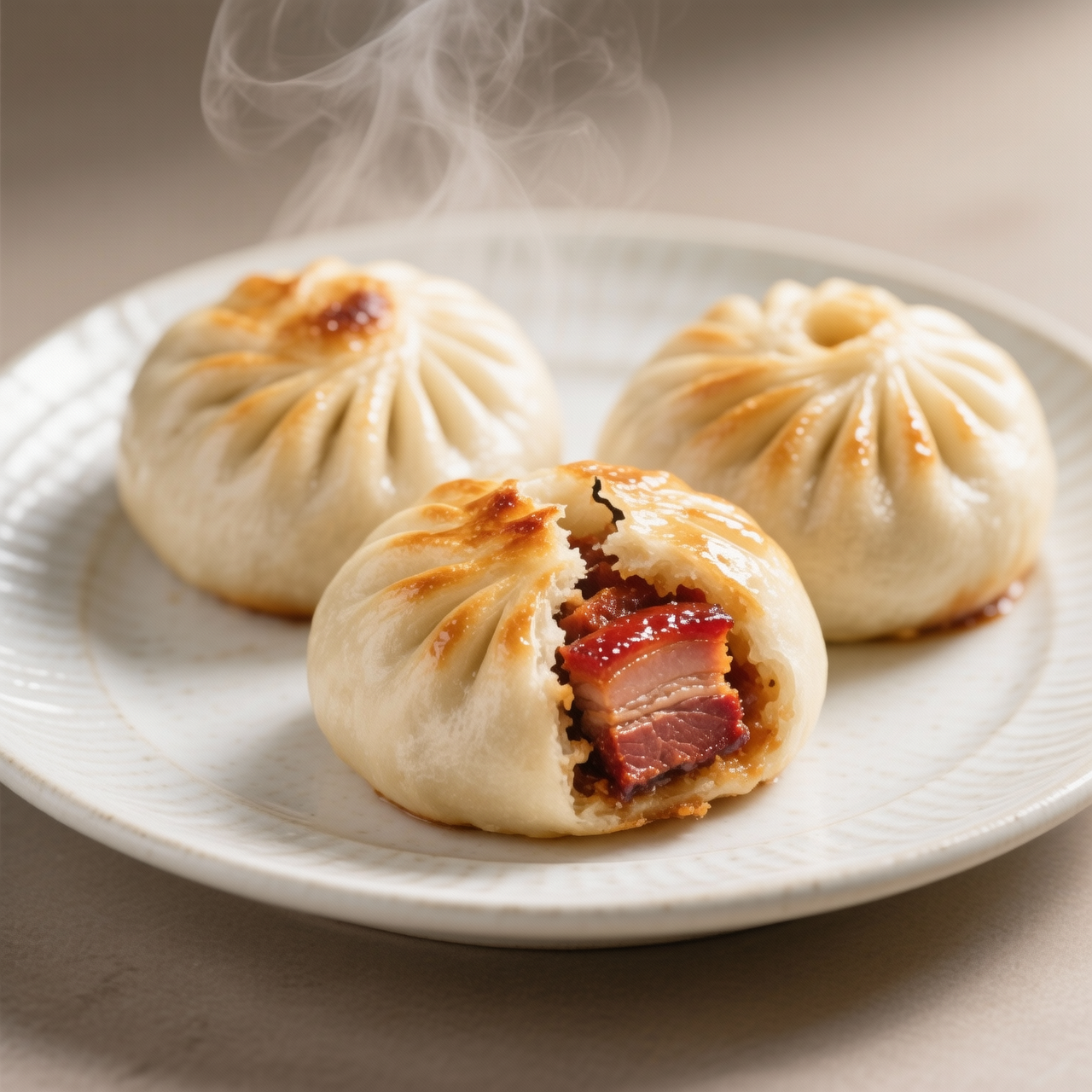
Char Siu Bao (BBQ Pork Buns)
I’ve always believed that the quiet magic of Cantonese dim sum lives in the contrast of textures, and nowhere is that more apparent than in char siu bao. These pillowy steamed buns, traditionally born in the bustling teahouses of Guangdong, were originally designed as affordable, satisfying snacks for workers and tea drinkers alike. Yet today’s supermarket freezers are flooded with their pre-packaged cousins, often priced around five dollars for a meager four-pack while delivering a dense, rubbery dough and a cloying, corn-syrup-heavy filling that tastes more like a chemistry experiment than roasted pork. When I build them from scratch, I’m reclaiming that lost balance: a delicate, slightly sweet yeast wrapper that splits open to reveal a deeply savory, slow-reduced pork glaze thickened naturally with potato starch and toasted aromatics. The true challenge, and my most common pitfall, lies in the proofing stage. Over-proof the dough and your buns collapse into gummy pucks. Under-proof them and they stay stubbornly tight. I’ve learned to trust the gentle spring-back of the dough rather than rigid kitchen timers. Another frequent mistake is rushing the filling reduction; without patient simmering, the sauce stays thin and bleeds through the wrapper. By cooling the filling until it sets, folding the dough with care, and allowing a quiet second rise, you create buns that freeze beautifully and reheat with their original cloud-like integrity. It’s a modest investment of time, but the result is a deeply authentic, from-scratch comfort that completely justifies stepping away from the convenience aisle.
Nutrition
| Per serving | Calories | Protein | Carbs | Fat | Sat fat | Fibre | Sugar | Sodium |
|---|---|---|---|---|---|---|---|---|
| beginner | 410kcal | 14g | 52g | 15g | 4g | 2g | 14g | 650mg |
| intermediate | 380kcal | 18g | 52g | 10g | 3g | 2g | 14g | 580mg |
| expert | 420kcal | 22g | 54g | 14g | 5g | 2g | 19g | 690mg |
Per serving · Ava-estimated — a guide, not a clinical figure.
- 500 gpork shoulder— trimmed and cut into 2 cm cubes
- 60 mlhoisin sauce
- 30 mllight soy sauce
- 45 ghoney
- 5 gChinese five-spice powder
- 15 gred fermented bean curd— mashed smooth with 1 tbsp of its brine
- 400 gall-purpose flour— plus extra for dusting
- 7 ginstant yeast
- 80 ggranulated sugar— divided between filling and dough
- 8 gbaking powder
- 240 mlwhole milk— warmed to 35°C
- 30 mlneutral oil
This beginner version strips away the intimidating lamination and double-fermentation of traditional bakery buns, replacing them with a reliable one-bowl dough method that relies on yeast and baking powder for a soft, pillowy crumb. You will still make the char siu filling entirely from scratch, simmering diced pork shoulder in a balanced glaze of soy sauce, honey, hoisin, and five-spice rather than reaching for a jarred paste. The key difference here is the rolling-and-folding technique: we use a gentle hand-press and simple pleat instead of demanding perfect radial symmetry, which guarantees a tight seal without overworking the gluten. Watch the dough hydration closely; it should feel tacky but never sticky, and if it resists stretching, let it rest for five minutes before continuing. Keep a damp cloth over your rolled discs to prevent a dry skin from forming before filling. While frozen supermarket buns cost around $1.50 each and rely on heavy preservatives, artificial red dye, and overly sweet fillings, this approach delivers a clean, savoury-sweet balance with real meat and pantry staples. Freeze the finished buns on a tray before bagging for easy reheating later.
Equipment
- Bamboo steamer— line with parchment squares to prevent sticking
- Rolling pin— keep a light dusting of flour nearby
- Damp kitchen towel— essential for covering resting dough
Method
- 1
Simmer diced pork shoulder with soy sauce, honey, hoisin, and five-spice until the liquid reduces to a thick glaze.
Cool completely before filling the buns.
reducing~ 15 minTricky bit - 2
Whisk warm water, yeast, and a pinch of sugar until the mixture turns frothy and doubles in volume.
Water should be comfortably warm, not hot, to avoid killing the yeast.
blooming~ 5 minTricky bit - 3
Combine flour, baking powder, salt, the bloomed yeast, and oil, then knead until the dough is smooth and elastic.
Dough will feel slightly tacky; resist adding extra flour.
kneading~ 8 min - 4
Divide the dough into eight equal pieces and roll each into a thick, round disc with slightly thinner edges.
Cover unused pieces with a damp towel immediately.
rolling~ 5 min - 5
Place a generous spoonful of cooled filling in the center of each disc and pleat the edges upward to seal.
Pinch firmly to trap the juices, but avoid stretching the dough thin.
pleating~ 7 minTricky bit - 6
Rest the sealed buns on parchment squares for fifteen minutes, then steam over rapidly boiling water until puffed and springy.
Keep the lid slightly ajar to prevent condensation from dripping onto the dough.
steaming~ 15 minTricky bit
Cooking from frozen
Steam directly from frozen for fifteen to twenty minutes until the dough is soft and the filling is piping hot.
Storage times are a guide — always use your judgement and store food safely.