
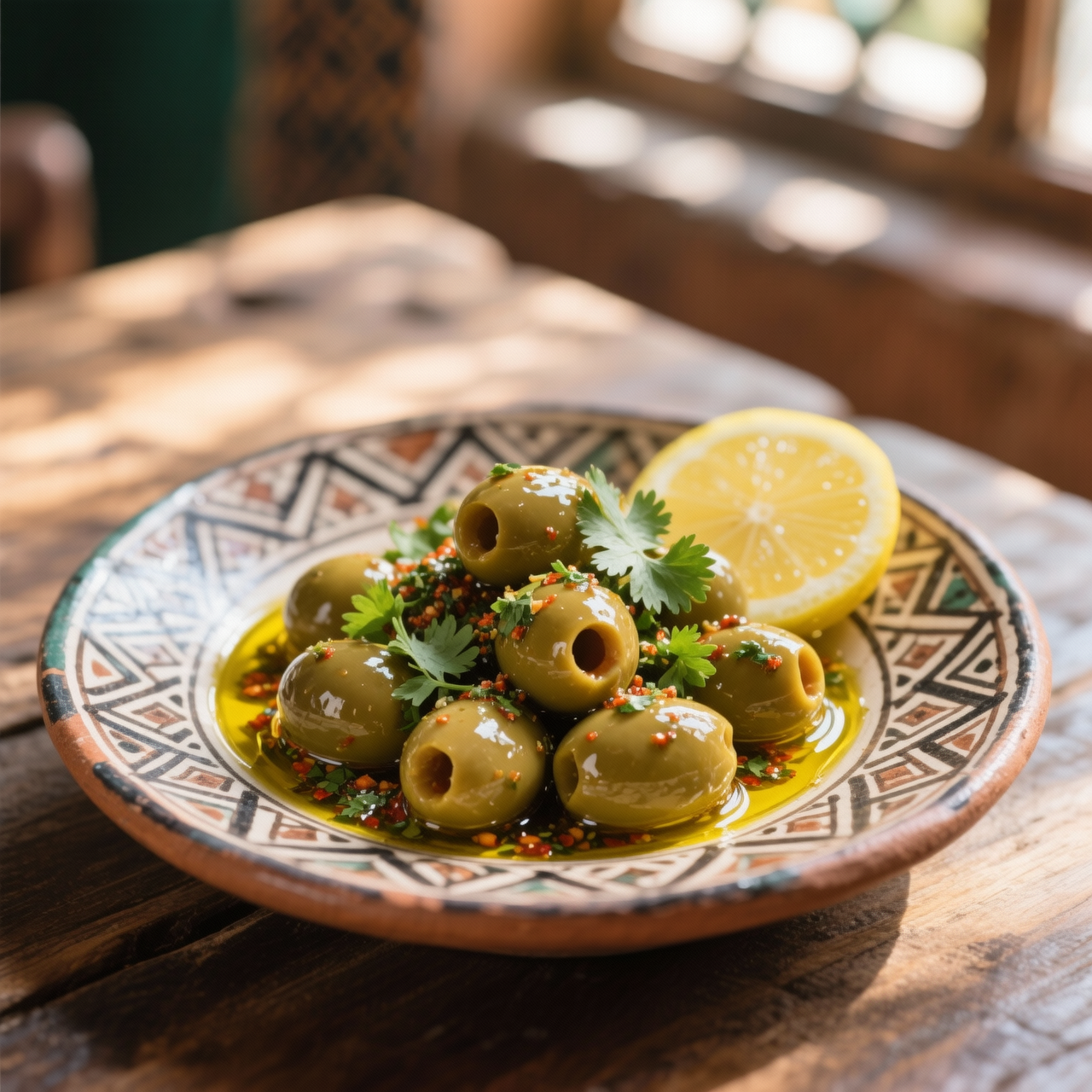
Charmoula olives
Charmoula began as a vibrant, all-purpose Moroccan herb blend, a fragrant marriage of cilantro, parsley, garlic, cumin, and bright citrus that has historically been rubbed onto grilled fish, folded into stews, or tossed with roasted vegetables. When I first encountered it as a standalone olive marinade in a bustling Marrakech souk, I realized how perfectly its sharp, herbal acidity cuts through the rich, briny weight of cured fruit. This matters because it transforms a humble pantry staple into a living, breathing condiment that elevates everything from mezze boards to weeknight grain bowls. Yet, charmoula olives are notoriously misunderstood in Western kitchens. The most common pitfall is rushing the infusion; charmoula is not a quick-toss affair but a slow alchemy that requires patience. If you simply dump dried herbs into a bowl with olives, you’ll get a dusty, flat disappointment. Fresh herbs are non-negotiable, and they must be bruised or finely minced to release their essential oils before mingling with high-quality olive oil and a touch of preserved lemon. Another frequent misstep is using the wrong olives; overly soft or pre-stuffed varieties turn to mush under the marinade’s weight, while overly salty ones drown out the delicate spice balance. I always recommend starting with firm, unpitted green or kalamata olives, rinsed thoroughly, then letting them rest in a cool, dark place for at least forty-eight hours before they ever see the table. When done right, the oil becomes a liquid gold infused with earthy warmth, and every bite delivers a layered harmony that feels both ancient and entirely modern.
Nutrition
| Per serving | Calories | Protein | Carbs | Fat | Sat fat | Fibre | Sugar | Sodium |
|---|---|---|---|---|---|---|---|---|
| beginner | 185kcal | 1g | 3g | 18g | 3g | 2g | 0g | 520mg |
| intermediate | 145kcal | 1g | 3g | 14g | 2g | 2g | 0g | 420mg |
| expert | 158kcal | 1g | 4g | 14g | 2g | 2g | 1g | 890mg |
Per serving · Ava-estimated — a guide, not a clinical figure.
- 500 ggreen olive— drained and rinsed if brined
- 30 gfresh cilantro— leaves and tender stems only
- 30 gfresh parsley— flat-leaf
- 4 piecegarlic clove— peeled
- 45 mllemon juice— freshly squeezed
- 80 mlextra virgin olive oil
- 5 gground cumin
- 5 gsweet paprika
- 3 gsea salt
- 2 gred chili flake(optional)— adjust to heat preference
- 20 gpreserved lemon rind(optional)— rinsed and finely chopped
This beginner-friendly version of charmoula olives skips the traditional mortar-and-pestle grinding and relies on a high-quality, store-bought charmoula paste to deliver authentic Moroccan flavor in minutes. By using a pre-blended herb and spice base, you eliminate the need for measuring individual spices or managing fresh herb prep, making this a foolproof pantry project. The process focuses entirely on proper coating, layering, and jar storage, which are the real secrets to long-lasting, deeply infused olives. Watch closely for two key points: first, ensure the olives are thoroughly dried before mixing, as excess water can dilute the marinade and shorten shelf life. Second, always top the finished jars with a thin layer of olive oil to create an airtight seal that prevents mold and oxidation. Because this method relies on a ready-made paste, taste the mixture before jarring; if the paste is particularly salty, you can balance it with a squeeze of fresh lemon juice or a pinch of sweet paprika. Store your jars in the refrigerator and let them rest for at least twenty-four hours before serving. The longer they sit, the more the spices penetrate the olive flesh, transforming a simple brine snack into a vibrant, aromatic condiment perfect for mezze platters or grain bowls.
Equipment
- Large mixing bowl— glass or ceramic works best for easy stirring
- Airtight glass jars— two 8-ounce mason jars with tight lids
- Paper towels— essential for removing brine moisture
Method
- 1
Pat the drained olives completely dry with paper towels.
Residual water will dilute flavor and encourage spoilage.
drying~ 2 min - 2
Transfer the jarred charmoula paste into your mixing bowl and stir in two tablespoons of olive oil to loosen it.
A quick microwave burst for ten seconds makes spreading easier.
tempering~ 1 min - 3
Add the dried olives to the bowl and fold gently until every piece is thoroughly coated.
Use a silicone spatula to scrape the bottom corners.
folding~ 2 min - 4
Pack the mixture tightly into clean glass jars, leaving half an inch of headspace at the top.
Press down lightly to remove trapped air pockets.
packing~ 2 minTricky bit - 5
Pour a thin layer of extra virgin olive oil over the top to fully cover the surface.
This oil barrier is critical for safe refrigeration and oxidation prevention.
sealing~ 1 min - 6
Cap the jars tightly and refrigerate for at least twenty-four hours before serving.
Shake gently once daily for the first two days to redistribute herbs.
infusing~ 1 min
Storage times are a guide — always use your judgement and store food safely.