
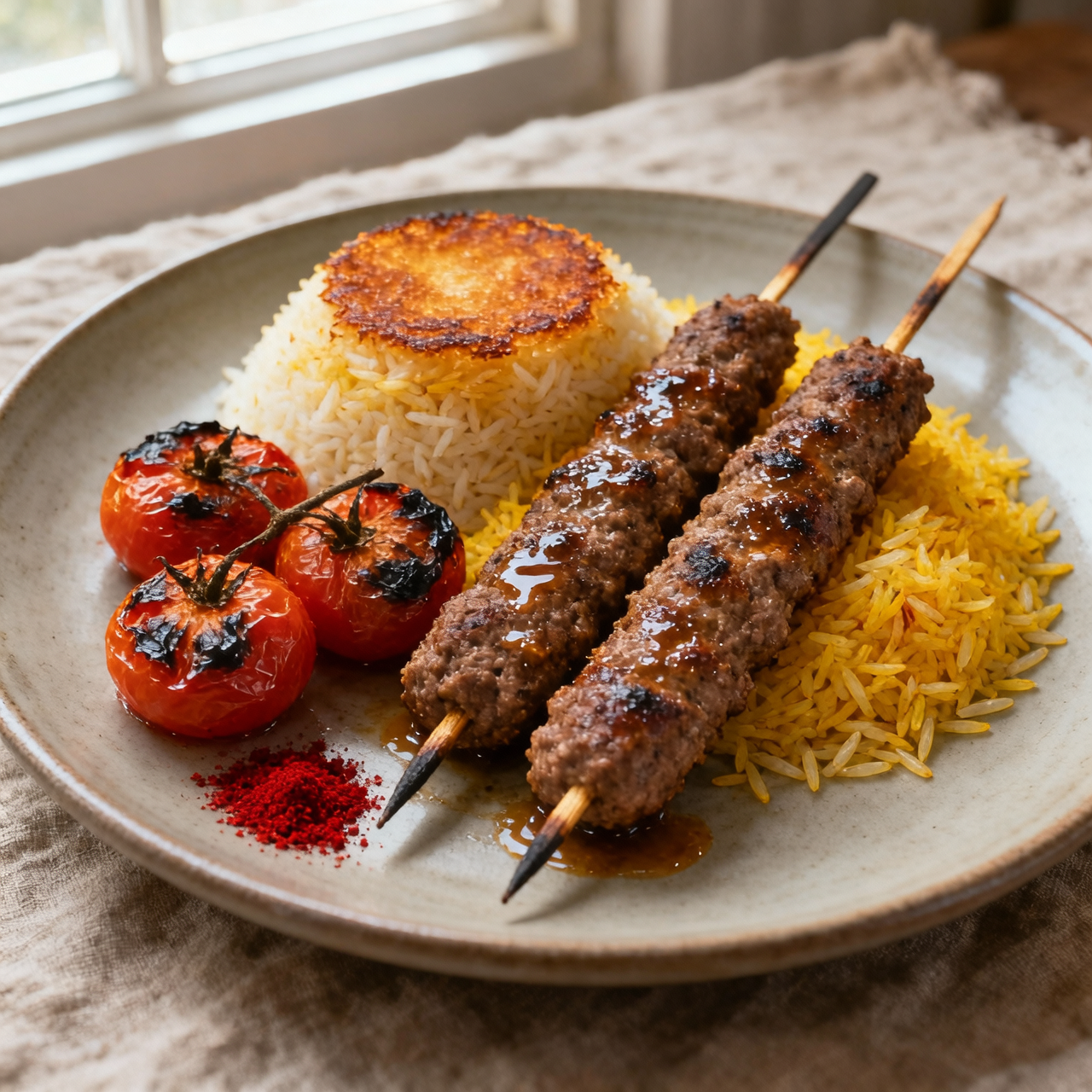
Chelo Kebab Koobideh
When I first learned to shape Chelo Kebab Koobideh, I quickly understood why it holds such a revered place in Persian kitchens. This dish isn’t merely ground meat on a skewer; it is a cultural anchor, born from the ancient fire pits of the Iranian plateau and refined over centuries of communal gatherings. The name itself whispers of its essence: koobideh, meaning pounded, speaks to the rhythmic, almost meditative process of kneading lamb and beef with grated onions until the mixture becomes impossibly smooth and cohesive. For me, mastering this kebab is about honoring patience and precision. What makes it truly matter is how it transforms humble ingredients into something deeply celebratory, served alongside fragrant saffron rice and charred tomatoes that carry the smoky breath of summer evenings. Yet, the path to perfect koobideh is notoriously unforgiving. The most common pitfall is rushing the kneading stage; without sufficient time to develop the proteins, the meat will simply slide off the skewers and into the coals. Temperature is equally unforgiving. If your meat isn’t thoroughly chilled before shaping, the fat will melt prematurely, guaranteeing a disastrous collapse over the flame. I’ve lost countless batches to overworked onions that released too much moisture, leaving behind a watery paste that refuses to cling. The secret lies in balancing dryness with richness, straining the onion juice meticulously, and respecting the quiet discipline of the craft. Every successful skewer feels like a small victory, a testament to the quiet persistence that Persian cooking demands.
Nutrition
| Per serving | Calories | Protein | Carbs | Fat | Sat fat | Fibre | Sugar | Sodium |
|---|---|---|---|---|---|---|---|---|
| beginner | 878kcal | 30g | 89g | 44g | 18g | 4g | 4g | 1280mg |
| intermediate | 878kcal | 30g | 89g | 44g | 18g | 4g | 4g | 1280mg |
| expert | 878kcal | 30g | 89g | 44g | 18g | 4g | 4g | 1280mg |
Per serving · Ava-estimated — a guide, not a clinical figure.
- 350 gground beef— freshly ground, eighty percent lean
- 150 gground lamb shoulder— high fat content preferred for binding
- 250 gyellow onion— finely grated, excess juice discarded
- 0.5 gsaffron thread— high-grade, lightly crushed
- 400 gbasmati rice— aged, rinsed until water runs clear
- 50 gunsalted butter— room temperature
- 12 gfine sea salt
- 5 gblack peppercorn— freshly cracked
- 4 countroma tomato— firm, halved lengthwise
- 10 gground sumac— bright red, not stale
- 30 mlneutral vegetable oil— for greasing hands and grill grates
This version prioritizes approachability over tradition, using a reliable commercial spice paste to bypass the tedious prep of fresh aromatics. The focus here is on building confidence through controlled moisture management and simplified shaping techniques. You will grate and drain the onion yourself, but rely on a pre-blended seasoning to guarantee balanced flavor without guesswork. The rice is steamed using a straightforward stovetop method that eliminates the stress of flipping a perfect tahdig. Watch closely during the chilling phase: if the meat feels warm or sticky, it will refuse to cling to your skewers. I recommend keeping a bowl of ice water nearby to cool your hands while shaping, and using a flat baking sheet under a broiler if open-flame grilling feels intimidating. The goal is a cohesive, juicy bite that introduces you to the core mechanics of Persian kebab making without overwhelming your workflow. By the end of this process, you will understand exactly how temperature, fat, and handling dictate success, setting a solid foundation for more ambitious attempts later.
Equipment
- large mixing bowl— glass or stainless steel retains cold well
- flat metal skewers— wide profile prevents spinning
- heavy-bottomed pot— non-stick is acceptable for rice
Method
- 1
Grate the yellow onion finely and squeeze out all excess liquid using a clean kitchen towel.
Moisture is the primary enemy of adhesion.
draining~ 5 minTricky bit - 2
Combine the grated onion, ground beef, ground lamb, salt, black pepper, and pre-mixed spice paste in a large bowl.
Ensure all ingredients are thoroughly cold before mixing.
combining~ 4 min - 3
Knead the meat mixture vigorously on a chilled surface until it becomes extremely tacky and cohesive.
The texture should resemble a dense, sticky paste.
kneading~ 8 minTricky bit - 4
Cover the bowl tightly and refrigerate the mixture until it is completely firm and cold throughout.
Do not skip this chilling step or the meat will collapse.
resting~ 5 min - 5
Shape the chilled meat evenly onto flat metal skewers and cook over medium heat until browned.
Keep your hands wet with cold water while molding.
skewering~ 8 minTricky bit - 6
Parboil the rinsed rice in salted water until tender, drain thoroughly, and steam gently until fluffy.
Fold in crushed saffron and butter before the final steam.
steaming~ 15 min