
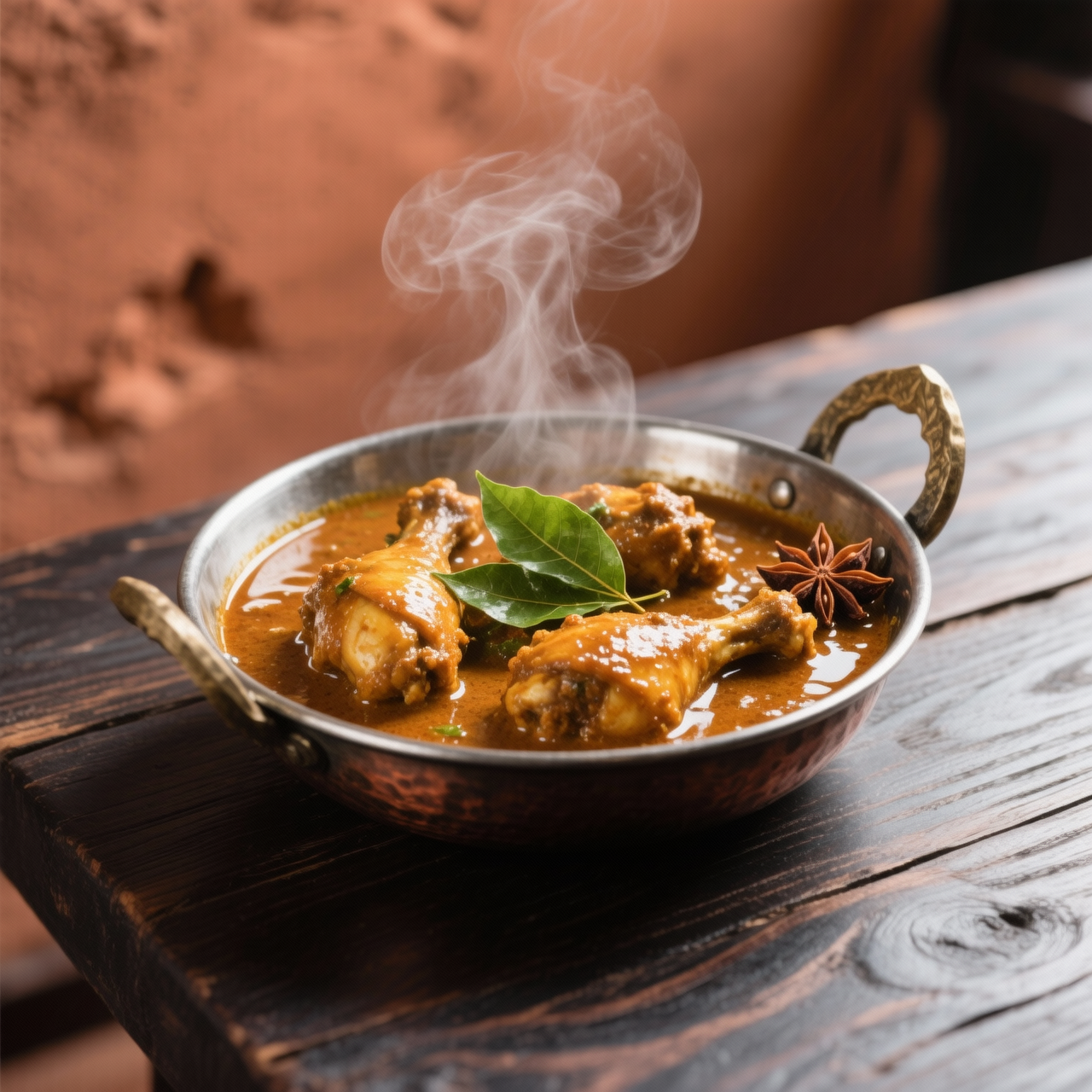
Chettinad Chicken
I first encountered Chettinad chicken not in a bustling Chennai kitchen, but through the faded pages of a community cookbook passed down by a friend’s grandmother. Hailing from the arid, spice-rich lands of Tamil Nadu’s southern belt, this dish was born out of necessity and ingenuity. The Chettiar community, known for their mercantile travels across Southeast Asia, brought back peppercorns, star anise, and fennel seeds, weaving them into a fiery masala that transformed humble village poultry into something extraordinary. To me, Chettinad chicken isn’t just a curry; it’s a testament to cultural exchange and the relentless pursuit of bold, unapologetic flavor. It matters because it resists the modern tendency to soften regional Indian food for palates accustomed to milder profiles. When done right, the dish sings with layers of toasted coriander, sharp black pepper, and the earthy depth of freshly grated coconut, all simmered into a thick, clinging gravy that demands to be eaten with hands, not cutlery. Yet, I’ve seen it ruined countless times. The most common pitfall is rushing the spice roast. Those whole spices must be dry-toasted until fragrant, then ground fresh. Pre-mixed powders simply cannot replicate that volatile, aromatic intensity. Another mistake is overcrowding the pan or adding tomatoes too early, which steams the chicken instead of allowing it to sear and absorb the masala. Finally, skipping the resting period after cooking leaves the meat tough and the flavors disjointed. Patience, heat control, and respect for the original spice ratios are non-negotiable if you want to honor this dish’s fierce, uncompromising soul.
Nutrition
| Per serving | Calories | Protein | Carbs | Fat | Sat fat | Fibre | Sugar | Sodium |
|---|---|---|---|---|---|---|---|---|
| beginner | 520kcal | 40g | 25g | 24g | 11g | 7g | 6g | 1000mg |
| intermediate | 520kcal | 40g | 25g | 24g | 11g | 7g | 6g | 1000mg |
| expert | 520kcal | 40g | 25g | 24g | 11g | 7g | 6g | 1000mg |
Per serving · Ava-estimated — a guide, not a clinical figure.
- 800 gchicken— bone-in thighs and drumsticks, skin removed
- 45 mlcoconut oil— cold-pressed preferred
- 300 gshallot— finely chopped
- 200 gtomato— ripe, roughly diced
- 20 ggarlic— peeled and minced
- 15 gginger— peeled and finely grated
- 10 gdried red chili— whole, deseeded if preferred
- 15 gblack peppercorn— whole
- 10 gcoriander seed— whole
- 5 gfennel seed— whole
- 5 gcumin seed— whole
- 4 gclove— whole
- 5 cmcinnamon stick— broken into pieces
- 2 gstar anise— whole
- 20 gcurry leaf— fresh, rinsed and dried
- 15 gtamarind paste— concentrated
- 10 gfine salt— to taste
- 200 mlwater— warm
- 15 gfresh coriander leaf— chopped, for garnish
This approach strips away the intimidation factor by streamlining the spice preparation while preserving the foundational flavor architecture. You will skip the labor-intensive dry-roasting and stone grinding phases, opting instead for a rapid pulse of whole spices or a direct swap with a high-quality commercial paste. The primary goal here is confidence and consistency, so temperature control is your most critical ally. Watch the pan closely when introducing the spice blend; modern pre-mixed pastes often contain higher moisture or oil content, which means they can scorch in seconds rather than minutes. Keep the heat strictly at medium and stir continuously until the raw edge disappears. The simmering phase is forgiving, allowing the chicken to tenderize without demanding constant attention. Focus on the visual cue of oil separation around the edges of the gravy, which signals that the spices have properly bloomed and integrated with the aromatics. By simplifying the prep, you free up mental bandwidth to monitor the reduction stage, ensuring the sauce clings properly rather than pooling. This version guarantees a deeply satisfying, authentic-tasting result on your first attempt without compromising on the dish’s signature warmth.
Equipment
- Heavy-bottomed pan— non-stick is acceptable here
- Spice grinder(optional)— optional if using jarred paste
- Wooden spatula— for gentle stirring
Method
- 1
Combine black peppercorn, coriander seed, fennel seed, cumin seed, clove, cinnamon stick, star anise, and dried red chili in a spice grinder and pulse to a coarse powder, or measure 45g of high-quality jarred Chettinad paste.
Do not grind into a fine dust; texture aids blooming.
grinding~ 1 min - 2
Heat coconut oil in a heavy-bottomed pan over medium heat until the surface shimmers.
Oil should ripple but not smoke.
tempering~ 2 min - 3
Add shallot to the pan and cook until translucent and lightly golden.
Stir frequently to prevent scorching.
sweating~ 5 min - 4
Stir in garlic, ginger, and the prepared spice blend until the raw aroma disappears.
Lower heat immediately if the mixture begins to stick.
blooming~ 2 minTricky bit - 5
Fold in tomato, curry leaf, tamarind paste, fine salt, and water, scraping all browned bits from the bottom.
Ensure the paste fully incorporates before adding liquid.
deglazing~ 1 min - 6
Add chicken pieces, cover the pan, and reduce heat to low until the meat is fork-tender.
Avoid lifting the lid to trap steam.
braising~ 20 min - 7
Remove the lid and increase heat to medium-high to reduce the liquid until it clings to the meat.
Stir constantly during the final three minutes.
reduction~ 5 minTricky bit - 8
Sprinkle fresh coriander leaf over the finished dish and transfer to a serving bowl.
Let it rest for two minutes before serving.
finishing~ 1 min